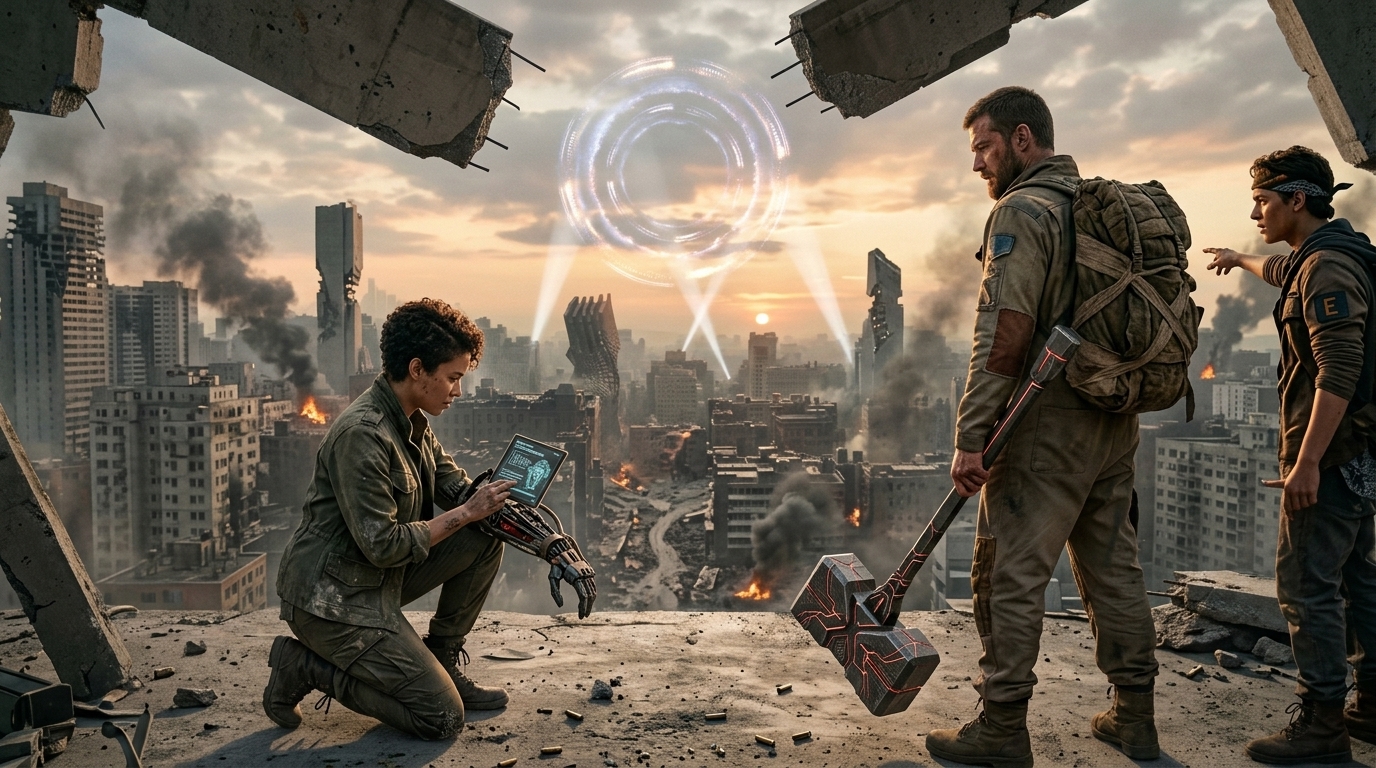
In an era where the development costs of so-called 'AAA' titles have skyrocketed to dizzying heights, Sony Interactive Entertainment is making a strategic admission that is expected to reshape the landscape of digital entertainment. According to recent statements from company executives, the integration of 'efficient' artificial intelligence (AI) tools into the production pipeline is no longer just an option, but a necessity that will lead to an unprecedented volume of new releases in the market.
This admission comes at a critical juncture for the gaming industry. With games like 'Spider-Man 2' costing over $300 million to develop, the current production model is widely considered unsustainable. Sony argues that AI can automate the most laborious and time-consuming aspects of development—such as environment creation, secondary dialogue writing, and quality assurance (QA) testing—allowing teams to produce more content in less time.
Quantity vs. Quality: The Risk of Market Saturation
The prospect of a 'flood' of games evokes mixed feelings among analysts and consumers alike. On one hand, lowering the barriers to entry for creating high-quality content could lead to a new golden age of experimentation. On the other, there is a profound fear that the market will be inundated with 'generic' content, stripped of the artistic spark that characterizes the great hits of the past.
Sony, however, is quick to reassure skeptics. 'Human artists must remain at the center,' PlayStation's representatives emphasize. The company's stance is that AI will function as a 'force multiplier' rather than a replacement for human creativity. Nevertheless, the history of technology has shown that when efficiency becomes the primary metric, artistic integrity often takes a backseat to quarterly balance sheets.
The Shift in the Workforce
The use of AI in game development is not just about code and graphics; it is also about the people who create them. Concerns about mass layoffs in the sector—which has already been plagued by cuts over the last two years—are intense. If an AI tool can do the work of ten environment artists, what happens to the other nine? Sony maintains that roles will evolve, with creators transforming into 'curators' and 'directors' of algorithms, rather than mere executors of technical tasks.
- Automation of 3D asset generation to reduce manual labor.
- Use of Large Language Models (LLMs) for dynamic NPC interactions.
- Acceleration of debugging through predictive modeling.
- Reduction of production cycles from 5-7 years to 3-4 years for major titles.
In a broader context, Sony's move reflects a global trend in the tech sector: the pursuit of infinite scalability. If PlayStation can offer a continuous stream of content through its subscription services (PlayStation Plus), it locks users into its ecosystem more effectively than ever. The question remains: will players have the time—or the inclination—to consume this ocean of digital entertainment?
Conclusion: A New Equilibrium
The video game industry faces an existential challenge. Sony's promise of 'efficiency' is attractive to shareholders, but the true test will be decided in the hands of the players. If AI is used to liberate creators from drudgery, we will see masterpieces. If it is used merely to fill shelves with digital noise, the 'flood' Sony predicts may ultimately drown the very innovation it seeks to protect.