The history of humanity is a continuous sequence of technological revolutions, each promising liberation from toil while simultaneously causing profound existential anxiety about the future of work. However, the current Artificial Intelligence (AI) revolution differs radically from steam, electricity, or the first cycle of information technology. This time, the threat does not only concern muscle power or repetitive manual tasks, but the very core of human cognitive activity.
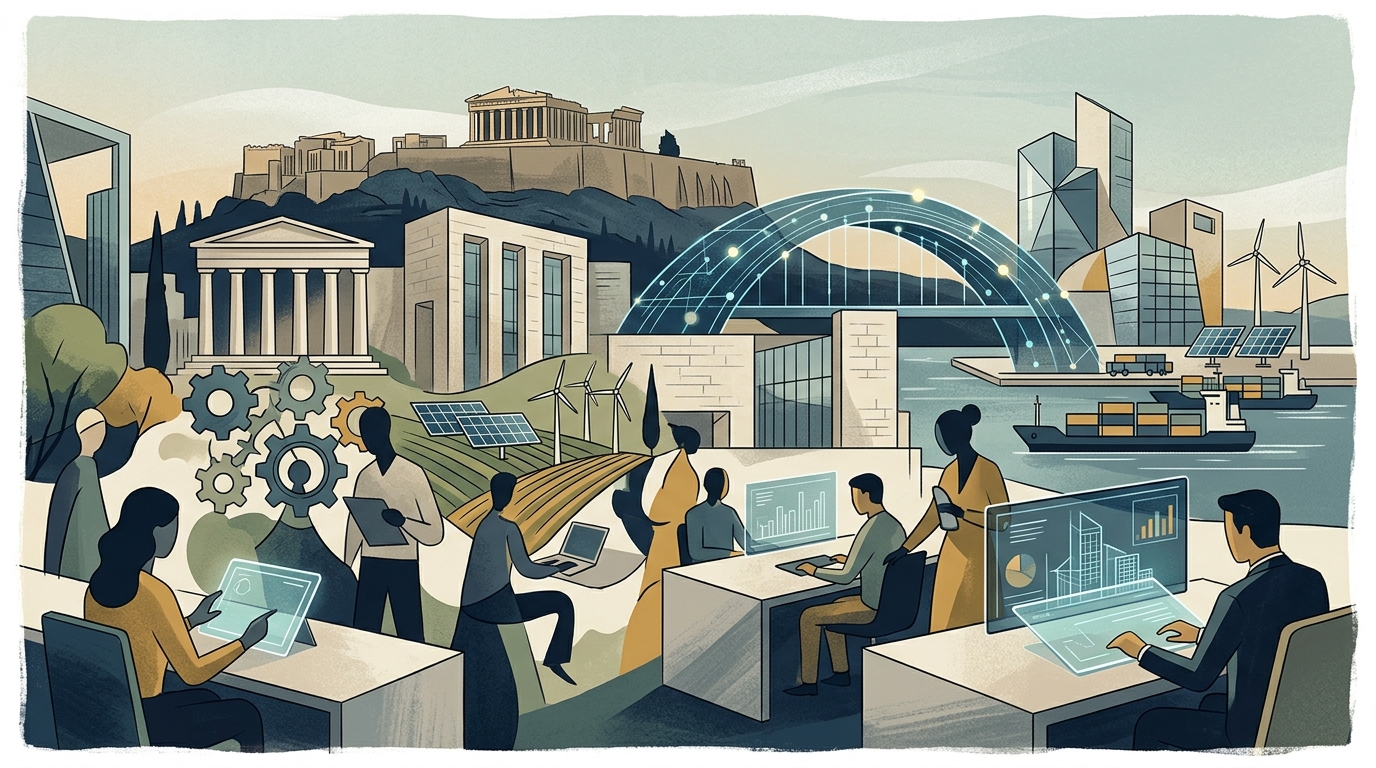
According to recent reports and analyses, the onslaught of AI tools—from large language models to specialized automation systems—is expected to affect millions of jobs worldwide. In Greece, an economy heavily reliant on services, tourism, and small-to-medium enterprises (SMEs), the tremors are expected to be particularly palpable. The challenge is no longer theoretical; it is a reality knocking on the doors of accounting firms, law offices, and customer service centers.
The "White-Collar" Target
For decades, automation was considered a problem primarily for manufacturing workers. Today, the situation has reversed. Generative AI tools demonstrate stunning capabilities in writing, data analysis, coding, and design. This means that professions requiring years of education and specialization are now on a trajectory of radical transformation or even obsolescence.
- Administrative Support: Automation of scheduling, correspondence, and data organization reduces the need for secretarial staff.
- Financial Services: Risk analysis and portfolio management are now performed faster and more accurately by algorithms.
- Creative Sectors: Marketing content production and basic graphic design are under immense pressure from tools like Midjourney and ChatGPT.
In the Greek market, where bureaucracy remains a significant hurdle, the introduction of AI could act as a double-edged sword: on one hand, increasing productivity and reducing costs for businesses, and on the other, the risk of a new army of highly qualified unemployed individuals who no longer find a purpose for their professional skills.
The Greek Particularity and the Digital Divide
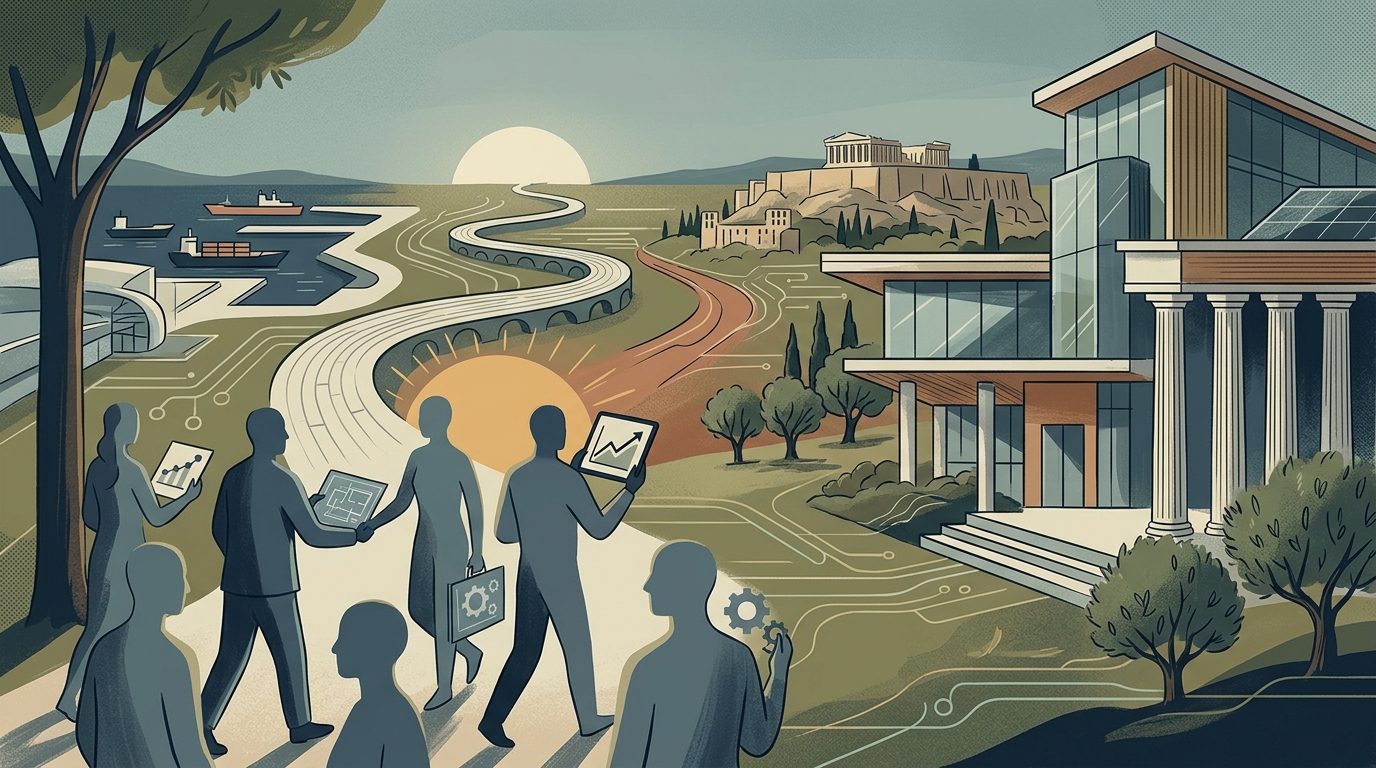
Greece stands at a critical crossroads. While the digitalization of the state has progressed by leaps and bounds in recent years, the private sector, and especially SMEs, lag in adopting advanced technologies. The paradox is that SMEs, which form the backbone of the Greek economy, are simultaneously the most vulnerable to AI and those with the most to gain from increased efficiency.
"AI will not replace humans, but humans who use AI will replace those who do not," market analysts often state.
However, this adage ignores the fact that for many older workers or those in remote areas, reskilling is not a simple process. The Greek state is called upon to design programs that are not just "certification seminars" but substantial bridges to the new digital economy. Without a cohesive national strategy, the digital divide will transform into a social chasm.
Social Implications and the Need for a New Social Contract
The discussion about AI and labor cannot be limited to economic terms alone. There is a deep ethical and social dimension. If productivity skyrockets thanks to AI, who will reap the benefits? The shareholders of big tech giants or society as a whole? The idea of a Universal Basic Income (UBI) is returning to the forefront as the traditional "work-wage" relationship is shaken.
Furthermore, the mental health of workers under constant surveillance by algorithms or those who feel the "breath" of AI closing in is a burning issue. The need for new labor laws that protect workers in the age of algorithmic management is more urgent than ever. The European Union, with the AI Act, is taking the first steps, but the speed of technology will always outpace legislation.
In conclusion, the AI incursion is not a future threat but a present challenge. For Greece, the stakes are twofold: not to fall behind in the innovation race while ensuring that the transition occurs under terms of social justice and the protection of human dignity. Technology must remain a tool in human hands, not a replacement for humans in life itself.