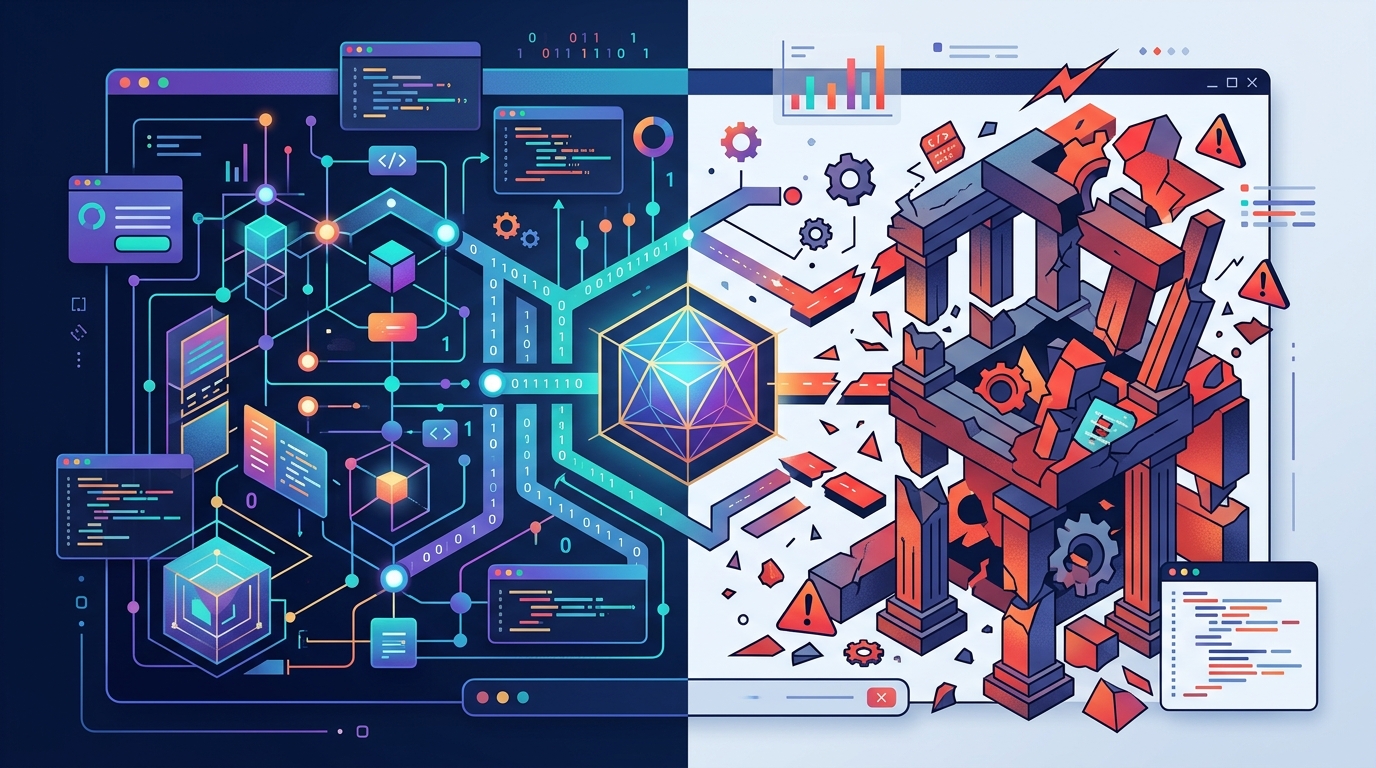
In the rapidly evolving landscape of 2026, a new term has captured the imagination of technologists and budget-conscious administrators alike: ‘Vibe Coding.’ It describes a shift from manual syntax to intent-based development, where users leverage Large Language Models (LLMs) to generate sophisticated software by simply describing their goals. A compelling report from Education Week highlights a US school district that projected savings of $200,000 by pivoting from commercial software subscriptions to internally developed, AI-generated tools.
The Shift from Procurement to Creation
For decades, the standard operating procedure for school districts has been procurement. When a need arose—be it for student behavior tracking, cafeteria management, or specialized scheduling—districts would enter long-term contracts with Software-as-a-Service (SaaS) providers. These contracts are often expensive, inflexible, and create vendor lock-in. The emergence of Vibe Coding has introduced a third path: the democratization of the ‘Build’ option.
Using advanced AI agents such as Replit Agent, Cursor, or specialized versions of Claude 3.5 and GPT-5, non-technical staff members are now building functional applications. In the case study at hand, the district saved six figures by replacing a suite of administrative tools with bespoke apps created by employees who had never written a line of Python or JavaScript. This represents a radical shift in the economics of the public sector, where the barrier to entry for custom software has plummeted from hundreds of thousands of dollars to the cost of an AI subscription and a few hours of ‘vibing’ with a prompt.
The Risks of the ‘Low-Code’ Mirage
While the financial gains are undeniable, the rise of Vibe Coding is not without its critics. Software engineering is more than just generating code; it involves architecture, security, scalability, and long-term maintenance. When a district builds an app through an AI agent, they are essentially creating a ‘black box.’ If the AI-generated logic fails or if a security vulnerability is discovered, the original ‘vibe coder’ may lack the technical depth to fix it.
Furthermore, there is the risk of ‘shadow IT’—a proliferation of fragmented, unmanaged applications across a district that do not communicate with one another. To mitigate this, forward-thinking districts are establishing ‘AI Sandboxes’ where staff can innovate under the supervision of a small, centralized technical team that audits the code for security and data privacy compliance. The goal is to balance the speed of AI development with the rigor of traditional engineering.
Economic Implications for the SaaS Industry
The success of this school district is a shot across the bow for the enterprise software industry. If a mid-sized public entity can bypass traditional vendors for its core operational needs, the pricing power of SaaS companies will inevitably erode. We are entering an era of ‘Disposable Software,’ where tools are built for specific, temporary tasks and discarded or rebuilt as needs change, rather than being maintained as permanent, costly fixtures.
From a broader economic perspective, this trend could lead to a massive reallocation of capital. The $200,000 saved by this district isn't just a number on a spreadsheet; it represents teacher salaries, updated textbooks, or improved physical infrastructure. As AI continues to lower the cost of cognitive labor, the ‘premium’ previously commanded by software developers and vendors is being redistributed back to the organizations that use the technology.
Conclusion: The Human Element in an Automated World
Ultimately, Vibe Coding is about empowering those closest to the problem. An assistant principal knows the nuances of their school’s discipline policy better than a software architect in a distant city. By providing the tools to translate that local knowledge into functional software, AI is fostering a new kind of institutional agility. The challenge for the coming years will be ensuring that this wave of innovation is supported by robust frameworks for data ethics and technical sustainability.
“The most powerful programming language is now English, but the most important skill is no longer knowing how to code—it’s knowing what to build.”
As we look toward the end of 2026, the success of this school district will likely serve as a blueprint for public institutions worldwide. The era of being a passive consumer of technology is ending; the era of the creator-administrator has begun.