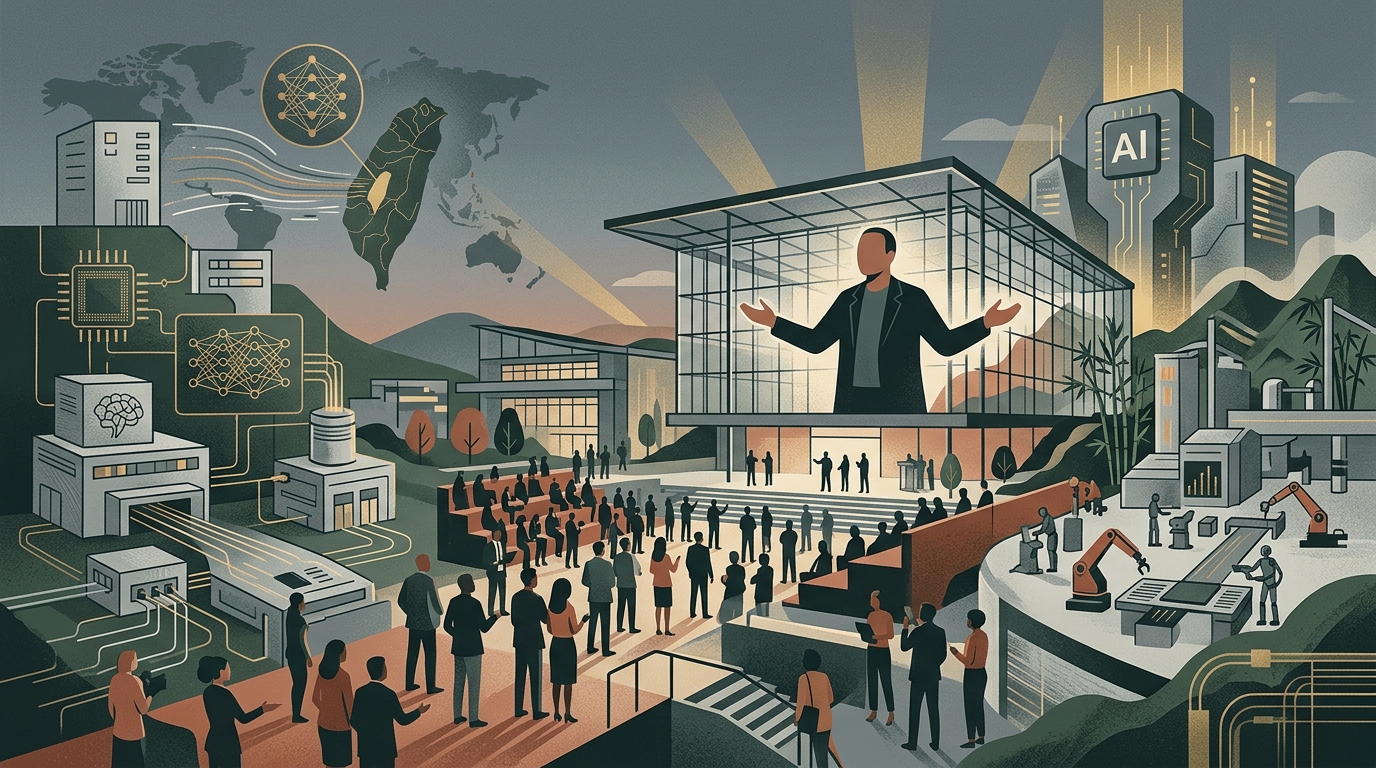
In the heart of Taipei, where the pulse of the global semiconductor supply chain beats strongest, Computex 2026 is more than just a tech trade show; it is the triumphant return of Jensen Huang. The Nvidia CEO, the man who transformed a graphics card company into the ultimate arbiter of the global economy, took the stage to herald a new era where artificial intelligence is no longer just code, but a physical entity.
The Architecture of Dominance: From Blackwell to Rubin
Huang’s keynote went far beyond simple product updates. He unveiled the next step in Nvidia’s chip architecture, the "Rubin" platform, which promises to outperform the already formidable Blackwell series by a factor of ten. Nvidia’s strategy is clear: accelerating the development cycle from two years to one. This breakneck pace leaves little room for competitors like Intel and AMD to react, as Nvidia now controls not only the hardware but the entire software ecosystem through CUDA.
Huang emphasized that we are at the dawn of "Physical AI." This involves the integration of AI into the real world through robotics and autonomous systems. Nvidia is no longer just selling chips; it is selling "AI factories." This infrastructure will allow nations and corporations to produce their own intelligence, turning data centers from cost centers into value-generating production units.
Taiwan as the Silicon Shield of Global Security
Huang’s presence in Taiwan carries profound political weight. Born in Taipei, Huang is treated as a national hero. In his speech, he praised the importance of local partners, from TSMC to Foxconn and Quanta. This "semiconductor diplomacy" highlights that the global economy depends on a small island nation currently at the center of intense geopolitical rivalry.
Nvidia is investing billions in Taiwan, establishing new research and development centers. This move is as strategic as it is economic. By linking the fate of the world’s most valuable company to the security of Taiwan, Huang sends a message to global powers: a disruption in production here would mean the end of the AI revolution for everyone.
The Rise of Humanoid Robotics
One of the most striking segments of the presentation was the demonstration of the Isaac platform for humanoid robot development. Huang predicted that in the near future, robots will be as common as cars. Using Omniverse, the digital twin of our world, Nvidia trains robots in virtual environments before they ever set foot on real ground. This approach dramatically reduces the cost and time of development, bringing automation to sectors previously thought to be exclusively human, such as elderly care and delicate surgery.
- The new Rubin architecture will launch in 2026, offering unprecedented energy efficiency.
- Nvidia is promoting the concept of "Sovereign AI," encouraging nations to keep their data and computing power within borders.
- The partnership with TSMC remains the cornerstone of the company’s manufacturing capability.
Closing his keynote, Huang stood before a screen that read "Taiwan: The Unsung Hero of the AI Age." It was a moment of recognition for the thousands of engineers working in the shadows to power the dreams of Silicon Valley. For Nvidia, Computex 2026 was not just a business obligation, but a confirmation that the world of tomorrow is being built today, with silicon materials and architecture from Taipei.