The San Francisco courtroom transformed on Wednesday into a theater of revelations that are reconstructing the history of modern artificial intelligence. According to testimony and documents presented to the jury, Elon Musk, at a critical juncture in his relationship with Sam Altman, seriously considered offering the OpenAI CEO a seat on the board of directors of Tesla Inc. This disclosure sheds new light on Musk's attempts to consolidate the AI ecosystem under the umbrella of his electric vehicle giant, a move that could have radically altered the global technological map.
The Convergence Strategy: Tesla and OpenAI
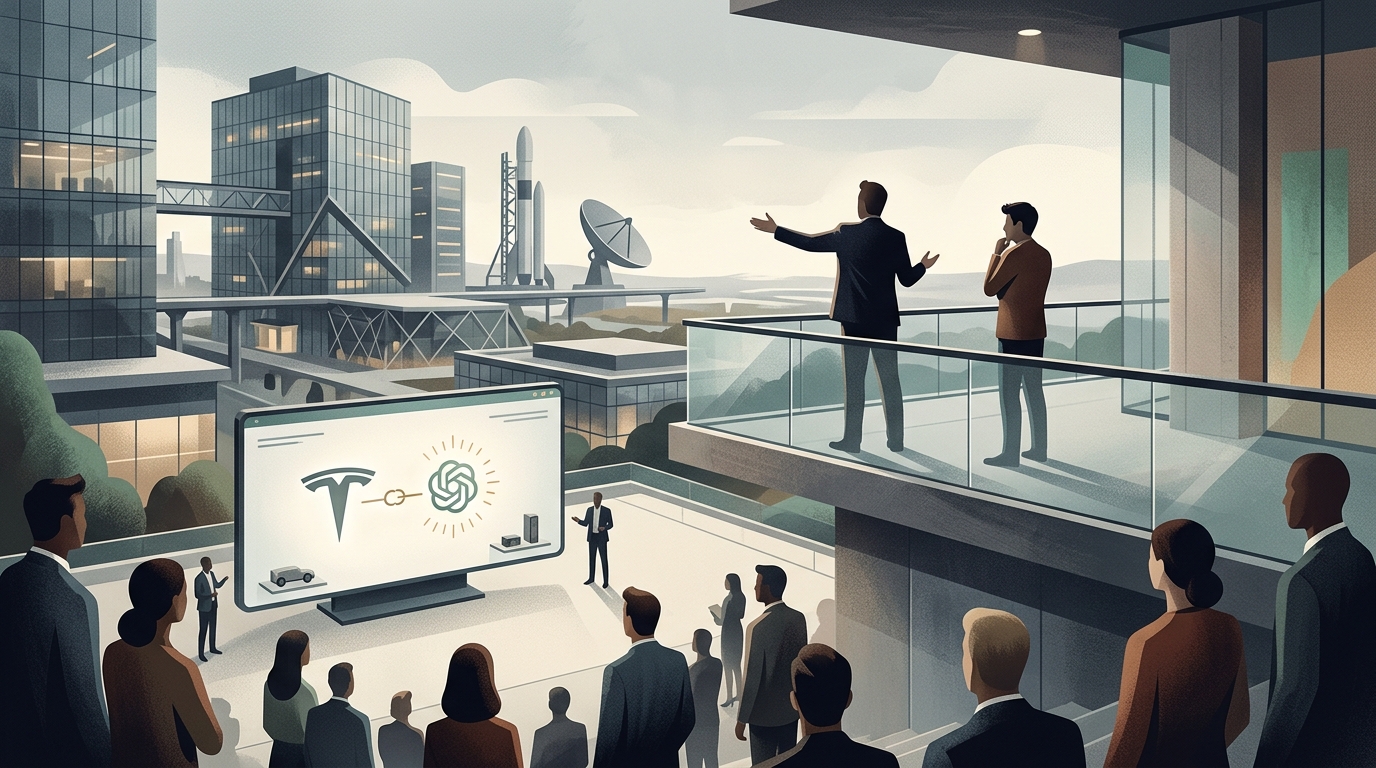
The testimony heard in court describes an era, around 2018, when the boundaries between Tesla and OpenAI were far more blurred than they are today. Musk, who was one of OpenAI’s primary financial backers at its founding as a non-profit in 2015, viewed Tesla not merely as a car manufacturer but as an "AI and robotics company." The offer of a board seat to Altman was not just a gesture of professional courtesy, but a strategic attempt to align the interests of the two entities.
Lawyers involved in the case presented emails and internal memos suggesting that Musk believed OpenAI could never compete with Google (DeepMind) without the vast resources and computational power of Tesla. Bringing Altman onto the Tesla board would have been the connective tissue for a future absorption or a tight partnership that would have made Musk the ultimate sovereign of AI development. However, the refusal of Altman and the rest of OpenAI’s leadership to hand over the reins to Musk served as the catalyst for the subsequent rift.
From Alliance to Legal Warfare
The current trial focuses on Musk’s allegations that OpenAI betrayed its original mission to develop AI for the benefit of humanity, turning into a "de facto closed-source subsidiary" of Microsoft. OpenAI’s defense, on the other hand, is using this new evidence to prove that Musk’s motives were always about control and personal dominance. The fact that Musk wanted Altman at Tesla, according to OpenAI’s lawyers, undermines the argument that Musk was solely concerned with the organization's "non-profit" status.
"Mr. Musk wasn't bothered by the profit; he was bothered that he wasn't the one controlling it," one of OpenAI’s legal representatives remarked during the proceedings. The revelation about the Tesla board seat reinforces the image of a Musk who was trying to "buy" Altman’s loyalty by offering him access to one of the world's most valuable companies. This failed negotiation led to Musk’s departure from OpenAI in 2018 and the beginning of a public and legal confrontation that continues to this day.
Implications for Shareholders and the Market
For Tesla investors, this news brings mixed emotions. On one hand, it confirms Musk’s long-standing vision for Tesla as an AI leader. On the other, it raises questions about corporate governance and how Musk utilizes board positions as tools of personal diplomacy. Tesla, which is currently investing billions into its Full Self-Driving (FSD) system and the Optimus humanoid robot, is at a critical crossroads where leadership credibility is of paramount importance.
- The revelation highlights Tesla's historical reliance on Musk’s AI vision.
- The trial is expected to last several weeks, with further disclosures regarding the Microsoft-OpenAI relationship.
- The market is watching closely, as the trial's outcome could impact intellectual property rights over GPT models.
In conclusion, this testimony is not just a detail in a legal dispute; it is the missing piece of a puzzle that explains why the AI industry is so polarized today. Had Altman accepted the position at Tesla, Microsoft might never have become the dominant player in AI, and Tesla might be a very different company today. History, however, was written through conflict, and the jurors must now decide whether those conflicts were the result of ideological disagreement or a wounded business ambition.