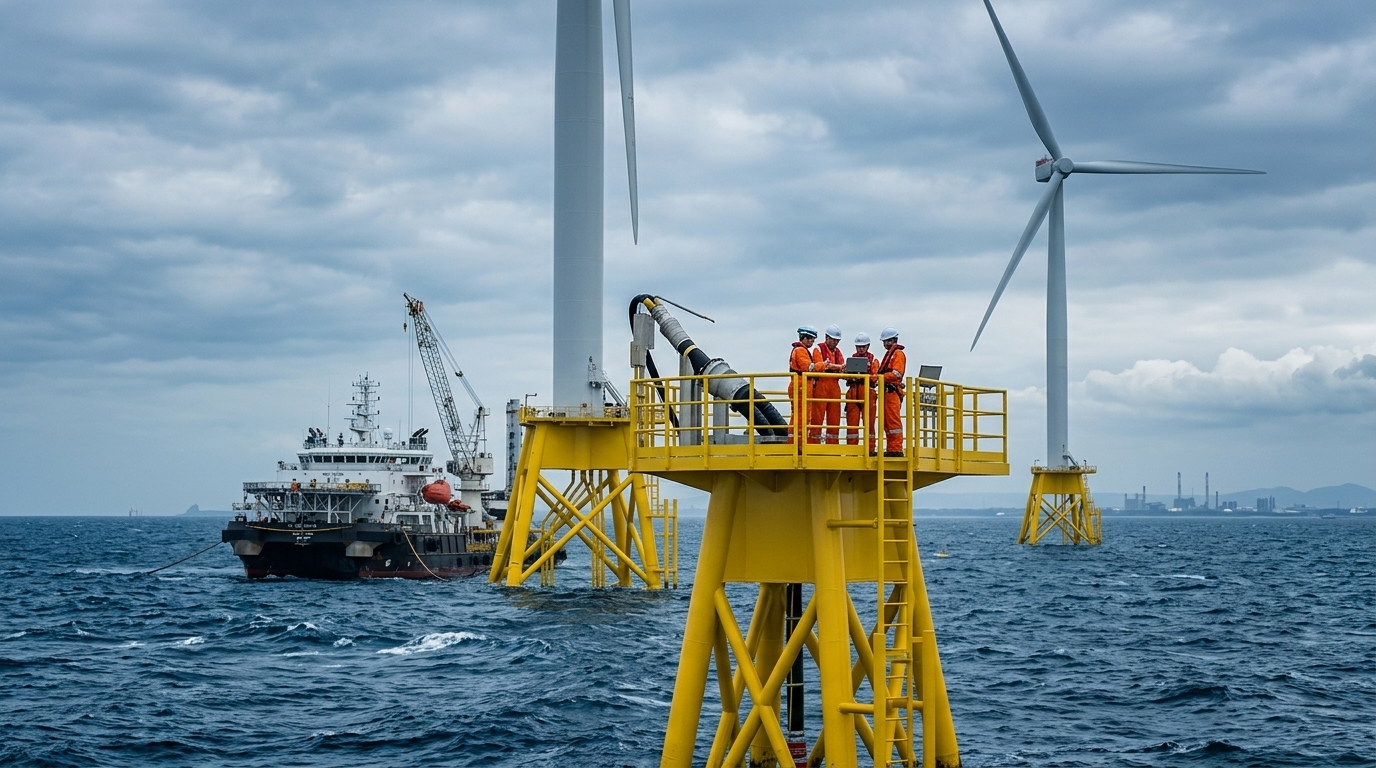
As we navigate the first half of 2026, the global thirst for computational power shows no signs of waning. At the heart of this technological revolution lies Taiwan Semiconductor Manufacturing Co. (TSMC), which now finds itself balancing two conflicting realities: the explosive demand for AI chips and Taiwan's limited energy capacity. The giant's recent decision to invest billions in offshore wind farms is not merely a move of corporate social responsibility, but a survival strategy on an island teetering on the edge of an energy crisis.
The Energy Price of Technological Supremacy
Manufacturing next-generation semiconductors, especially at the 3nm and 2nm scales required for training AI models, is a staggeringly energy-intensive process. The use of Extreme Ultraviolet (EUV) lithography, which allows for the etching of billions of transistors onto a single chip, requires up to ten times more electricity than previous methods. According to market analysts, TSMC now consumes nearly 7-9% of Taiwan's total electricity, a figure expected to double by the end of the decade.
Taiwan, however, faces structural problems in its energy mix. With the decision to phase out nuclear power and a reliance on fossil fuel imports exceeding 90%, the island is vulnerable. Frequent power outages in recent years have caused investor concern, as a pause of just a few minutes on TSMC's production lines can cost hundreds of millions of dollars and trigger a global supply chain shock.
Wind Power as a Lifeline
To secure its operations, TSMC has signed the world's largest Power Purchase Agreements (PPAs) with companies like Denmark's Ørsted. The strategy focuses on offshore wind farms in the Taiwan Strait, an area with some of the strongest winds on the planet. This move serves three purposes: first, securing stable energy prices in the long term; second, meeting the strict zero-carbon requirements of its customers (such as Apple and Nvidia); and third, easing the pressure on the national grid.
- Investments in offshore wind farms with a total capacity of several Gigawatts.
- 20-year PPA agreements to ensure stable costs.
- Development of large-scale battery energy storage systems.
- Collaboration with the government to modernize the transmission grid.
However, the transition is not without obstacles. Installing wind turbines in a region frequently hit by typhoons and located at the center of geopolitical tensions with China carries significant risks. Furthermore, the local industry cannot always keep up with the pace demanded by TSMC, leading to delays in infrastructure projects.
Geopolitics and the 'Silicon Shield'
TSMC's energy security is inextricably linked to Taiwan's national security. The so-called 'Silicon Shield' suggests that the global economy is so dependent on Taiwan's chips that major powers have a vested interest in protecting the island. But if production stops due to power shortages, this shield cracks. The Taipei government is under pressure to revise its energy policy, as the tech industry demands more and 'green' energy faster than current state infrastructure can provide.
"It is no longer just about who has the best chip design, but who has the energy to manufacture them. Energy is the new battlefield of technological sovereignty," says a leading semiconductor market analyst.
In conclusion, TSMC's pivot to wind power is a bold response to an existential threat. As artificial intelligence reshapes the world, Taiwan's ability to fuel this digital brain with clean energy will determine not only the company's future but also global economic stability for decades to come.