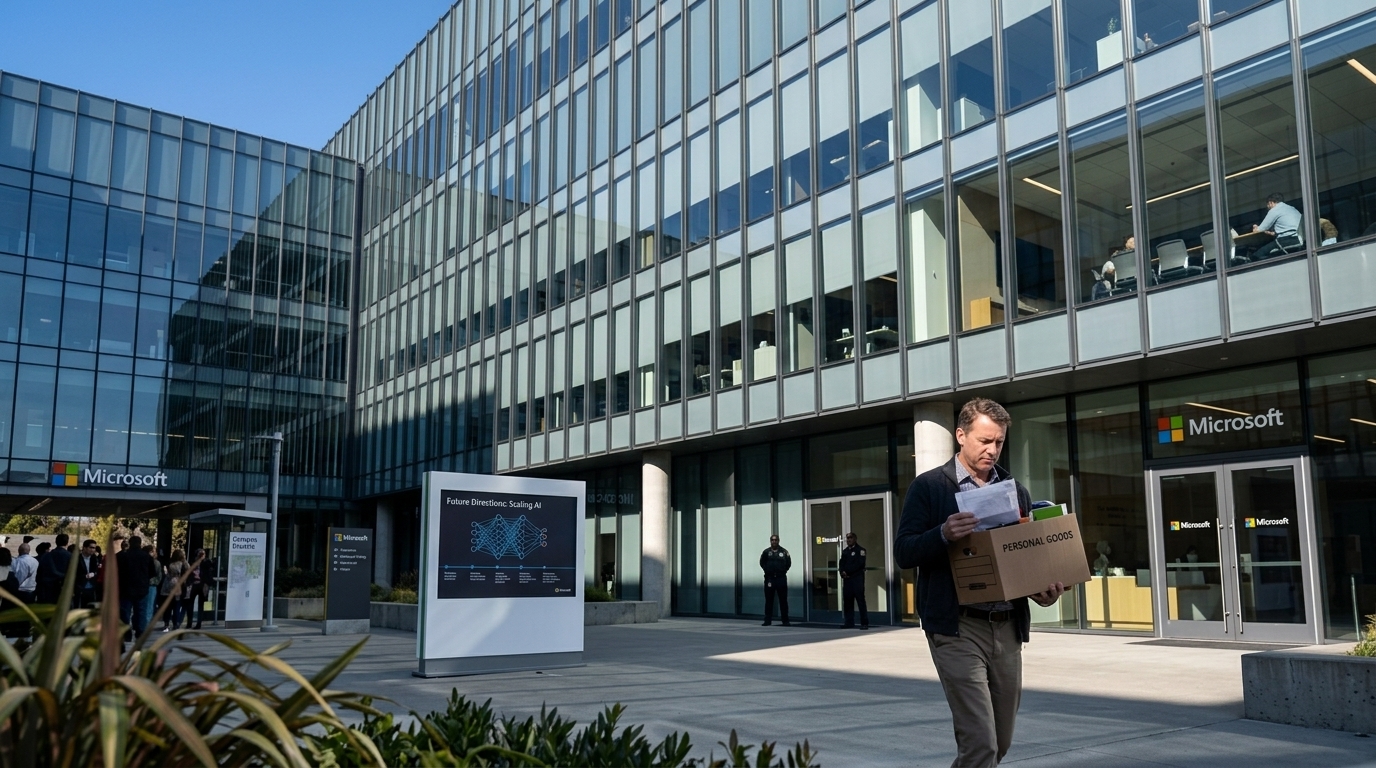
In a move that underscores the profound transformation occurring within the technology sector, Microsoft is proceeding with an extensive voluntary separation program that could impact up to 8,750 employees in the United States. The news, which surfaced through internal leaks and industry reports, reveals a carefully orchestrated strategy of "quiet" workforce reduction, steering clear of the social and market turbulence that typically follows mass layoff announcements.
The Art of the 'Golden Handshake'
Microsoft’s decision to offer voluntary buyout packages is no coincidence. In the current economic climate, where Big Tech companies are under intense scrutiny for their labor practices, voluntary departures offer a more palatable alternative. According to sources close to the company, these packages include generous severance pay, extended healthcare coverage, and outplacement services. Through this approach, leadership under CEO Satya Nadella aims to reduce operating expenses without irreparably damaging employee morale or the company’s reputation as a top-tier employer.
However, this move also highlights a stark reality: Microsoft, despite reporting record profits, feels the need to shed roles that are now considered redundant or misaligned with its new direction. The departments expected to be most affected include administrative roles, marketing, and certain sales divisions, as well as legacy software units that are no longer at the cutting edge of the company's roadmap.
Artificial Intelligence as a Catalyst for Change
The real "elephant in the room" behind this restructuring is Artificial Intelligence (AI). Microsoft has committed billions of dollars to OpenAI and the integration of Copilot across its entire product ecosystem. This pivot requires massive capital—not just for algorithmic development, but primarily for the construction and maintenance of gargantuan data centers and the acquisition of specialized GPUs from Nvidia.
Capital reallocation is imperative. For every dollar saved by reducing headcount in traditional sectors, the company can invest more into the AI arms race. Furthermore, AI itself is beginning to automate Microsoft’s internal processes—from code generation via GitHub Copilot to customer support management—rendering certain positions less essential. It is a modern irony: the very individuals who built the tools of the future are now seeing those tools take over portions of their responsibilities.
Financial Implications and Market Reaction
Wall Street investors tend to reward such moves toward "operational efficiency." Microsoft’s stock remains at historic highs, as the market perceives the company to be proactively adapting to new conditions. Unlike 2023, when tech layoffs were seen as a sign of crisis, in 2024 and 2026 these moves are interpreted as strategic optimization.
- Freeing up capital for investments in cloud and AI infrastructure.
- Reducing long-term payroll and benefits liabilities.
- Aligning the workforce with emerging technological priorities.
- Avoiding the negative headlines of "mass layoffs" that could trigger political scrutiny.
Nevertheless, the challenge for Microsoft remains talent retention. A voluntary exit program always carries the risk that the most capable employees—those confident in their ability to find new work quickly—will be the first to take the package, potentially leaving behind a vacuum of institutional knowledge and experience.
The Future of Work in Big Tech
Microsoft’s case is not isolated. It is part of a broader pattern observed at Google, Amazon, and Meta. The era of limitless headcount expansion has definitively ended. In its place, a "Lean Tech" model is emerging, where efficiency per employee is the dominant metric of success. For workers in the industry, the message is clear: continuous upskilling and AI fluency are no longer optional but a prerequisite for survival. Microsoft, as a leader in this transition, is setting the template for how a corporate titan can shed its skin without triggering a social outcry—at least for now.