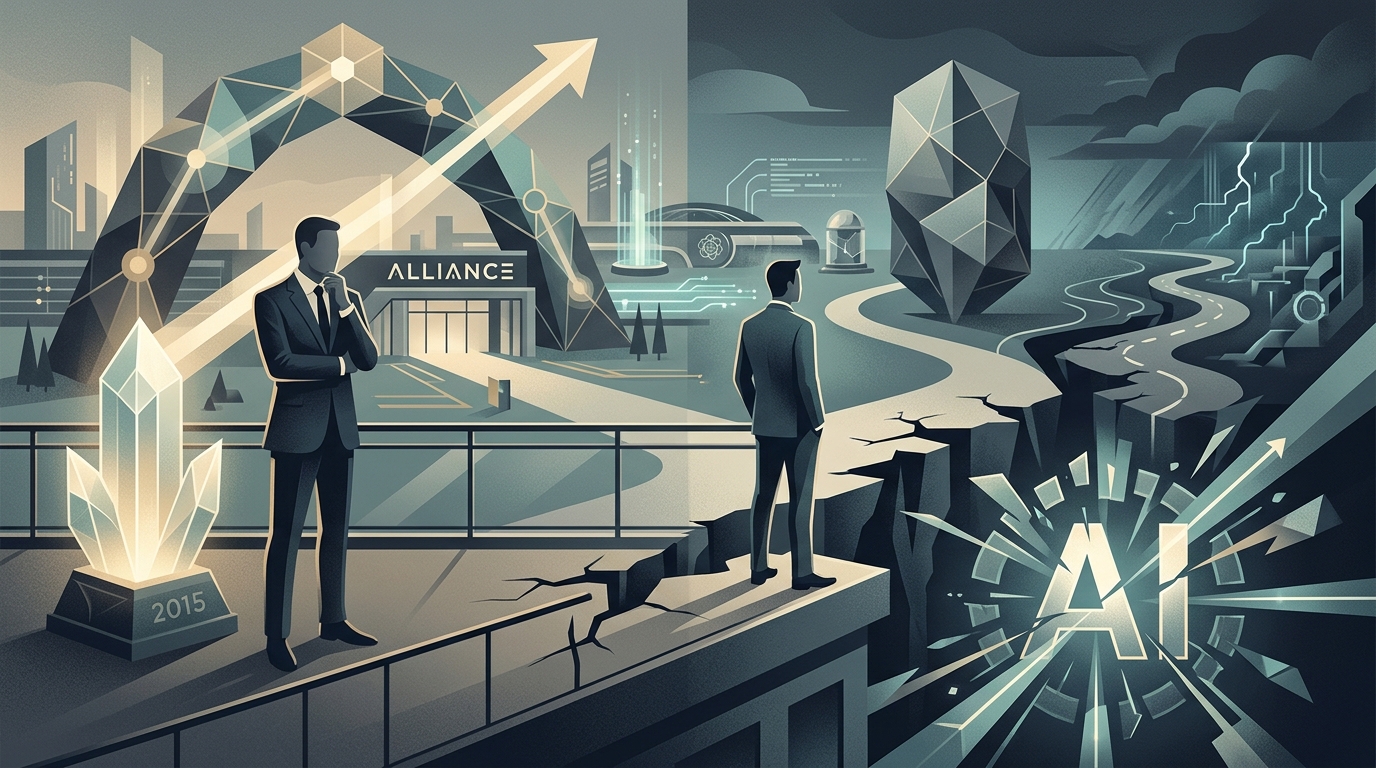
The history of modern artificial intelligence is not merely a chronicle of algorithms and compute power; it is a saga of personal ambition, betrayed promises, and an epic clash between two of Silicon Valley's most formidable titans: Sam Altman and Elon Musk. What began in 2015 as a romantic, almost utopian endeavor to "save" humanity from the existential threat of unchecked AI has devolved into a bitter legal and corporate feud that is reshaping the technological landscape.
The Genesis of an Alliance Against Monopoly
In 2015, the AI landscape was dominated by Google, which had recently acquired DeepMind. For Elon Musk and Sam Altman, then president of Y Combinator, this concentration of power in the hands of a single corporation represented an existential risk. Over a dinner in Menlo Park, the two men, along with Greg Brockman and other elite researchers, decided to found OpenAI. The mission was explicit: a non-profit organization that would develop Artificial General Intelligence (AGI) and open-source its findings, ensuring that the benefits of superintelligence were distributed to all of humanity rather than just a handful of shareholders.
Musk provided the initial financial oxygen and the cultural gravity to attract top talent, while Altman handled the strategic architecture. For a brief period, it seemed this duo would be the definitive counterweight to the commercialization of intelligence. However, the cracks soon began to appear. The staggering capital requirements necessary to compete with Big Tech started to collide with OpenAI's non-profit constraints.
The 2018 Schism and the Pivot to Profit
2018 marked the definitive turning point. Reports suggest that Musk attempted to take full control of OpenAI, arguing that the lab had fallen dangerously behind Google. When Altman and the other founders refused his takeover bid, Musk departed the board, citing a potential conflict of interest with Tesla’s own AI ambitions. Yet, the reality was more nuanced: it was the beginning of a profound ideological and personal estrangement.
Under Altman's stewardship, OpenAI underwent a radical metamorphosis. In 2019, it created a "capped-profit" subsidiary, allowing it to raise billions in investment, most notably from Microsoft. This move, while commercially brilliant—leading directly to the release of ChatGPT—was viewed by Musk as a total betrayal of the founding mission. OpenAI was no longer "Open" nor non-profit; in Musk's view, it had become a de facto closed-source subsidiary of the world's largest software company.
Legal Warfare and the Stakes of the Future
The recent lawsuit filed by Musk against OpenAI and Altman is the climax of this long-simmering resentment. Musk alleges that the company has abandoned its altruistic roots in favor of maximizing profits for Microsoft. In response, OpenAI has taken the unusual step of publishing old emails from Musk, which suggest that he once supported the idea of massive fundraising and even a potential merger with Tesla to secure the necessary resources.
This conflict highlights the central dilemma of our age: Can the most powerful technology ever devised by man be developed outside the traditional market structures? Altman argues that only through market-driven capital can safe AGI be achieved. Musk, having since launched his own AI firm, xAI, contends that the current path leads to a proprietary, controlled intelligence that serves corporate masters rather than the public good.
- OpenAI was conceived as a non-profit shield against Google's dominance.
- The 2019 shift to a capped-profit model allowed Microsoft to exert massive influence.
- Musk’s lawsuit claims a "breach of contract" regarding the original non-profit mission.
- Altman maintains that the pivot was the only way to survive the AI arms race.
Ultimately, the Altman-Musk rivalry is about more than just two billionaires' egos. It is a battle for the soul of AGI. If Altman’s vision prevails, the model of closed, commercially-backed development will become the industry standard. If Musk succeeds in disrupting this narrative, we may see a forced return to open-source transparency—though critics wonder if Musk’s own xAI is truly any more altruistic than the entity he helped create and now seeks to dismantle.