In the era of digital surveillance, the concept of "profiling" is taking on a new, chilling dimension. Meta, the social media giant that once promised to "bring the world closer together," now appears to be turning its gaze inward, transforming its own employees into guinea pigs for algorithmic efficiency. According to recent reports, Mark Zuckerberg’s company is implementing an extensive program to monitor computer activity among its US-based employees, specifically to harvest data for training Artificial Intelligence (AI) models.
The Anatomy of Surveillance: Beyond the Simple Login
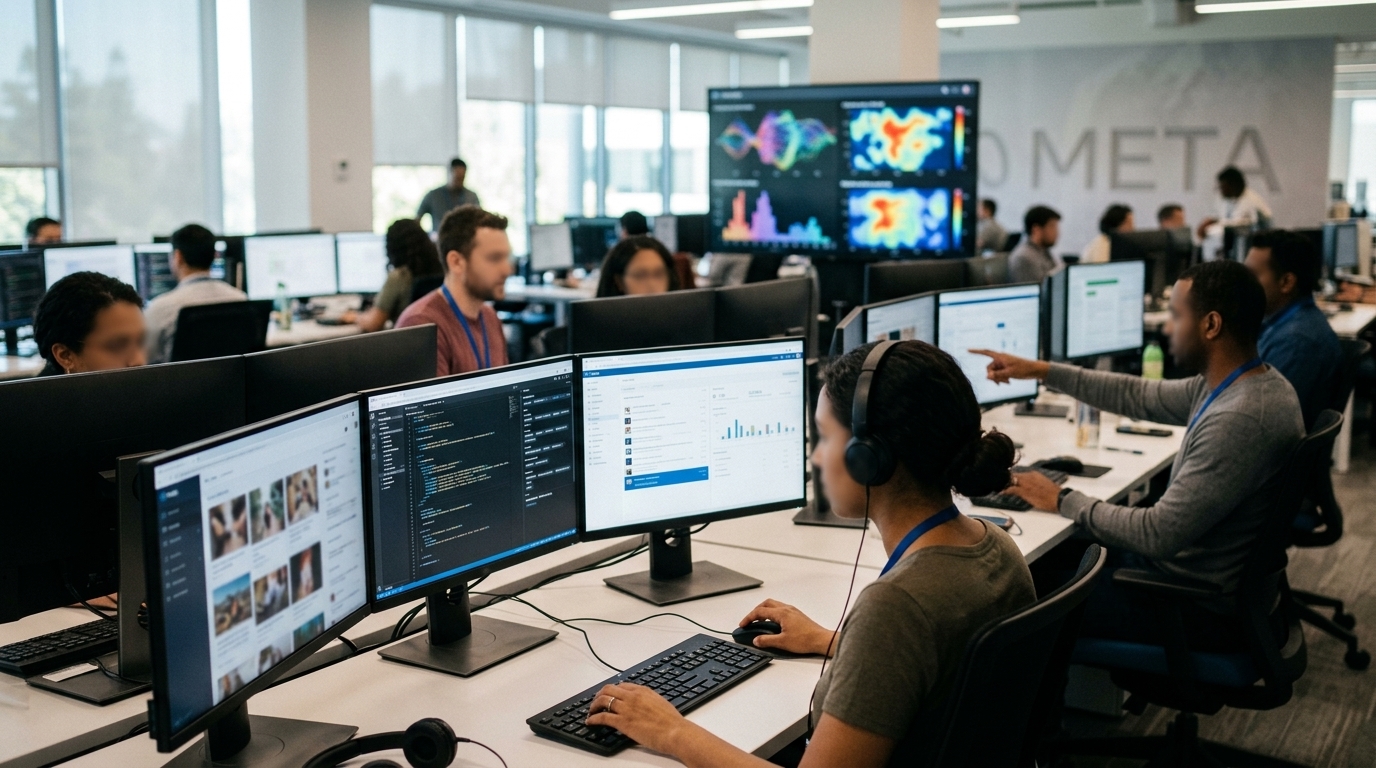
This is not merely a check on attendance or whether someone is logged into the system. Meta is reportedly collecting granular data covering every aspect of digital interaction: from the time an application remains active to the frequency of clicks and mouse movements. This "digital footprint" is not just being used to evaluate productivity; it serves as a massive database intended to teach future AI systems how to "work" like humans.
This strategy is part of the broader "Year of Efficiency" declared by Zuckerberg. Following massive layoffs and restructuring, management seems to be seeking ways to automate even the most complex administrative or technical tasks. The question that arises is clear: Are Meta’s employees, whether unknowingly or under duress, training their own eventual replacements?
The Ethics of "Training Through Monitoring"
The use of "bossware" (employer surveillance software) is not new, but its connection to the training of Generative AI represents a critical turning point. In traditional surveillance, the goal was discipline. In Meta’s new model, the goal is the extraction of knowledge and behavior. When a software engineer or a data analyst works, their subtle movements, their pauses for thought, and their problem-solving patterns are recorded as "gold" for refining Large Language Models (LLMs).
- Psychological Pressure: Knowing that every second of idle time is logged creates an environment of constant stress, stifling creativity.
- Blurred Boundaries: Where does workflow optimization end and the violation of privacy begin?
- The Legal Vacuum: While the GDPR in Europe sets strict limits, the US legal framework allows employers broad freedom to monitor the equipment they provide.
"The transformation of human labor into data for processing strips work of its dignity and turns it into a mere sequence of bits," say labor ethics experts.
The Backlash and the Future of Work
Internal reactions at the company are intense, though often whispered due to the fear of layoffs. Many employees feel that Meta views them as disposable components of a machine that will soon no longer need them. Furthermore, there is the risk that this data could be used for "algorithmic layoffs," where the system flags the least "efficient" workers based on cold numbers, without accounting for quality or strategic thinking.
Meta’s move serves as a harbinger for what is to come across the entire tech industry. If a company with Meta’s size and influence legitimizes this level of internal espionage, others are certain to follow. The stake is not just office privacy, but the very nature of human labor at the dawn of the AI age. As computers "learn" when we sleep and when we work, the line between human and tool becomes increasingly blurred.