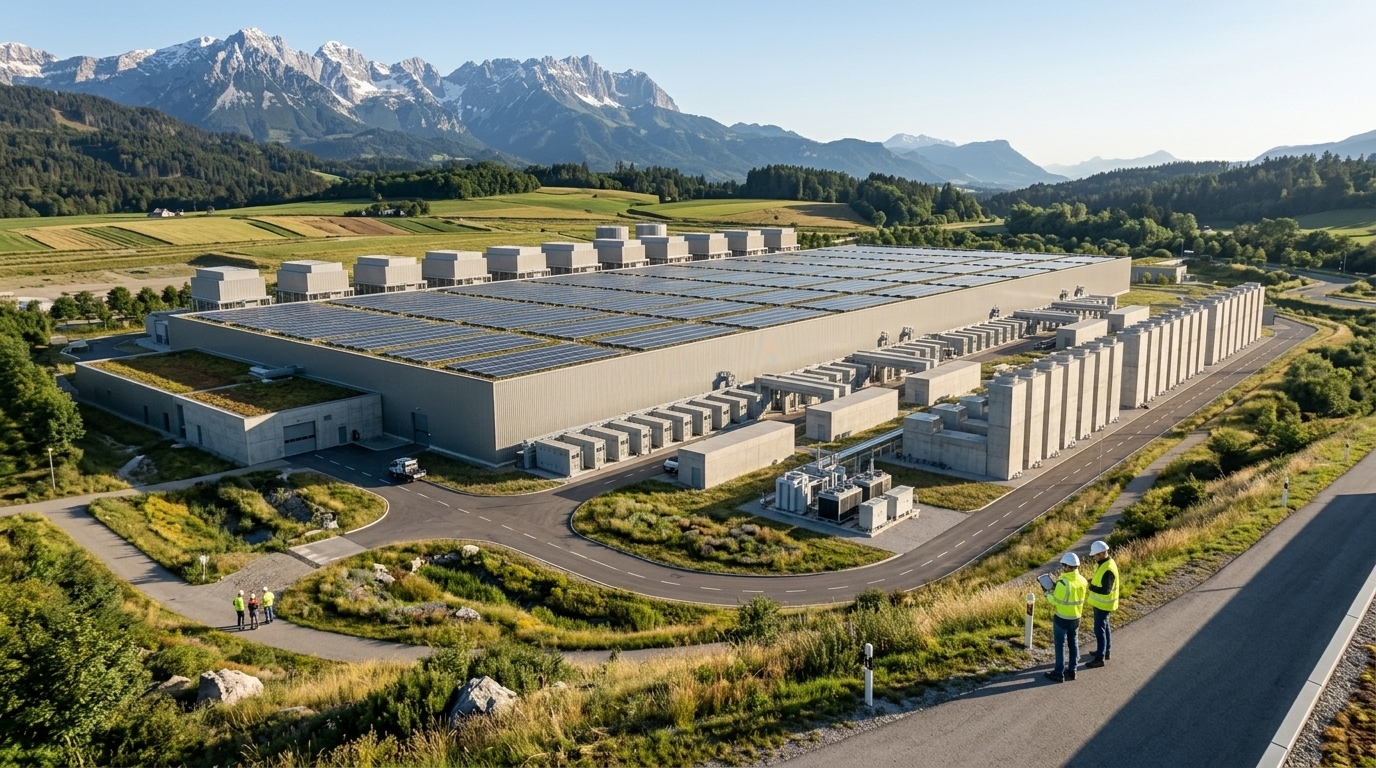
Google’s announcement of its first-ever data center in Kronstorf, Upper Austria, is more than just a corporate expansion; it is the culmination of a decade-long strategy to anchor the tech giant in the heart of Europe. With a long-term investment plan projected to reach €1 billion in the region, Google is transforming the Alpine foothills into a digital hub that will power Cloud and Artificial Intelligence needs across the continent.
The Strategic Significance of Kronstorf
Why Kronstorf? The selection of this specific location was far from accidental. Austria offers a unique blend of political stability, a highly skilled workforce, and, crucially, access to a robust renewable energy grid. While the new data center will directly create 100 high-tech jobs, the true economic impact lies in the surrounding ecosystem. From construction firms to maintenance providers and local energy suppliers, this investment acts as a powerful catalyst for the regional economy.
Located near Linz, a city with a deep-rooted industrial heritage now pivoting toward digital innovation, Kronstorf provides the ideal infrastructure. Google Austria’s leadership emphasized that this facility will serve as the backbone for Google Cloud services, enabling Austrian enterprises to keep their data within national borders, thereby strengthening their digital sovereignty and compliance with local regulations.
Green Energy and Sustainability in the Alps
One of the most pressing concerns surrounding large-scale data centers is their massive energy consumption. Google has committed to operating on 24/7 carbon-free energy (CFE) by 2030. Austria, with its extensive network of hydroelectric plants and growing wind power capacity, serves as the perfect laboratory for this ambitious goal. The Kronstorf facility is designed to be among the most efficient in the world, utilizing advanced cooling systems that leverage the local climate to minimize energy waste.
- Utilization of 100% renewable energy in partnership with local utility providers.
- Potential for heat recovery systems to supply local district heating networks.
- Minimized water usage through advanced closed-loop cooling technologies.
Digital Sovereignty and the European Context
In an era where the European Union is pushing for greater strategic autonomy regarding data, having physical infrastructure on European soil is paramount. The Austrian data center offers European companies lower latency and seamless compliance with strict GDPR standards, without compromising the raw computational power required by modern AI applications. This move is also seen as a strategic response to competition from Microsoft and AWS, both of which are aggressively expanding their footprints in Central Europe.
“Our investment in Austria is a vote of confidence in the country’s digital economy and its commitment to sustainability,” a Google spokesperson noted during the announcement event.
In conclusion, the Kronstorf data center is not merely a warehouse full of servers. It is a symbol of Austria’s transition from a traditional industrial power to a key player on the global digital stage. While challenges remain—particularly regarding environmental management and community integration—the vision of an "Alpine Silicon Valley" is becoming a reality. As AI continues to demand unprecedented levels of compute, Austria's role as a neutral, green, and high-tech hub is set to grow exponentially.