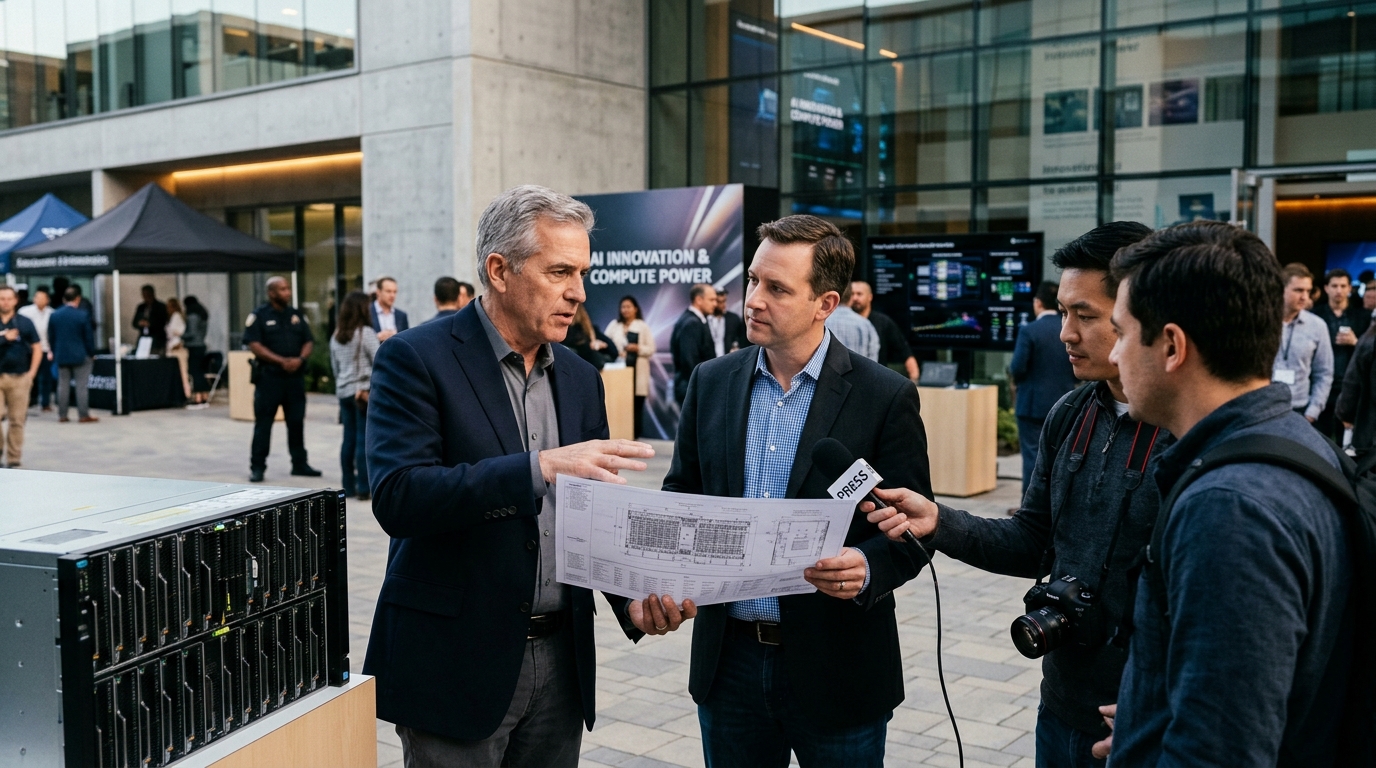
In the ever-shifting landscape of the global technology scene, May 5, 2026, marks a critical turning point for the AI hardware market. Recent announcements from Advanced Micro Devices (AMD) and Super Micro Computer (SMCI) are not merely quarterly financial reports; they are a clear indication that Nvidia's monopoly on AI infrastructure is beginning to face substantial pressure from an increasingly capable field of competitors.
AMD and the Strategy of the 'Viable Alternative'
Dr. Lisa Su, CEO of AMD, presented a forecast that outpaced Wall Street analysts' expectations, highlighting the surging demand for the Instinct MI350 and MI400 accelerators. In a market hungry for computational power, AMD has successfully positioned itself not just as a lower-cost solution, but as an equal technological partner for cloud giants (hyperscalers) like Microsoft and Meta.
The company's strategy is now heavily focused on open architecture. While Nvidia retains its users through the proprietary CUDA ecosystem, AMD is investing massively in its ROCm software stack, which allows developers to port their applications with minimal friction. This move appears to be paying off in 2026, as enterprises seek to break free from vendor lock-in. Revenue projections for AMD's AI chips for the current year have been revised upward, reaching levels that seemed inconceivable just two years ago.
Super Micro: Returning to Profitability Through Cooling
Simultaneously, Super Micro Computer, the primary server manufacturer for AI data centers, saw its stock jump significantly in extended trading. The key to success was not just sales volume, but an impressive improvement in profit margins. Super Micro made an early bet on direct-to-chip liquid cooling technology, which has become a necessity for the power-hungry systems of 2026.
The margin improvement suggests the company has moved past the supply chain bottlenecks that plagued it in 2025 and has gained greater bargaining power over its customers. As data centers become denser and hotter, Super Micro's ability to deliver ready-to-use, pre-configured racks with integrated cooling is its primary competitive advantage. Analysts note that SMCI acts as the 'accelerant' for AI adoption, turning raw silicon into functional, scalable infrastructure.
Geopolitics and the Energy Challenge
Beyond the raw numbers, the rise of AMD and Super Micro reflects a deeper shift in market priorities. In 2026, energy efficiency has become as critical as raw processing speed. Governments in Europe and Asia are now imposing strict limits on data center power consumption, forcing hardware manufacturers to innovate in power management.
- AMD is leveraging its Chiplet architecture to reduce power consumption per operation.
- Super Micro is promoting the 'Green Data Center' concept as a core pillar of its commercial strategy.
- Supply chain diversification is mitigating risks associated with geopolitical tensions in East Asia.
"The era of AI hardware scarcity is ending; the era of AI hardware efficiency is beginning,"notes a senior analyst at a leading technology firm. This sentiment captures the current market mood perfectly.
Conclusion: A Mature AI Ecosystem
In conclusion, the AI hardware market is entering a phase of maturity. The era of 'buy whatever is available' is giving way to an era of strategic choices, where total cost of ownership (TCO), energy efficiency, and software flexibility determine the winners. AMD and Super Micro have proven that there is room for more than one sovereign in the kingdom of artificial intelligence. As we look toward the second half of 2026, the focus will shift from simply building models to running them sustainably and profitably.