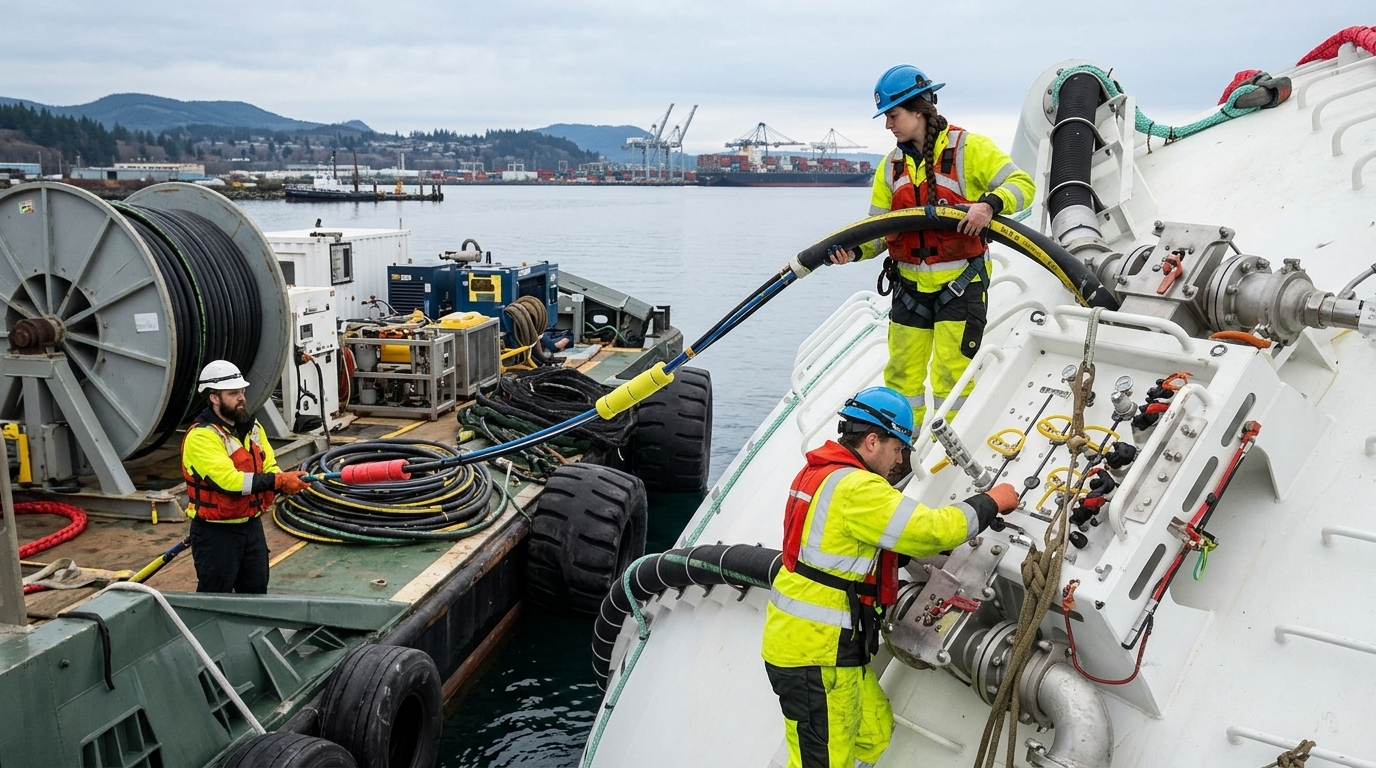
The insatiable hunger of Artificial Intelligence for power and cooling is driving Silicon Valley into uncharted waters—literally. As terrestrial power grids reach their limits and environmental backlash over water consumption intensifies, a new generation of startups, led by Panthalassa, is turning to the ocean. With a massive $200 million investment, the company has announced the deployment of the first floating AI data centers in the Pacific Ocean by 2026, marking a radical shift in the infrastructure of our digital world.
The Thermodynamics of the Deep: Why the Ocean?
The biggest hurdle for modern AI models, such as GPT-5 and its successors, isn't just the code—it's the heat. Nvidia’s H100 and B200 processors generate immense thermal energy that requires expensive and energy-intensive cooling systems. On land, this translates into billions of gallons of freshwater evaporated in cooling towers. At sea, the problem is solved by physics: the ocean's vast thermal mass acts as an infinite heat sink.
Panthalassa’s approach relies on sealed capsules submerged at shallow depths, where water temperatures remain consistently low. Through heat exchangers, the servers' heat is transferred directly to the seawater, eliminating the need for traditional air conditioning. According to the company, this could reduce operating costs by up to 40%, making the training of new models economically viable at a time when profit margins are tightening.
Wave Power and Autonomy
The most ambitious element of the venture isn't the cooling, but the power supply. Panthalassa’s floating data centers are designed to be energy-autonomous, utilizing a combined technology of wave energy conversion and floating photovoltaic systems. Unlike land-based data centers that strain national grids, these "abyssal nodes" generate their energy on-site.
"We aren't just moving computers to the water. We are redesigning the relationship between computing and the environment. The ocean isn't just our refrigerator; it's our battery," said Panthalassa’s CEO during the project launch.
The use of wave energy offers a more consistent power flow compared to land-based wind or solar, as ocean swells are perpetual. However, this technology remains experimental at such a scale, and many skeptics wonder if the generators will withstand salt corrosion and the sheer force of open-ocean storms.
Environmental and Geopolitical Ripples
Despite the promises of "green" technology, moving data centers to the seas raises serious questions. Marine biologists warn of "thermal pollution." While the ocean is vast, localized temperature increases around the capsules could affect micro-ecosystems and marine life. Furthermore, the use of chemicals to prevent biofouling (the accumulation of organisms on surfaces) poses another environmental threat.
Beyond the environment, there is a geopolitical dimension. Placing massive computing power in international waters creates a legal paradox. What law governs the data stored on a platform 200 miles away from any coast? The possibility of creating "digital tax havens" or data processing centers that bypass EU (GDPR) or US regulations is a looming concern. Governments will soon be forced to decide whether their sovereignty ends where the deep blue begins.
Conclusion: A New Era of Liquid Computing
The $200 million investment is just the beginning. If Panthalassa’s experiment succeeds, we may witness a mass migration of the cloud toward the oceans. This could solve the problem of locating centers near cities, where land is expensive and power is scarce. However, the challenge of maintenance in one of the planet's most hostile environments remains. Silicon Valley is betting that technology can tame the waves, but the ocean has a way of reminding humans of their limits.