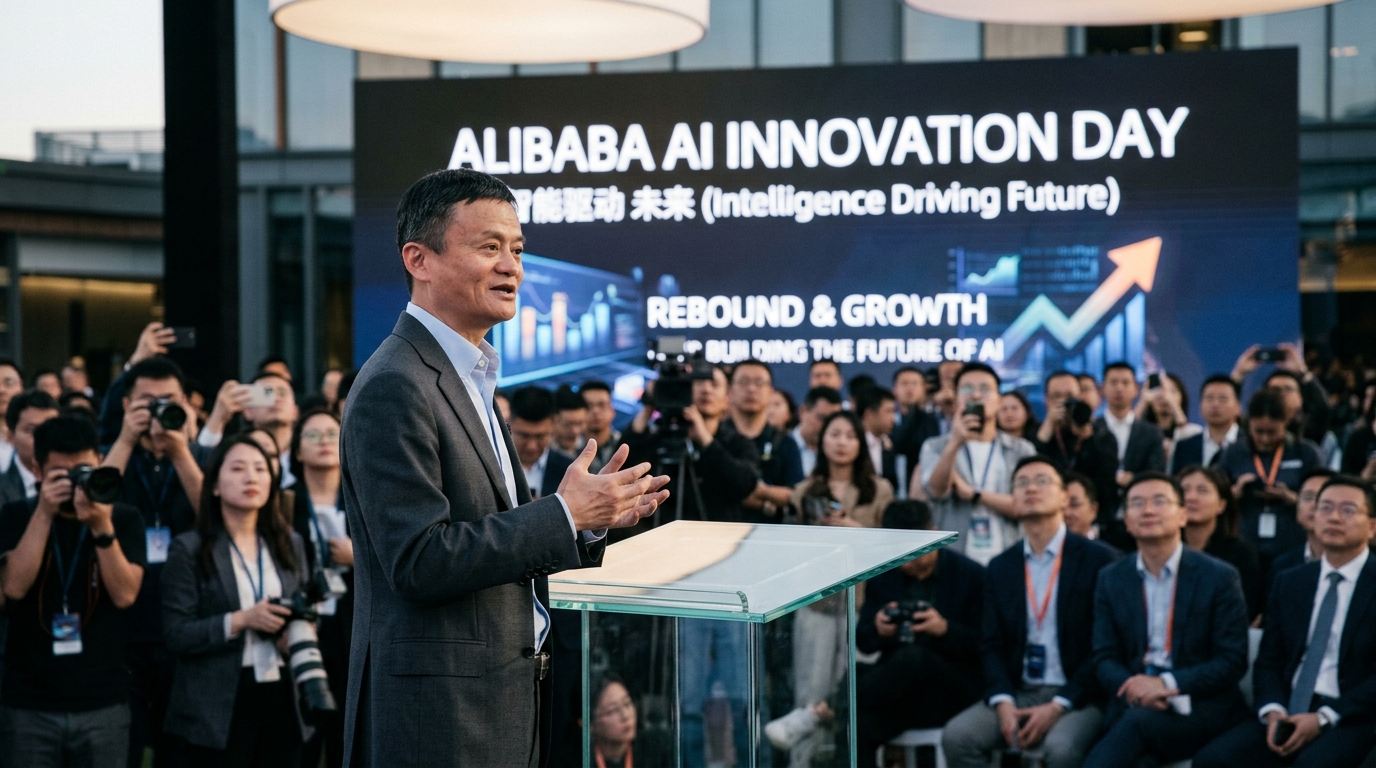
Alibaba, once the undisputed sovereign of Chinese e-commerce, is undergoing a profound transformation. After years of regulatory pressure from Beijing and intense competition from younger upstarts like PDD Holdings (Pinduoduo), the company appears to be finding its new stride. The recent surge in its stock price is not merely a market fluke but a reflection of a strategic repositioning centered on Artificial Intelligence (AI) and Cloud Computing.
The Cloud Engine and the Qwen Model
The heart of Alibaba’s new strategy beats within the Cloud Intelligence Group. Management has made it clear that AI is not just an add-on, but the central axis upon which its future will be built. The company’s large language model, Qwen (Tongyi Qianwen), has evolved into one of the world’s most formidable competitors, directly challenging models from OpenAI and Google.
What sets Alibaba apart is its decision to pursue an open-source strategy for many of its models. By offering access to its technology, Alibaba is fostering an entire ecosystem of developers and businesses that rely on its infrastructure. As market analysts point out, this move mirrors Google’s Android strategy: sacrificing absolute control in the short term to ensure long-term platform dominance.
“AI is the single greatest opportunity we have faced in a decade. It is not just changing how we work, but the very fabric of the global economy,” a senior executive recently remarked.
The Semiconductor Challenge and the Geopolitical Factor
Despite the optimism, the road to the AI summit is fraught with obstacles. U.S.-imposed restrictions on the export of advanced semiconductors (such as Nvidia’s H100 chips) pose a persistent threat to Chinese tech firms. Alibaba is forced to walk a tightrope, investing billions in designing its own chips (via its T-Head unit) and optimizing existing resources to maintain its competitive edge.
Furthermore, domestic competition in China is ruthless. Tencent and Baidu are also pouring massive capital into Generative AI. However, Alibaba possesses a unique advantage: a vast treasure trove of data from its Taobao and Tmall retail platforms. Integrating AI into customer service, personalized recommendations, and supply chain logistics allows the company to monetize its technology immediately, turning algorithms into tangible revenue.
Financial Recovery and Investor Sentiment
Investors seem increasingly convinced by this new narrative. The recent stock rally reflects a belief that Alibaba has moved past the worst of the 2021-2023 period. The company’s restructuring into six autonomous units, while initially causing confusion, now allows each division to move with the agility of a startup while retaining the resources of a titan.
- Double-digit growth in Cloud services revenue specifically tied to AI workloads.
- Successful integration of AI copilots into enterprise productivity tools.
- Stabilization of e-commerce market share through AI-driven marketing and efficiency.
- Aggressive share buyback programs, reassuring shareholders of the company’s long-term value.
In conclusion, Alibaba is no longer just a retail company. It is an infrastructure provider for the new digital era. If it can navigate geopolitical hurdles and sustain its AI innovation, the current stock rise may only be the beginning of a new growth cycle that restores its position at the center of the global tech map.