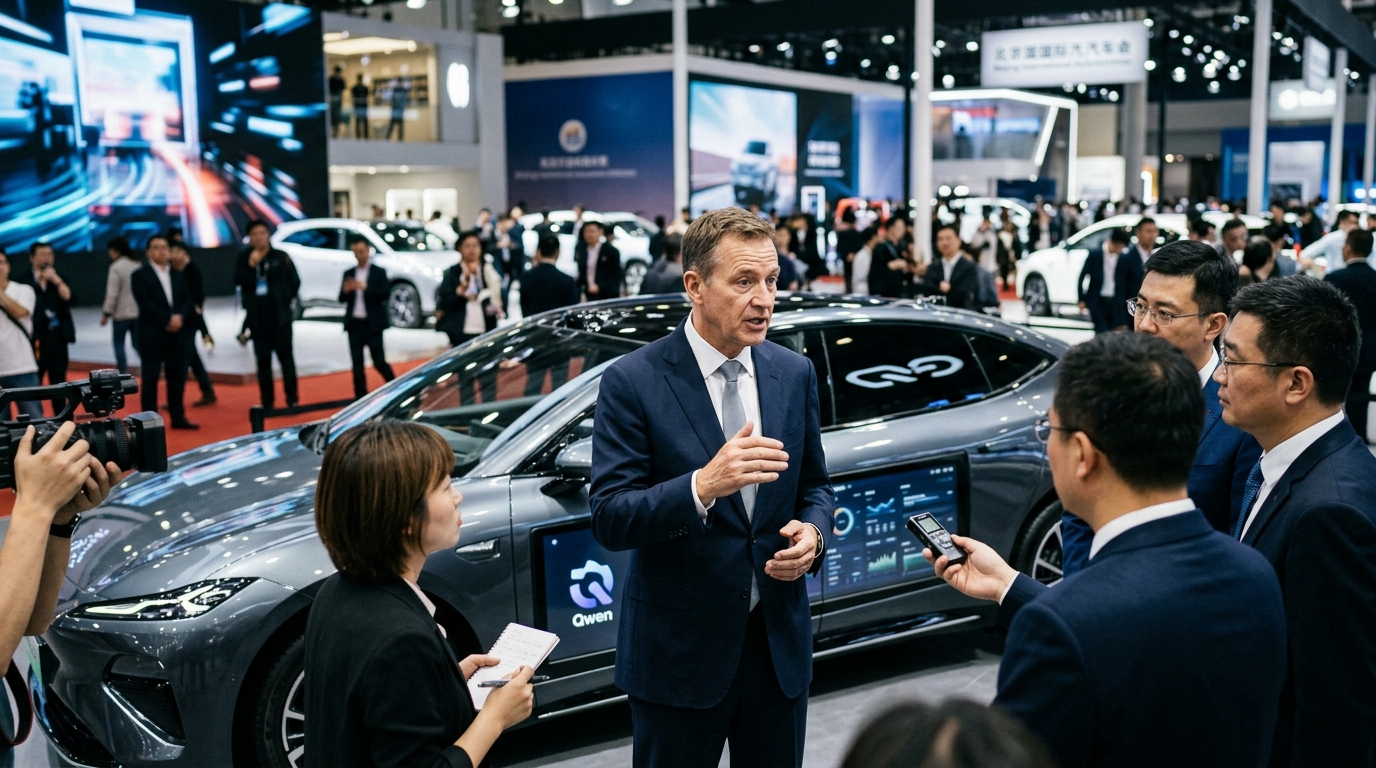
The Beijing Auto Show (Auto China) is no longer a mere display of horsepower and aerodynamic design; it has become the epicenter of a tectonic shift in computing. At the heart of this revolution is Alibaba Cloud, which has announced the full integration of its large language model (LLM), Qwen (Tongyi Qianwen), into the next-generation systems of leading automakers. This move signals the transition from the "smart car" to the "conscious car," where artificial intelligence does not just execute commands but perceives the environment and the driver's needs in real-time.
The Technological Edge of Qwen on Four Wheels
Qwen is not a typical chatbot. It is a multimodal system capable of simultaneously processing text, audio, and visual data from vehicle cameras. At the Beijing show, Alibaba demonstrated how AI can function as a "digital co-pilot." For instance, a driver can point to a building through the window and ask, "What is that monument?", with the system responding instantly using geolocation and image recognition data.
Furthermore, the integration extends to the control of the vehicle itself. Instead of navigating complex touchscreen menus, users can issue sophisticated commands like: "Adjust the temperature to make me feel like I'm in a forest and find a route that avoids tunnels because I feel claustrophobic." Qwen understands context and intent, making the human-machine interface (HMI) more natural than ever before.
Strategic Alliances and Global Reach
Alibaba's strategy is not confined to the Chinese market. Although it works closely with domestic giants like SAIC Motor and Geely, the company is targeting global manufacturers looking to penetrate the Chinese market or upgrade their software suites internationally. Alibaba Cloud's architecture allows for data processing both in the cloud and locally on the vehicle (edge computing), ensuring speed and privacy protection.
- Personalization: The AI learns driver habits, from music preferences to the usual coffee stop.
- Autonomy: Enhancing ADAS (Advanced Driver Assistance Systems) through better prediction of pedestrian behavior.
- Ecosystem: Connecting the car to the smart home and Alibaba's e-commerce services.
This move places Alibaba in direct competition with Huawei and Baidu, who are also vying for the role of the "operating system" for the future of mobility. However, Alibaba's dominance in cloud computing gives it a significant advantage in scale and data processing speed.
Challenges and the Geopolitical Landscape
Despite the technological triumph, integrating Chinese AI into global fleets is not without obstacles. Growing tensions between the West and China regarding cybersecurity and personal data raise questions about whether European and American manufacturers will adopt Qwen. Alibaba responds with strict encryption protocols and local data storage, but trust remains the critical currency of the era.
"The car is no longer just a means of transport; it is a mobile computing hub. Artificial intelligence is the gasoline of this new engine," an Alibaba Cloud executive stated during the presentation.
In conclusion, Alibaba's presence at the Beijing Auto Show confirms that the battle for automotive dominance will be decided in software labs rather than on assembly lines. Qwen AI promises to make driving safer, more productive, and, above all, more human, bridging the gap between artificial and emotional intelligence.