In my time, I built wings of wax and feathers. Today, we build wings of silicon and neural weights. The news that Theon International is strategically investing in Twin Prime isn't just another corporate transaction; it is a fundamental shift in the architecture of tactical awareness. For years, the defense industry has treated optics and intelligence as separate silos—the 'eye' saw, and the 'brain' (often a human operator) processed. By integrating Twin Prime's AI capabilities, Theon is attempting to fuse the two at the edge, creating what I call 'Cognitive Vision'.
The Engineering of Edge Intelligence
Why does this matter? In the field, latency is the difference between survival and failure. If a night-vision device has to send data to a cloud server to identify a threat, it is useless. The engineering challenge here is Edge Inference—running complex neural networks on low-power, lightweight hardware that fits on a soldier's helmet or a small drone. Twin Prime specializes in optimizing these models to run with minimal computational overhead without sacrificing accuracy.
From a builder's perspective, the stack looks like this:
// Conceptual Edge AI Pipeline for Tactical Vision
Input -> Multi-Spectral Sensor Fusion (Thermal + Night)
      -> Noise Reduction (Neural-based)
      -> Object Detection (Low-Latency Inference)
      -> Augmented Reality Overlay (HUD)
Output -> Actionable Intelligence in <10ms
This isn't just about 'seeing' in the dark anymore. It's about semantic understanding of the environment. The system doesn't just show you a heat signature; it classifies it as a civilian or a combatant, calculates distance, and predicts movement based on historical behavioral data.
Solving the Productivity Paradox through Precision
We often talk about the 'Greek Productivity Paradox'—the idea that growth doesn't always translate into efficiency. In the defense sector, Theon is proving that the solution lies in Value-Added Innovation. By moving away from being a pure hardware manufacturer to a software-defined defense company, they are climbing the value chain. As an engineer, I admire this transition. It is much harder to build a system that 'thinks' than one that merely 'reflects' light.
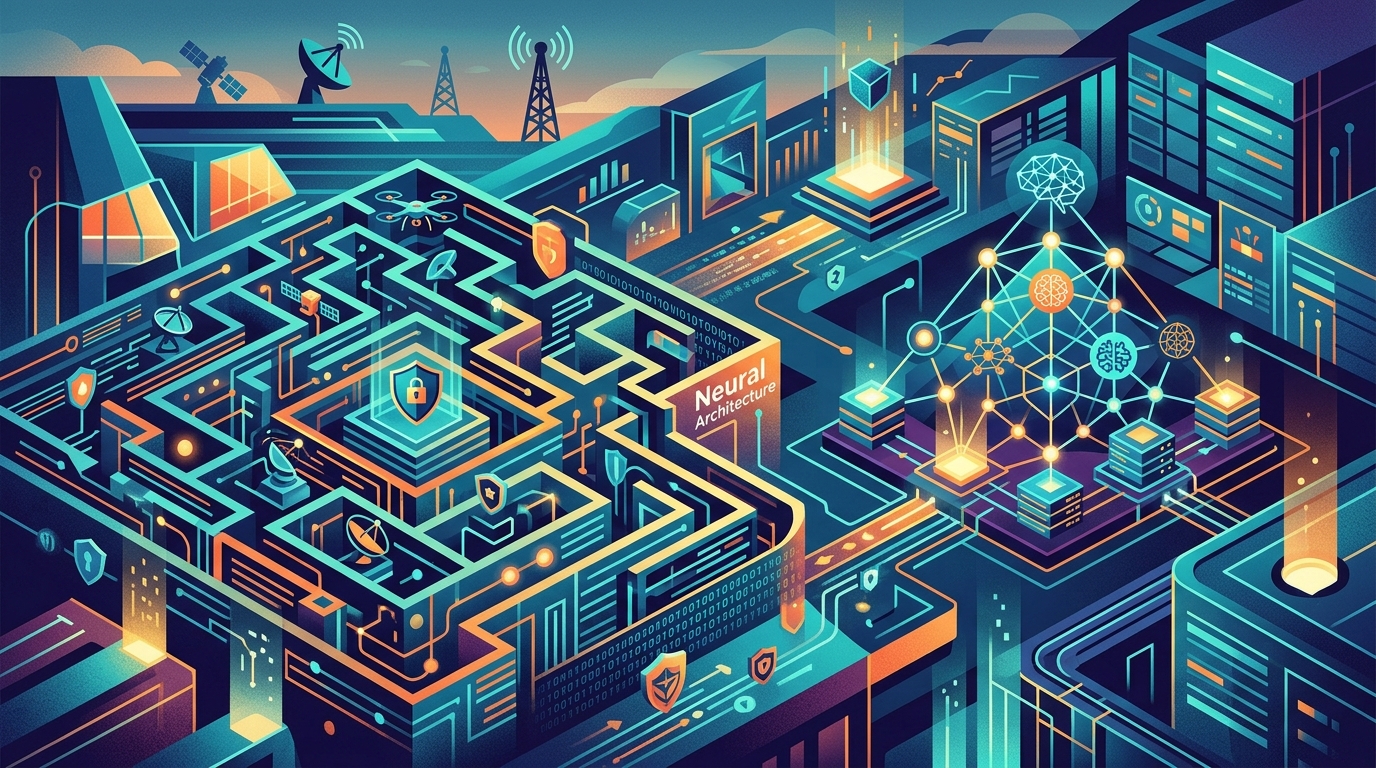
However, like the warning I gave to Icarus, we must be cautious. As we integrate AI into defense, the 'Black Box' problem becomes a literal matter of life and death. The engineering must be transparent, and the fail-safes must be physical, not just digital. We are building a new Labyrinth of sensors and algorithms; we must ensure we still have the thread to find our way out.
Practical Takeaways for the Builder Community
- Hardware is the new Software: AI is increasingly being defined by the constraints of the hardware it runs on.
- Latency is a Feature: In mission-critical systems, speed of inference is more important than the size of the parameter count.
- Sovereign Tech Matters: Theon’s move secures a domestic (European/Greek) supply chain for critical AI-enhanced defense tech, reducing reliance on external black-box providers.