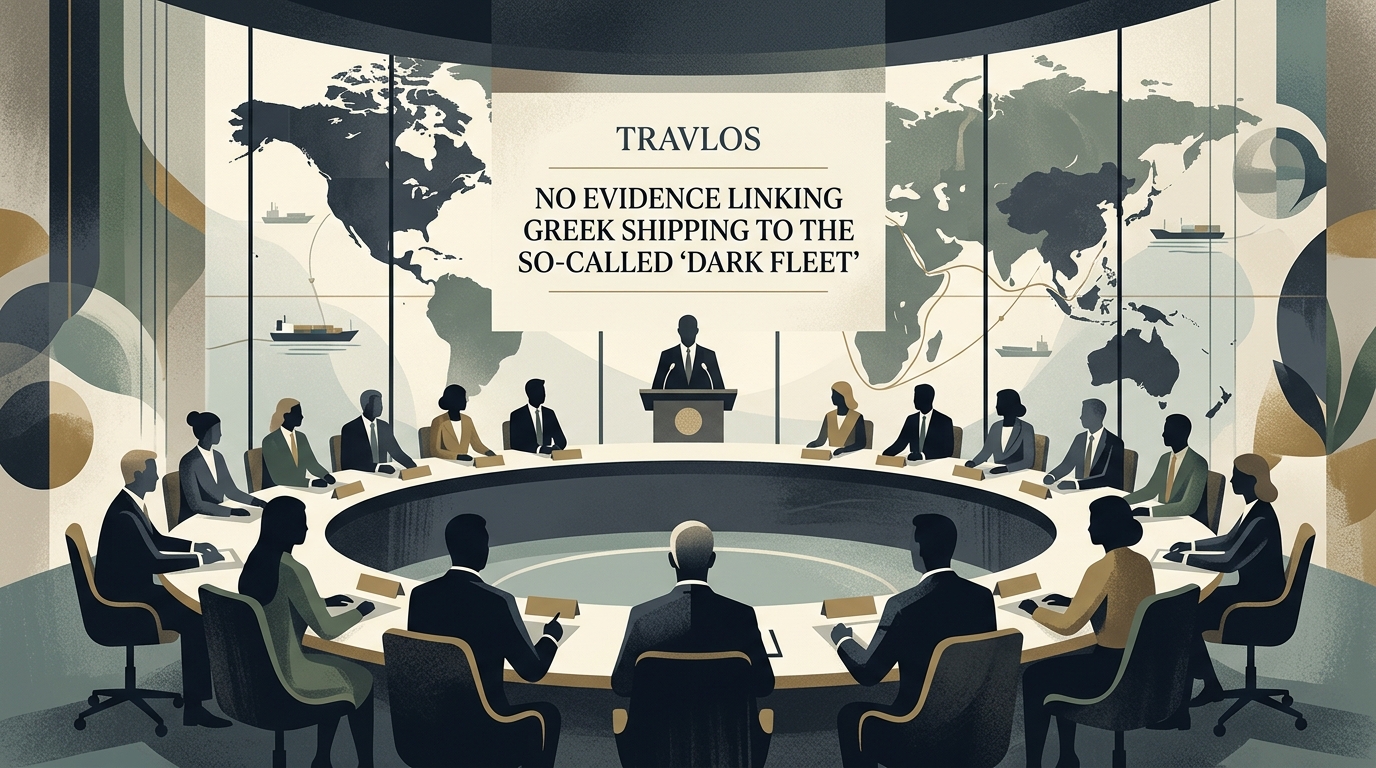
In an era of intense geopolitical instability, Greek shipping finds itself once again at the center of international scrutiny. Melina Travlos, President of the Union of Greek Shipowners (UGS), has issued a forceful response to allegations linking the Greek-owned fleet to the so-called "dark fleet" used to transport sanctioned Russian oil.
The Instrumentalization of Shipping
Ms. Travlos emphasized that the ocean-going shipping industry is experiencing an unprecedented "instrumentalization" within the context of geopolitical conflicts. According to her, the targeting of Greek shipping is not only unfair but also baseless, as Greek shipowners have a long-standing tradition of operating within the framework of international law and the regulations set by the International Maritime Organization (IMO). "The fact that shipping has now been instrumentalized in crises that are geopolitical and highly political in nature, while it has also been unfairly targeted, is unprecedented," she remarked.
The narrative surrounding the "dark fleet"—also known as the shadow fleet—has intensified following Russia's invasion of Ukraine and the subsequent imposition of price caps by the G7 and the European Union. The term refers to vessels operating outside Western oversight, often with opaque ownership structures, aging technical specifications, and a lack of coverage from major international insurance associations (P&I Clubs). Ms. Travlos insisted that equating legitimate Greek maritime activity with these practices lacks any empirical evidence.
Greece’s Role in the Global Supply Chain
Greek shipping controls approximately 20% of the world's merchant fleet capacity and 60% of the European Union's. This sheer scale inevitably makes it a target when major powers attempt to control energy flows. However, the UGS highlights that Greek shipowners have demonstrated unparalleled adaptability and compliance, despite a complex sanctions environment that evolves almost daily.
- Greek shipping remains the most vital energy transporter for the Western world.
- Accusations regarding the "dark fleet" often conflate the legal sale of older vessels to third parties with active participation in illicit activities.
- The lack of a clear international definition of what constitutes a "dark fleet" allows for arbitrary interpretations and political pressure.
Ms. Travlos called upon international regulatory bodies to focus on enhancing maritime safety and environmental protection rather than engaging in politically motivated accusations. The safety of seafarers and the protection of the marine environment must remain the top priorities, shielded from geopolitical power plays.
Challenges and the Path Forward
The controversy over the shadow fleet highlights a deeper crisis in the international governance of shipping. As the West seeks to isolate Russia economically, shipping has become the "battleground" where free-market principles clash with political expediency. The Greek maritime community argues that the imposition of unilateral or disproportionate measures could lead to a fragmentation of the global market, increasing costs for consumers and compromising safety on the high seas.
"Shipping is the connective tissue of global trade. When we weaken it with baseless accusations, we jeopardize global economic stability."
In conclusion, Melina Travlos's stance serves as a clear warning: Greek shipping will not accept being the scapegoat of the geopolitical chessboard. With the global economy depending on the freedom of navigation, maintaining the industry's integrity is vital not only for Greece but for the entire world. The focus must return to the facts and the rigorous application of existing international standards.