
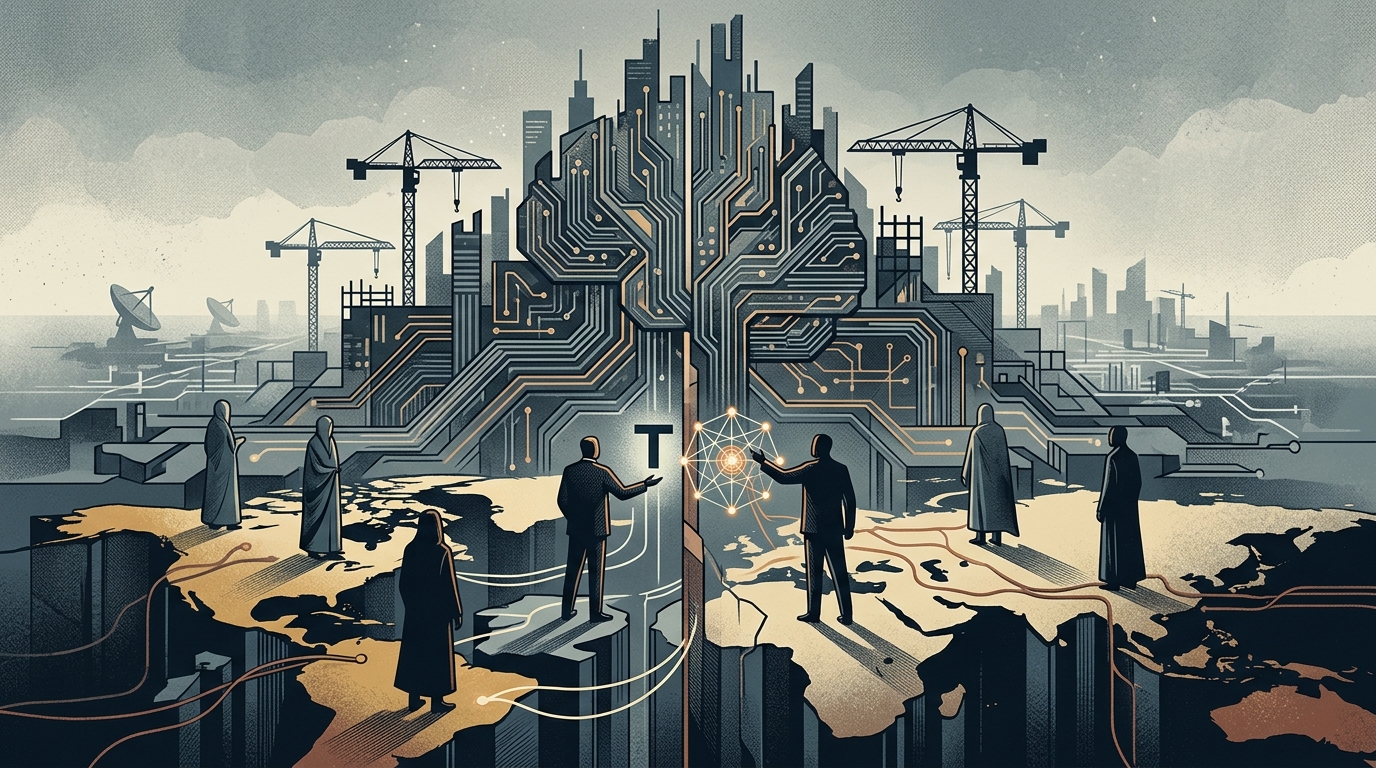
As we navigate the second quarter of 2026, the global business landscape is defined by a paradox of unprecedented capital injection and sharpening geopolitical friction. The 'AI Infrastructure Boom' is no longer a speculative trend; it has become the primary driver of equity markets, even as leaders like Jamie Dimon warn that 'silly' trade disputes between the US and EU could undermine the very hegemony these technologies are meant to secure. With Anthropic seeking a $30 billion valuation and SoftBank reporting a surprise profit jump via its OpenAI exposure, the market is signaling that the 'Trillion-Dollar Threshold' for AI-integrated entities is the new benchmark for success.
The Infrastructure Supercycle vs. Trade Friction
The current market rally is sustained by the 'AIoT Explosion'—the convergence of Artificial Intelligence and the Internet of Things. This synergy is demanding a massive expansion of physical infrastructure, from data centers to specialized semiconductor supply chains. However, the business community remains cautious. The potential for a trade 'truce' between Washington and Beijing is the pivot point upon which global supply chains rest. Investors are closely monitoring the Xi-Trump summit, as any disruption in the flow of high-end chips or rare earth minerals could derail the valuation models of the top US tech stocks.
"AI is the ultimate margin killer for those who fail to adapt, but it is the ultimate market maker for those who control the infrastructure."
We are seeing a shift from 'Experimental AI' to 'Agentic AI,' as evidenced by Alibaba’s recent pivot. By automating complex e-commerce logic, these systems are eroding information asymmetry—the traditional source of profit for many middle-market firms. For the C-suite, this means a fundamental reallocation of budgets; as our analysis of the 'CMO Identity Crisis' suggests, brand spending is being cannibalized by the necessity for technical integration and AI-driven operational efficiency.
The Greek Paradigm: FDI Records and Strategic Integration
Closer to home, the Greek economy is demonstrating remarkable resilience and strategic foresight. The record $12.8 billion in Foreign Direct Investment (FDI) is not merely a number; it represents a qualitative shift in how international capital views the Hellenic market. Blackstone’s entry into Skroutz is a watershed moment, setting a new valuation benchmark for Greek tech and signaling that the local ecosystem is ready for high-level AI integration.
- Austriacard's Expansion: The 'Japanese landing' and the transition of the Lykos Group signify the internationalization of Greek-led industrial tech.
- Digital Transformation: The use of AI as a catalyst for institutional reform in Brussels, with strong Greek participation, is creating a more predictable regulatory environment for SMEs.
- Debt Relief Dynamics: The final terms for the 72-installment social security relief provide a necessary financial lifeline, ensuring that the domestic business fabric remains intact while transitioning to the new digital paradigm.
In conclusion, while the 'Star Wars' style defense shields and geopolitical posturing dominate the headlines, the real market story is the consolidation of AI infrastructure. For investors, the strategy should be 'cautious optimism': focus on the enablers of AI rather than just the applications, and keep a keen eye on the regulatory 'shields' being built in markets like Madrid, which may serve as a blueprint for future EU-wide algorithmic governance.