
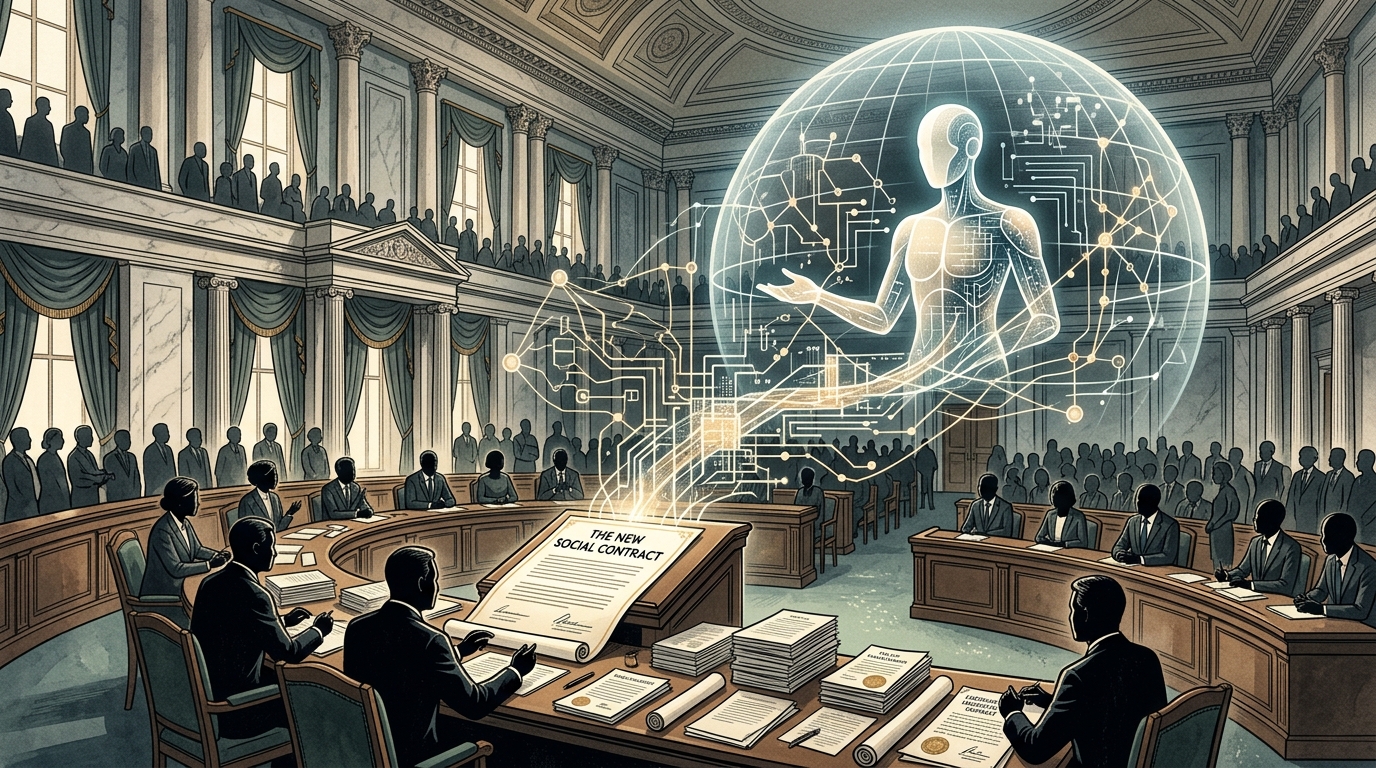
In the ancient halls of Athens, governance was understood not merely as the imposition of rules, but as the harmonization of conflicting interests for the sake of the polis. As we stand in May 2026, the rapid evolution of artificial intelligence presents a modern version of the crisis I once faced: a profound imbalance of power between those who control the tools of production—now algorithmic—and the citizens whose lives are shaped by them. The recent legislative developments in Connecticut, juxtaposed with the moral imperatives of Pope Leo XIV’s AI Encyclical, reveal a world searching for a new 'Seisachtheia'—a shaking off of burdens to restore equity.
The Fragmentation of Authority: Lessons from Connecticut
The recent passage of AI-focused bills in Connecticut serves as a poignant reminder that in the absence of a unified federal or international framework, governance becomes fragmented. While these bills address critical issues such as algorithmic bias and transparency in public sector AI use, they are, as observers rightly note, 'not the finish line.' From a political analysis standpoint, this state-level activism reflects a growing distrust in centralized legislative bodies to act with the necessary celerity.
However, fragmentation carries its own risks. For the global enterprise—be it the tech giants of Silicon Valley or the industrial powerhouses of the Greek-German economic nexus—a patchwork of disparate regulations creates a 'compliance labyrinth.' This complexity often favors the largest incumbents who possess the legal resources to navigate it, paradoxically stifling the very competition that democratic governance seeks to protect. We must ask: are we building a coherent shield for the citizen, or a fragmented obstacle course for innovation?
The Moral Compass: Beyond Mere Legality
"Technology must serve the dignity of the human person, not the dictates of the market or the efficiency of the machine." — Pope Leo XIV, 2026 Encyclical on Artificial Intelligence.
While legislatures struggle with the technicalities of 'high-risk' systems, the Vatican has introduced a different dimension of governance: the moral imperative. Pope Leo XIV’s Encyclical provides a necessary counterweight to the purely technocratic approach. In my view, this is a return to the ethos that must underpin any nomos (law). The Encyclical’s focus on 'digital fraternity' and the protection of the vulnerable echoes the democratic values we hold dear in Europe.
Governance is not solely a matter of preventing harm; it is a matter of fostering a society where AI enhances human agency rather than eroding it. The intersection of the Pope’s moral framework and Connecticut’s legislative pragmatism suggests that the next phase of AI policy will not be found in code or in courtrooms alone, but in a broader societal dialogue about what it means to be human in an automated age.
Geopolitical Realities and the European Path
We cannot ignore the geopolitical shadow cast by the 'Cloud Empires' of the East. Alibaba’s dominance in the Chinese AI market, fueled by massive state-aligned investment, presents a model of governance that prioritizes national power and social control over individual liberty. For the European Union, and specifically for growing economies like Greece, the challenge is to maintain a third way: one that leverages the economic benefits of AI—as seen in the 8.9 billion euro Greek-German economic pillar—without sacrificing the privacy and democratic rights of the individual.
As we look toward the remainder of 2026, the goal for policymakers must be synthesis. We need the precision of the Connecticut bills, the moral clarity of the Encyclical, and the strategic foresight to ensure that AI serves as a tool for democratic renewal. We must ensure that the 'Admission Scores' of the future are not just about technical proficiency, but about the wisdom to govern the tools we have created. The polis of the 21st century depends on it.