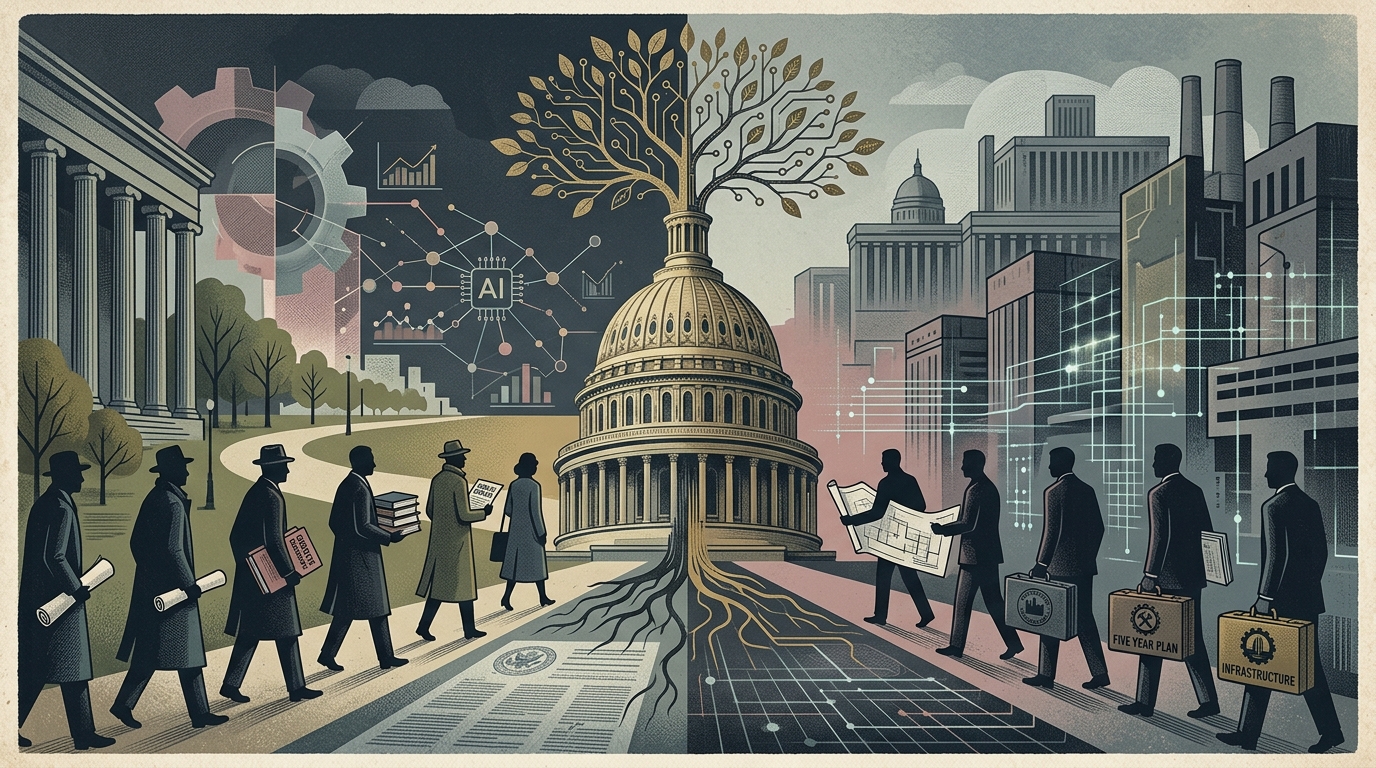

The End of the 'Viral Era' and the Rise of the Agentic Powerhouse
As we navigate the second quarter of 2026, the global business landscape is witnessing a profound structural transformation. The era of 'Viral AI'—characterized by ephemeral consumer applications and speculative hype—is officially setting. Alibaba’s recent decision to disband the team behind Miaoya is a symbolic turning point. Investors are no longer satisfied with engagement metrics; they are demanding infrastructure-level integration and tangible productivity gains. We are moving from chatbots to 'Agentic Powerhouses,' where AI doesn't just suggest actions but executes them across complex supply chains and financial ecosystems.
The Silicon Gambit: Breaking the Nvidia Hegemony
The most significant market movement this month is undoubtedly Alibaba’s unveiling of the Zhenwu M890 AI chip and the Qwen3.7-Max model. This is not merely a product launch; it is a strategic strike at Nvidia’s global dominance. By developing proprietary silicon optimized for autonomous agents, Alibaba is signaling that 'Silicon Sovereignty' is the new prerequisite for tech leadership. For the markets, this introduces a much-needed competitive tension. While Nvidia remains the gold standard, the emergence of viable alternatives from the East suggests a potential cooling of hardware premiums, which could provide a tailwind for mid-cap tech firms previously priced out of the high-end compute market.
The $600 billion pivot in generative search isn't just about how we find information; it's about how capital is reallocated from traditional advertising to agentic service fulfillment.
Strategic Alliances and the Infrastructure War
On the Western front, the alliance between Google and Blackstone to launch StartupHub.ai marks a crucial consolidation of power. By combining Google’s algorithmic prowess with Blackstone’s massive real estate and energy portfolio, they are creating a formidable moat in AI cloud infrastructure. This 'Alliance of Giants' reflects a broader market trend: the realization that AI dominance is as much about physical data centers and energy logistics as it is about code. For institutional investors, this makes infrastructure-focused REITs and energy providers key components of a modern tech-weighted portfolio.
The Greek Perspective: Fiscal Digitalization as an Economic Hedge
In Greece, the narrative is equally compelling but focuses on fiscal precision. The AADE’s digital 'close watch' and the government’s €3.2 billion algorithmic bet represent a localized version of the global trend. By utilizing AI for tax compliance and debt management—what some are calling a 'Digital Seisachtheia'—Greece is attempting to de-risk its economy. For the Athens Stock Exchange, these moves provide a sense of stability. As the state becomes more efficient through autonomous agents, the 'bureaucracy tax' on private enterprises diminishes, making Greek SMEs more attractive for foreign direct investment (FDI).
Market Outlook: Navigating the 2026 Energy Shock
Despite the positive news regarding UK inflation dropping to 2.8%, providing much-needed relief to European households, we must remain cautious. The 2026 energy shock remains a latent threat. However, as our analysis shows, AI-driven logistics and the shift toward 'Autonomous AI Ecosystems' are acting as an efficiency hedge. Companies that have successfully integrated agentic AI into their core operations are showing record productivity levels, effectively decoupling their growth from traditional inflationary pressures. The IPO market is currently in a 'Pivot' phase—investors are favoring companies with clear paths to agentic integration rather than those relying on the generative models of 2024.