
As we navigate the midpoint of 2026, the global markets are witnessing what I term the 'Great Re-calibration.' For the past two years, the investment thesis was simple: buy the silicon. This strategy was validated by the staggering reality that semiconductors now represent 95% of all AI infrastructure value. However, the emergence of Nvidia’s RTX Spark Superchip and Jensen Huang’s recent assertions suggest that the 'Silicon Hegemony' is entering a new, more complex phase where hardware is no longer the sole arbiter of market cap.
The Software Rebound and the Value Chain Shift
The market significantly misjudged the AI value chain by underestimating the resilience of software stocks. While the hardware layer captured the initial capital expenditure, we are now seeing a robust rebound in the software sector. This is not merely a technical correction; it is a fundamental realization that without sophisticated software layers, the $91 billion bets on entities like SpaceX or the massive infrastructure projects in Europe remain underutilized assets. Nvidia’s strategic move into the PC market with the RTX Spark indicates a shift toward 'edge AI,' bringing high-performance computing directly to the enterprise and consumer level, thereby diversifying revenue streams away from data center dependency.
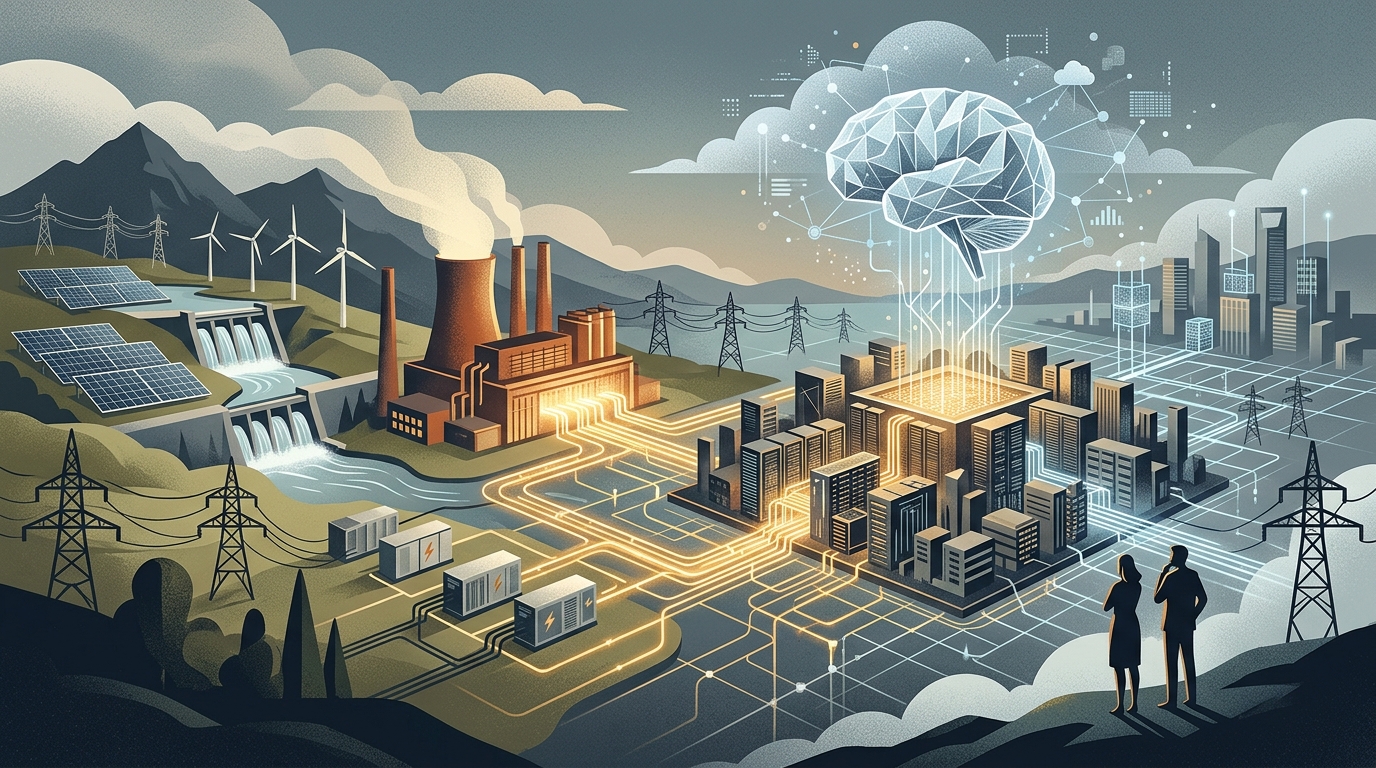
"The 2026 AI Paradox lies in the tension between billion-dollar valuations and the reality of the 'digital oil shock'—the escalating cost of energy required to sustain these silicon dreams."
Sovereign Infrastructure and the European Response
Europe is finally moving beyond the 'Great AI Divide.' The strategic pivot by Bull and Foxconn to scale European AI infrastructure, coupled with President Macron’s transformation of Versailles into a tech powerhouse, signals a move toward 'Sovereign AI.' For the investor, this represents a shift from globalized tech conglomerates to localized, high-security infrastructure plays. This 'Scaling Sovereignty' is the digital counterweight to geopolitical turmoil, offering a hedge against the volatility of traditional energy markets.
The Greek Perspective: Tourism 4.0 and the Ionian Gambit
In our local context, the 'Ionian Gambit' is proving to be a masterclass in market positioning. By combining 'energy realism'—utilizing our strategic position in the Mediterranean—with AI-driven 'Tourism 4.0' arbitrage, Greece is effectively multiplying its market cap potential. Project Trident’s role in propelling Greece to the forefront of global shipbuilding power is not just an industrial win; it is a data-driven transformation of a legacy sector. For Greek SMEs, the integration of custom silicon and sovereign AI tools is the multiplier needed to bridge the productivity gap with the rest of the Eurozone.
Actionable Insights for the Q3 Horizon
- Software Integration: Look for software firms that have successfully integrated AI into existing workflows rather than those promising 'pure' AI plays.
- Energy-Efficient Tech: As energy costs rise, companies providing cooling solutions and low-power silicon (like the RTX Spark) will command a premium.
- Sovereign Plays: Monitor European infrastructure partnerships (Bull/Foxconn) as they benefit from EU-centric policy tailwinds and security-focused capital.