
As we navigate the second quarter of 2026, the global markets are witnessing a fundamental shift in the AI investment thesis. For the past three years, the market was driven by a 'brute force' approach—more chips, more data, more energy. However, the recent emergence of DeepSeek V4 and its integration into domestic Chinese silicon has sent a shockwave through Silicon Valley and the Athens Stock Exchange alike. We are moving from the era of 'compute at any cost' to the era of 'efficiency as a competitive advantage.'
The Efficiency Paradox and the $5 Trillion Question
The primary concern for investors today is whether Nvidia’s $5 trillion valuation represents a peak or a new plateau. While Nvidia remains the undisputed leader in high-end hardware, the 'efficiency revolution' triggered by new algorithmic breakthroughs suggests that the next phase of growth will not come from selling more GPUs, but from optimizing existing infrastructure. The semiconductor supercycle is not over, but it is redrawing the global economic map. We are seeing a move toward domestic silicon—exemplified by Huawei’s latest strides—which challenges the US hegemony and forces Western tech giants like Microsoft and Apple to accelerate their own strategic pivots.
For the retail investor, the 'no-brainer' stocks of 2024 and 2025 are being re-evaluated. Microsoft’s leadership remains robust due to its diversified revenue streams, but the market is now pricing in the 'Efficiency Paradox': as AI becomes more efficient, the total demand for compute might actually increase, but the margins for hardware providers could face pressure if software-side optimizations reduce the hardware footprint required for LLMs.
Greece’s Industrial Transformation: The €450 Million Bet
In the Greek context, the business landscape is responding to these global shifts through the lens of the new Development Law. The €450 million allocation for industrial transformation is a critical bet on making Greek SMEs resilient in an AI-driven world. This isn't just about digitizing records; it's about integrating AI into supply chains and manufacturing. The 'Pissarides 2.0' plan and the push for constitutional reform are designed to create a more flexible economic environment by 2034, but the immediate market focus is on the banking sector.
As Gikas Psaltis emphasized at Delphi, the completion of the European Banking Union is no longer a theoretical luxury but a market necessity. For Greek banks to fund the digital transition, they need a unified regulatory framework that allows for greater liquidity and cross-border stability. The convergence with French digital strategies also signals a move toward a 'European AI' identity—one that prioritizes regulatory 'shields' (especially regarding minors and IP) while attempting to close the creativity gap in AI-generated content.
The New Constraints: Blue Gold and Energy Resilience
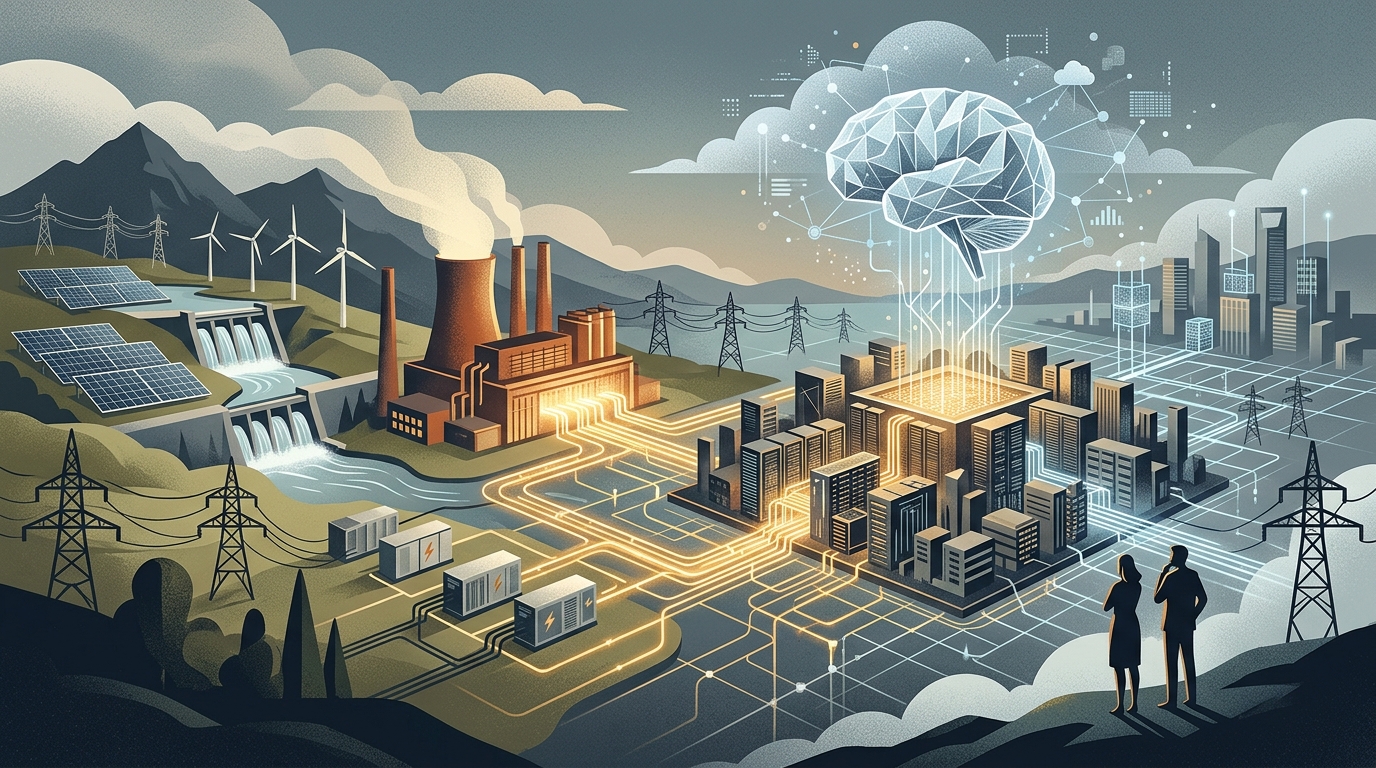
Finally, market analysts must look at the physical constraints of the AI boom. Water scarcity—the 'Blue Gold' of the 2020s—is emerging as the next big market constraint. Data centers require massive cooling capacities, and in regions like the Mediterranean, this creates a direct conflict with agricultural and urban needs. Companies that provide water-efficient cooling technologies or sustainable energy solutions are seeing a surge in VC interest. In 2026, the most successful AI play might not be an AI company at all, but the infrastructure firms that solve the cooling and energy bottlenecks that currently threaten to stall the semiconductor supercycle.