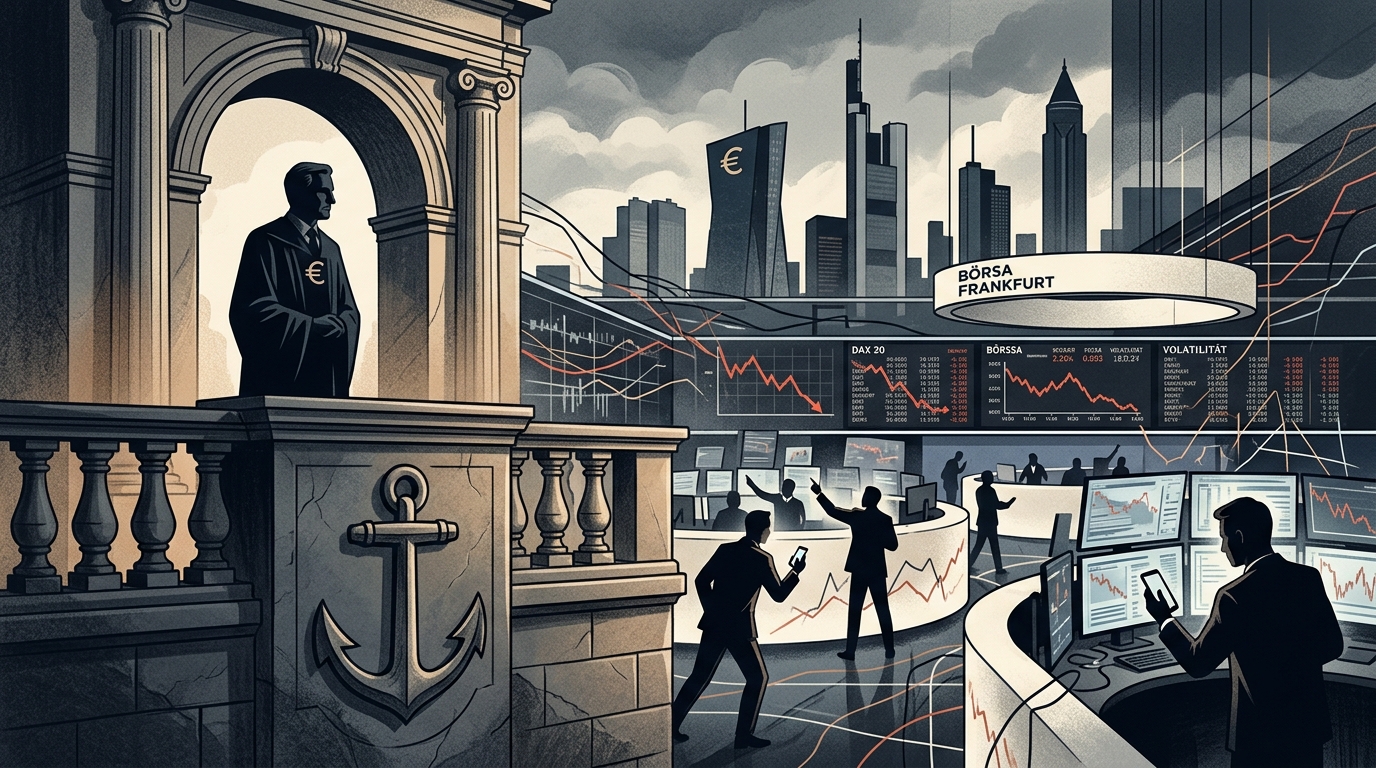
In a move that many analysts described as "expected maintenance," the European Central Bank (ECB) decided to keep its key interest rates unchanged during its latest meeting. This decision, while aligned with market forecasts, highlights the extremely delicate balance that Christine Lagarde and the Governing Council must maintain in an environment fraught with geopolitical landmines and economic uncertainty.
The "Last Mile" of Inflation
Frankfurt's rhetoric remains firmly focused on the 2% target. Despite a significant de-escalation from the historic highs of previous years, inflation in services and wage growth across the Eurozone continue to cause concern. Central bankers fear that a premature rate cut could reignite inflationary pressures, undoing the sacrifices made over the past two years.
The so-called "last mile" of returning to price stability is proving to be the most difficult. The energy crisis, although mitigated, remains an unpredictable factor. Geopolitical tensions in the Middle East and the ongoing conflict in Ukraine keep oil and gas prices in a state of "nervous readiness," which could be transferred to the consumer basket at any moment.
The Shadow of Recession and the Cost of Money
On the other hand, the prolonged maintenance of high interest rates is beginning to leave deep marks on the real economy. Industrial production in Germany, Europe's traditional powerhouse, is showing a decline, while the real estate market in many southern countries is in a state of deep freeze due to high borrowing costs. Businesses are hesitant to proceed with new investments, as the cost of money remains prohibitive for many business plans.
- Household consumption remains sluggish due to the erosion of disposable income.
- Banks have tightened loan granting criteria, limiting liquidity.
- Unemployment, while remaining at historic lows, shows signs of stabilization that could turn into an increase if stagnation continues.
Geopolitics and Energy Security
The ECB does not operate in a vacuum. Its decisions are directly influenced by the moves of the Federal Reserve in the US, as well as by global supply chains. The need for an energy transition adds an extra layer of complexity. Investments in "green" energy require massive capital, and high interest rates hinder this transition, creating a vicious cycle where fighting inflation blocks the structural changes that could lower energy costs in the long run.
"Patience is the virtue of central bankers, but inertia can be fatal for growth," note leading analysts, pointing to the risk of the ECB being found "behind the curve" if it does not react in time to the economic slowdown.
Towards a Digital and Technological Future
Alongside monetary policy, the ECB is examining the role of artificial intelligence in productivity. There is hope that the adoption of AI could lead to an increase in productivity that would allow for price reductions without the need for painful interest rate hikes. However, this remains a long-term scenario. In the immediate future, attention remains on inflation data for the next quarter, which will determine whether the summer of 2026 will bring the long-awaited liquidity breath to the European market.