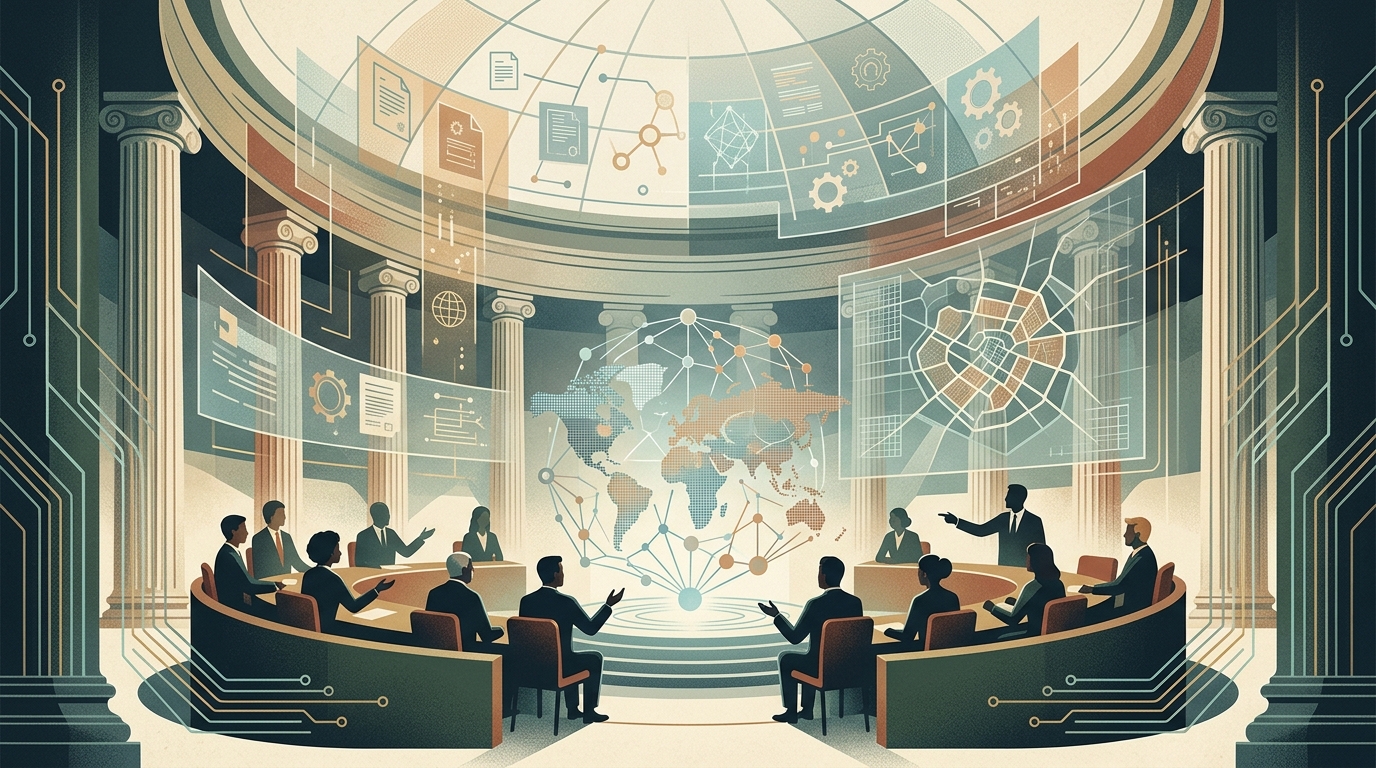

In the sixth century BCE, the Athenian state faced a crisis of inequality and systemic instability, a condition known as stasis. Today, as we navigate the spring of 2026, the global political order faces a digital stasis of its own. The emergence of DeepSeek-V4 and the subsequent allegations of intellectual theft have moved AI from the realm of corporate competition to the very center of the 'AI Cold War.' As a political analyst, I view this not merely as a technical milestone, but as a profound challenge to our existing frameworks of governance and international law.
The Erosion of the Token Hegemony
For the past two years, the global AI market was defined by a specific economic and power structure: the dominance of high-cost, resource-heavy American models. The 'DeepSeek Affair' has shattered this status quo. By slashing fees and demonstrating unprecedented efficiency, the Chinese firm has effectively weaponized 'token gluttony' against its Western rivals. From a policy perspective, this is a classic disruptive maneuver. It forces democratic regulators to ask: is our commitment to intellectual property (IP) protection hindering our ability to compete with more agile, less constrained state-backed entities?
The tension between innovation and regulation is the defining dialectic of our era. We must ensure that our laws do not become the chains that bind our progress while others run free.
The allegations of intellectual theft against DeepSeek represent a legal challenge of the 21st century. If foundational models are built upon the 'distilled' intelligence of their predecessors, our traditional definitions of copyright and sovereignty are rendered obsolete. We are witnessing a shift where data is no longer just the 'new oil,' but the new disputed territory, much like the silver mines of Laurium were to ancient Athens—a source of both immense wealth and intense geopolitical friction.
Strategic Autonomy and the European Path
For the European Union, and specifically for Greece, this escalation presents a strategic crossroads. While the US and China engage in a race for computational supremacy, Europe must define its 'Strategic Autonomy.' The recent move by the Public Power Corporation (PPC) in Greece to pivot toward data centers is a commendable example of this. It signifies an understanding that physical infrastructure—the 'real-world limits'—is the bedrock of digital power.
However, infrastructure alone is insufficient. We require a new 'Amphictyonic League' for AI—a multilateral governance framework that transcends the current bipolarity. This framework must address the 'AI Divide' seen in educational inequality and the anxiety of the labor market, ensuring that the benefits of agentic intelligence are distributed equitably. In my analysis, the path forward is not through isolationism or unregulated competition, but through a 'Regulatory Middle Path' that protects democratic values while fostering an environment where efficiency and transparency are rewarded over mere scale.
As we observe the Nasdaq reclaiming its crown through AI growth, we must remember that economic metrics are a poor substitute for social stability. The 'Great Pivot' of college students toward AI-proof majors is a clear signal of a social contract in flux. Our governance structures must evolve to provide the security that citizens deserve in an age of algorithmic uncertainty.