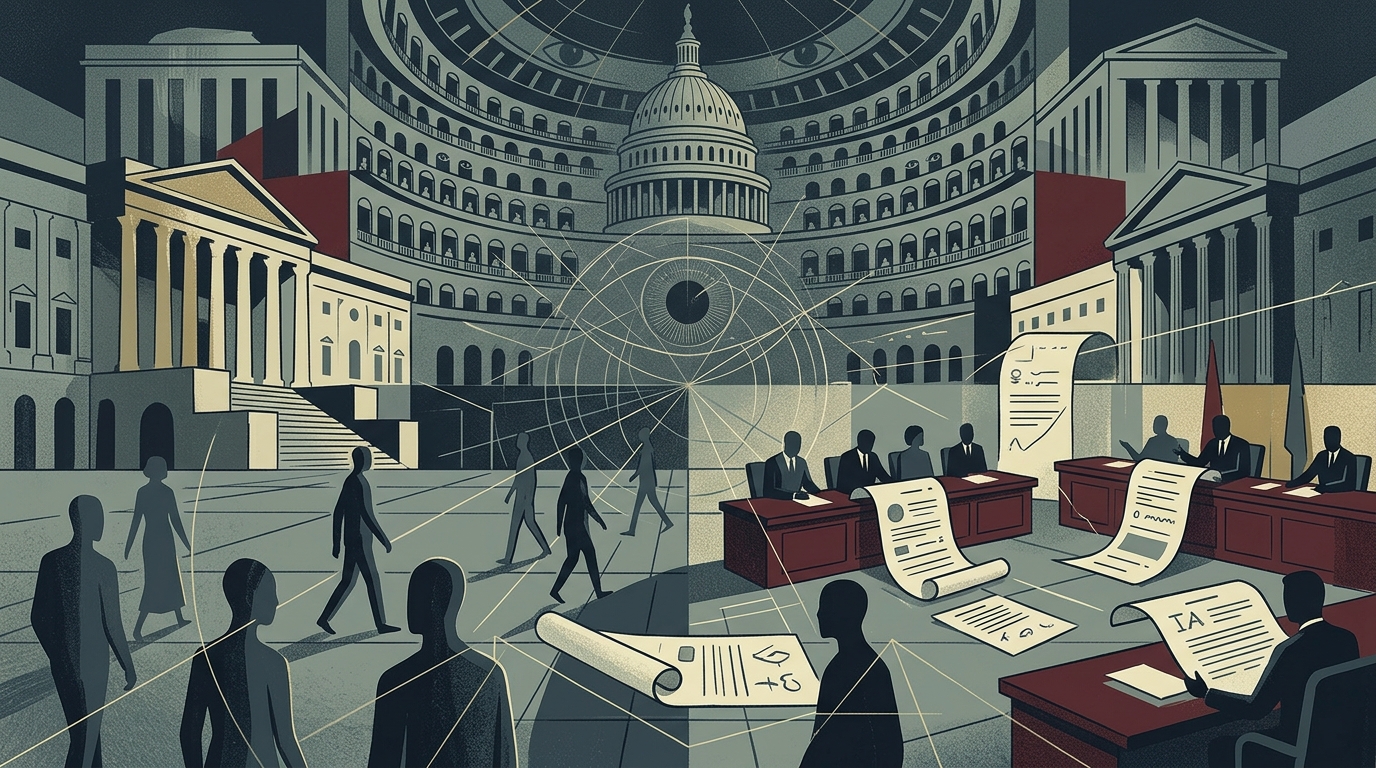

In the history of governance, the power to tax has always been the ultimate expression of state sovereignty. From the ancient Athenian liturgies to the modern bureaucratic state, the fairness of this extraction determines the stability of the social contract. Today, as we stand in May 2026, the Hellenic Independent Authority for Public Revenue (AADE) has embarked on a 'Digital Safari' that marks a fundamental shift in how the state interacts with its citizens. By deploying artificial intelligence and real-time digital audits, the Greek state is no longer merely reacting to non-compliance; it is predicting it.
The Leviathan’s New Eyes: Efficiency vs. Equity
The announcement of 50,000 targeted audits driven by AI algorithms represents a technocratic milestone. For decades, the Greek economy has struggled with the shadow of tax evasion—a systemic inefficiency that erodes public trust and fiscal health. In my analysis, the integration of AI into the tax mechanism is a necessary modernization. However, the metaphor of a 'Safari' is telling. It implies a predatory relationship between the state and the taxpayer. While the goal is the restoration of justice, the method must be governed by the principles of transparency and proportionality.
The risk of an 'algorithmic eclipse,' as recently cautioned by ecclesiastical voices, is not merely a spiritual concern but a political one. When a machine determines the likelihood of fraud, the 'black box' problem becomes a matter of civil liberties. If the criteria for these 50,000 audits remain opaque, the state risks replacing traditional bureaucracy with an automated form of suspicion. To maintain the democratic legitimacy of these tools, the AADE must ensure that every AI-driven decision is explainable and contestable.
Institutional Safeguards and the European Context
As Greece aligns its digital strategy with the EU AI Act, the use of high-risk AI systems in public administration requires rigorous oversight. We must ask: who audits the auditors? The transition to a digital-first compliance model must be accompanied by a robust governance framework that prevents algorithmic bias. For instance, if the AI disproportionately targets specific sectors or demographics without clear justification, the social contract is not being repaired; it is being further fragmented.
"True governance is not found in the strength of the law alone, but in the fairness of its application." — This principle must guide our digital transition.
I propose a three-pillar framework for the AADE’s digital era:
- Algorithmic Transparency: Publishing the general parameters used for audit selection to ensure public confidence.
- The Right to Human Intervention: Ensuring that no tax penalty is issued solely by a machine without human verification.
- Data Reciprocity: Using AI not just to collect taxes, but to provide citizens with better services and clearer insights into their fiscal obligations.
Ultimately, the digital 'Safari' should not be a hunt, but a harvest of data for the common good. If successful, Greece can move from a culture of evasion to a culture of compliance, provided the state proves itself to be as fair as it is technologically advanced.