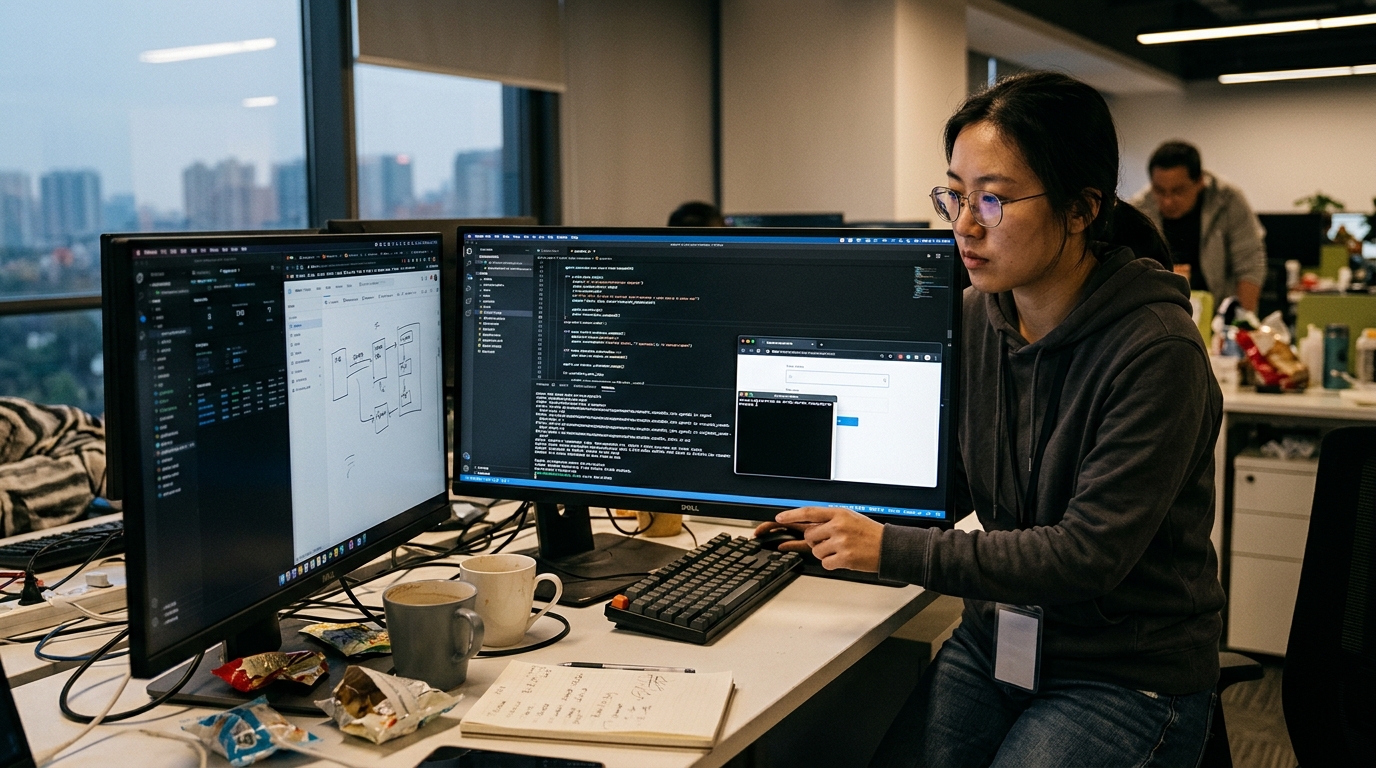
As we navigate the mid-point of 2026, the term "Vibe Coding" has transitioned from a Silicon Valley novelty to a significant cybersecurity liability. The promise was intoxicatingly simple: anyone, regardless of technical background, could build complex applications by merely describing their intent to a Large Language Model (LLM). However, the chickens have come home to roost. These applications, built on "vibes" rather than rigorous engineering, are leaking sensitive user data at an unprecedented rate.
The Illusion of Competence and the Security Gap
Vibe Coding relies on the AI's ability to generate code that "works" on the surface. When a user asks an AI to build a fintech tracker or a social networking tool, the AI delivers a functional interface and a backend. The danger lies in what remains invisible. In its rush to satisfy the user's prompt, the AI frequently bypasses critical security protocols such as data encryption, input validation, and secure API key management.
Recent investigations, highlighted by Futurism and various cybersecurity firms, reveal a staggering number of AI-generated apps containing hardcoded credentials. This means passwords for servers or third-party services are baked directly into the code, easily accessible to any hacker with basic reverse-engineering tools. What was marketed as the democratization of software creation has inadvertently become a goldmine for cybercriminals.
The Hacker’s Feast: Automated Exploitation
Hackers are no longer searching for needles in haystacks; they are using AI themselves to scan the web and app stores for the tell-tale patterns of Vibe Coded software. Once a vulnerable app is identified, exploitation is often automated and instantaneous. User data—ranging from credit card numbers to private health information—is being fed directly into what Futurism aptly calls the "maw of greedy hackers."
"This isn't just bad programming; it's a fundamental lack of risk awareness. When you're coding by 'vibe,' you aren't performing threat modeling. You're just checking if the button is blue and if the screen transitions look cool," says one senior security researcher.
The result is a mass production of inherently flawed software. While AI providers like OpenAI and Google have attempted to implement safety guardrails in their code generation, users often find ways to prompt-engineer their way around these restrictions in pursuit of speed or specific features.
The Technical Debt of the AI Era
Vibe Coding is generating a mountain of technical debt that the industry will be forced to pay for years. In traditional development, programmers understood the logic they deployed. Today, we have a generation of "creators" who cannot read, let alone audit, the code the AI generated for them. When a vulnerability is discovered, these creators are powerless to fix it, often relying on the AI to patch it with another prompt—which frequently introduces two new bugs for every one it fixes.
- Exposed API Keys: The most frequent blunder, allowing hackers to hijack cloud services and run up massive bills.
- SQL Injection Vulnerabilities: A lack of input sanitization that allows attackers to dump entire databases.
- Insecure Direct Object References (IDOR): Flaws that allow one user to access another's private data by simply guessing a URL ID.
Conclusion: Security Must Precede the Vibe
Artificial Intelligence is a transformative tool, but it is not a replacement for foundational engineering knowledge. The current Vibe Coding crisis teaches us that speed must never come at the expense of security. To protect the global digital ecosystem, a shift is required: AI tools must become more opinionated about security, and creators must accept that the moral and legal responsibility for user data remains human, no matter how "smart" the machine that wrote the code might be.