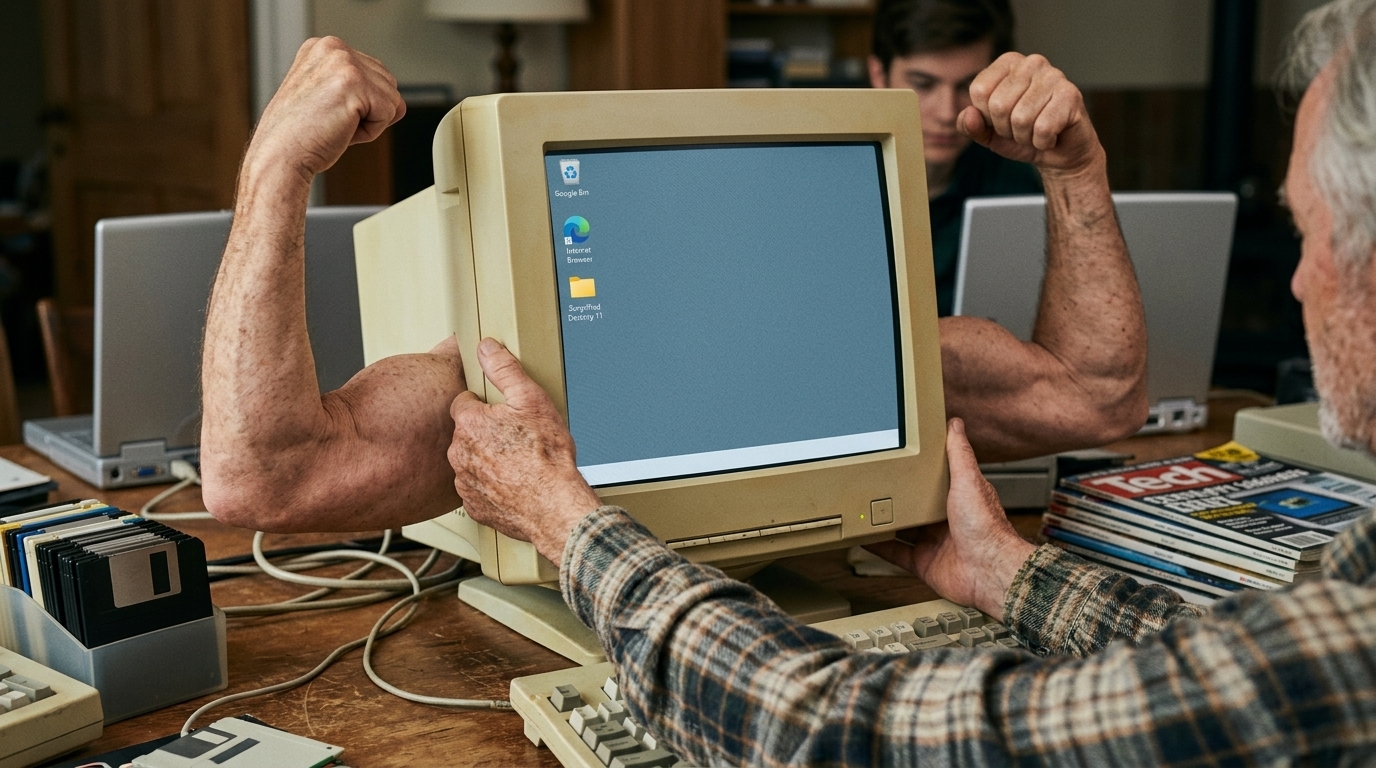
As we approach October 2025, a digital "Sword of Damocles" hangs over millions of computers worldwide. Microsoft's announcement regarding the end of support for Windows 10 threatens to turn perfectly functional machines into electronic waste, primarily due to the strict hardware requirements (TPM 2.0, Secure Boot) imposed by Windows 11. In this context, an unconventional solution named Tiny11 emerges as a deus ex machina for users who refuse to abandon their hardware.
The Philosophy of "Less is More"
Tiny11 is not a new operating system, but a drastically modified version of Windows 11 Pro (specifically version 22H2 or later). Created by the developer known as NTDEV, its core concept is the removal of every unnecessary element that bogs down the system. While a standard Windows 11 installation requires over 20GB of storage space and at least 4GB of RAM to function passably, Tiny11 occupies just 8GB and can run on as little as 2GB of RAM.
The "debloating" process involves removing Microsoft Edge, Teams, OneDrive, and hundreds of background services and telemetry tools that most users never need. The result is an operating system that evokes the speed and cleanliness of Windows 7, while maintaining the core and security features of the modern era.
Hardware Rescue and Ecological Consciousness
The significance of Tiny11 goes beyond mere technical curiosity. At its heart, it represents an act of resistance against planned obsolescence. According to market analysts, approximately 240 million computers could be headed for landfills after 2025 because they do not meet Microsoft's specifications, even though their processors remain capable of daily tasks.
"Tiny11 proves that the problem isn't our hardware, but the bloated code of modern operating systems that demands more and more resources without always offering proportional value," industry experts note.
By using Tiny11, older laptops that were once considered slow are given a second lease on life. System responsiveness is immediate, boot times are dramatically reduced, and energy consumption is limited, as the processor is no longer strained by meaningless background processes.
Risks and Compromises
However, using Tiny11 is not without risk. The first and most important issue is trust. Because it is a modified version from a third-party creator, the user must be certain that no malicious elements have been injected into the ISO. Although the open-source community and power users have extensively vetted Tiny11, official support from Microsoft is non-existent.
- Updates: Tiny11 does not always receive automatic updates in the same way that official versions do.
- Stability: Removing certain system components may cause malfunctions in specialized applications or games that rely on them.
- Legality: Although Tiny11 requires a valid Windows activation key to function fully, the modification of the software itself moves in a gray area of Microsoft's terms of service.
For the average user, installation requires some familiarity with creating bootable USB drives and managing partitions. It is not a "one-click and done" solution, but a process that requires care and the creation of backups.
Conclusion: A Tool for Conscious Users
Tiny11 is a reminder that technology should serve humanity, not the other way around. In an era where software companies push us toward continuous hardware upgrades, such tools offer an alternative path. It is the ideal solution for that old ThinkPad in the drawer or the 2017 desktop that refuses to die. Despite the risks, the promise of a lightweight, fast, and functional computer is too tempting to ignore.