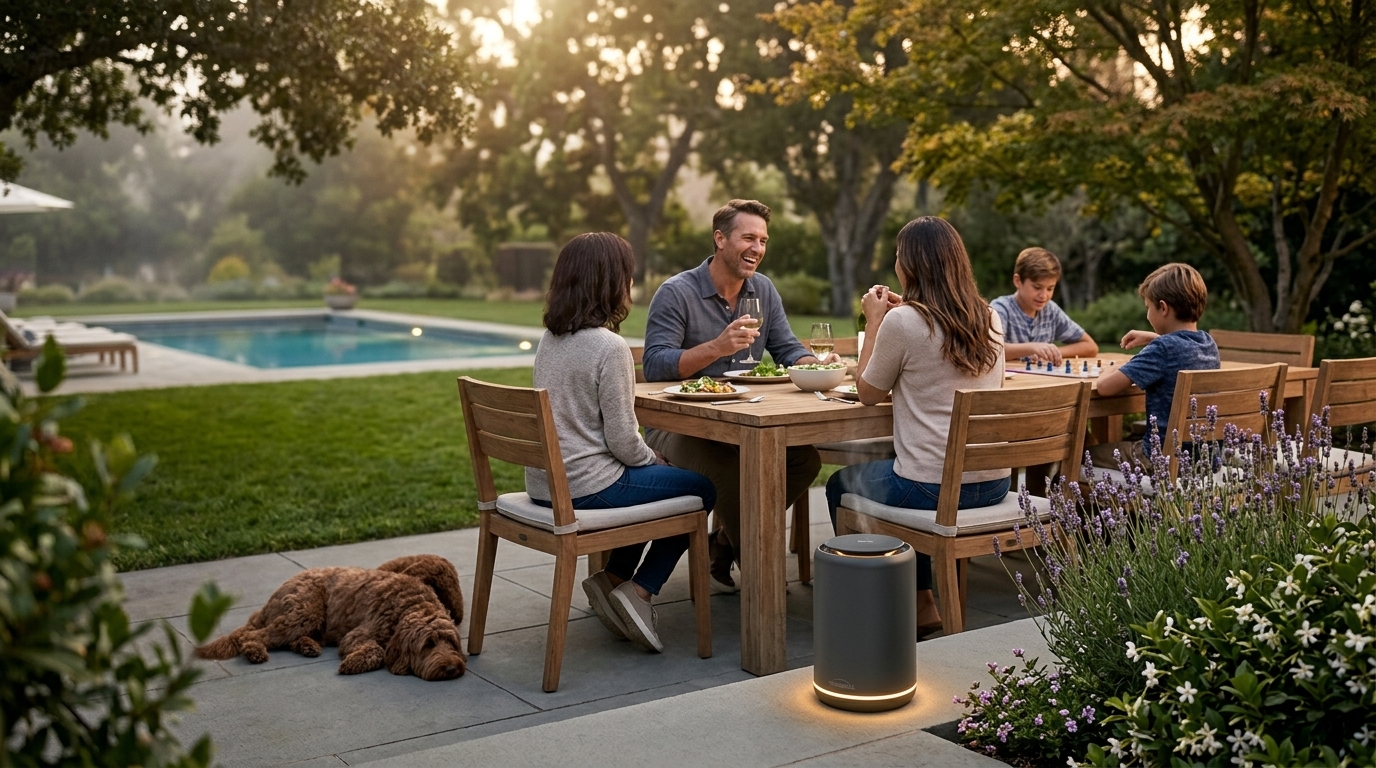
The days when mosquito control was limited to odorous sprays, smoky coils, and noisy electric zappers are rapidly becoming a thing of the past. Thermacell, a leader in the repellent industry, recently unveiled Liv 2.0, the second generation of its smart mosquito protection system. This is not merely an incremental update; it is a strategic repositioning of the outdoor living space as a controlled, technologically advanced environment. However, this high-tech shield comes with a price tag that firmly places it in the luxury category.
The Technological Evolution of Repellency
Liv 2.0 is far from a simple tabletop gadget. It is a hardwired, networked system consisting of multiple repellers connected to a central hub. Each unit uses heat to vaporize an odorless repellent liquid containing metofluthrin, creating a protective "bubble." In the new version, Thermacell claims that each repeller can cover up to 500 square feet, a significant increase over its predecessor.
The real innovation, however, lies in the new repellent formula. For the first time, the system promises to effectively deter "no-see-ums" (biting midges), which are often a more persistent nuisance than mosquitoes in coastal or humid regions. This expansion of the protection spectrum makes Liv 2.0 a comprehensive tool for managing a garden's microclimate.
The Cost of Comfort and Professional Installation
Despite its technological prowess, Liv 2.0 introduces a new reality for the consumer's wallet. The starting price has risen noticeably, with kits now beginning at around $900 and easily exceeding $1,500 for larger properties. Furthermore, Thermacell is now pushing professional installation as the preferred route. While the original Liv could be installed by a savvy DIY enthusiast, the complexity of the new wiring and the need for optimal placement make expert intervention almost a necessity.
"The transition from a shelf-bought gadget to a permanent piece of home infrastructure changes the market dynamic entirely," industry analysts observe.
It’s not just the initial investment. Liv 2.0 operates on a consumable model. The repellent cartridges have a limited lifespan (approximately 100 hours of use), and the replacement cost constitutes a recurring expense that owners must factor in. It is the classic "razor and blades" business model, successfully ported to the smart home industry.
Smart Features and Connectivity
As part of the modern smart home ecosystem, Liv 2.0 offers full control via a smartphone app. Users can schedule the system's operation, monitor repellent levels, and activate it remotely via Wi-Fi. Integration with voice assistants like Alexa and Google Assistant allows a user to "command" the expulsion of insects before even stepping outside.
However, this reliance on Wi-Fi and the cloud raises the usual questions about device longevity. What happens if Thermacell decides to stop supporting its servers in five years? For a system that requires trenching in the garden and permanent wiring, digital obsolescence is a risk that consumers must take seriously.
Environmental Implications and the Ethics of Tech
The continuous use of chemical repellents in outdoor spaces is not without its critics. While metofluthrin is considered safe for humans when used as directed, the constant release of substances into a garden ecosystem can affect other, beneficial insects. Thermacell maintains that the system is targeted, but ecological balance is always delicate. The choice to "sterilize" our outdoor spaces from every annoying insect reflects a broader modern trend of prioritizing absolute comfort over natural interaction.
In conclusion, the Thermacell Liv 2.0 is an impressive piece of engineering that solves a real problem in an elegant and effective way. However, it targets a specific demographic with the financial means to invest in a permanent solution. For everyone else, the traditional coil and the mosquito net will remain, for now, the most faithful companions of the summer season.