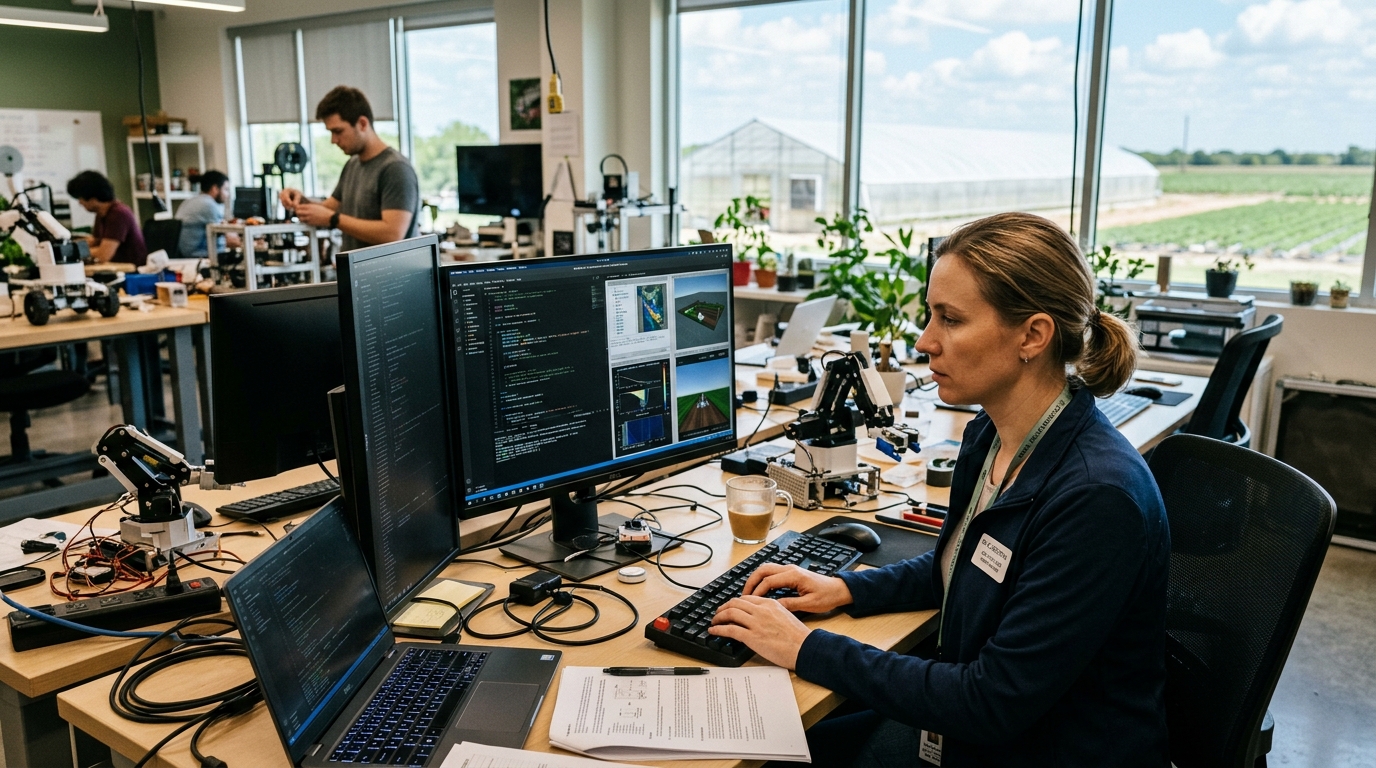
In the heart of Texas, where the legacy of ranching and farming is the bedrock of local identity, a quiet revolution is taking root. This isn't about a new strain of drought-resistant wheat or an improved irrigation pipe; it’s about the integration of algorithms and autonomous machinery into the soil itself. A new training initiative launched in San Antonio is preparing the agricultural workforce for a future where tractors drive themselves and plant pathologies are diagnosed by AI-powered drones before they are visible to the human eye.
From the Plow to the Processor
Agriculture has historically been a sector defined by backbreaking labor and immense volatility. Weather patterns, pest infestations, and fluctuating commodity prices have long made farming a gamble against nature. Today, technology promises to mitigate that uncertainty. The Texas program, supported by institutions like Texas A&M AgriLife, moves beyond theoretical classroom learning. It offers hands-on experience with systems that analyze soil composition in real-time, optimize water usage down to the drop, and apply fertilizers with sub-centimeter precision.
The urgency for this training cannot be overstated. As the global population climbs and climate change renders traditional resources scarcer, "precision agriculture" has shifted from an experimental luxury to a survival necessity. Program participants are learning to manage autonomous fleets that can work through the night, significantly reducing labor overhead and maximizing the yield of every acre planted.
Robotics: The Answer to the Labor Crisis
One of the most pressing challenges facing the American agricultural sector is a chronic labor shortage. Younger generations have historically migrated toward urban centers, leaving an aging demographic to manage the nation's food supply. Robotics is stepping in to bridge this demographic gap. The Texas training modules focus heavily on robotic pickers capable of harvesting delicate produce—a task once thought impossible for machines due to the nuance and dexterity required.
Furthermore, the integration of Artificial Intelligence allows for "smart" monitoring ecosystems. Using high-resolution multispectral imagery, AI can identify a single invasive insect or a localized fungal outbreak across thousands of acres. This enables "variable rate application," where chemicals are only applied to the infected area rather than the entire field. Such precision can reduce pesticide use by up to 90%, offering a dual benefit: lower operational costs for the farmer and a significantly smaller environmental footprint.
The Digital Divide and Cybersecurity Risks
Despite the optimism, the path to a fully automated farm is fraught with challenges. The high cost of entry for AI and robotic hardware remains a barrier for small-scale family farms. There is a legitimate concern that this technological leap could consolidate power further into the hands of massive agribusiness conglomerates, leaving independent farmers behind. To counter this, the Texas program emphasizes scalable solutions and provides access to shared technological hubs, aiming to democratize these tools.
Another emerging frontier is cybersecurity. As tractors and irrigation grids become nodes on the Internet of Things (IoT), they become potential targets for cyberattacks that could disrupt food security. The curriculum in Texas now includes modules on digital infrastructure protection, acknowledging that the 2026 farmer must be as proficient in network security as they are in crop rotation.
Conclusion: A Blueprint for Global Food Security
The Texas initiative serves as a blueprint for the symbiotic relationship between technology and nature. The stereotypical image of the farmer is being replaced by a tech-savvy professional who manages a fleet of drones from a tablet while analyzing data-driven yield projections. This evolution is not merely about convenience; it is about human resilience. By elevating farming to a high-tech discipline, the industry has a renewed chance to attract young talent who see a future in sustainable, tech-driven production.
In a rapidly changing world, the ability to produce more food with fewer resources will be the cornerstone of global stability. Texas is proving that even the most traditional industries can be reimagined through the lens of innovation, ensuring that the fields of tomorrow are as productive as they are intelligent.