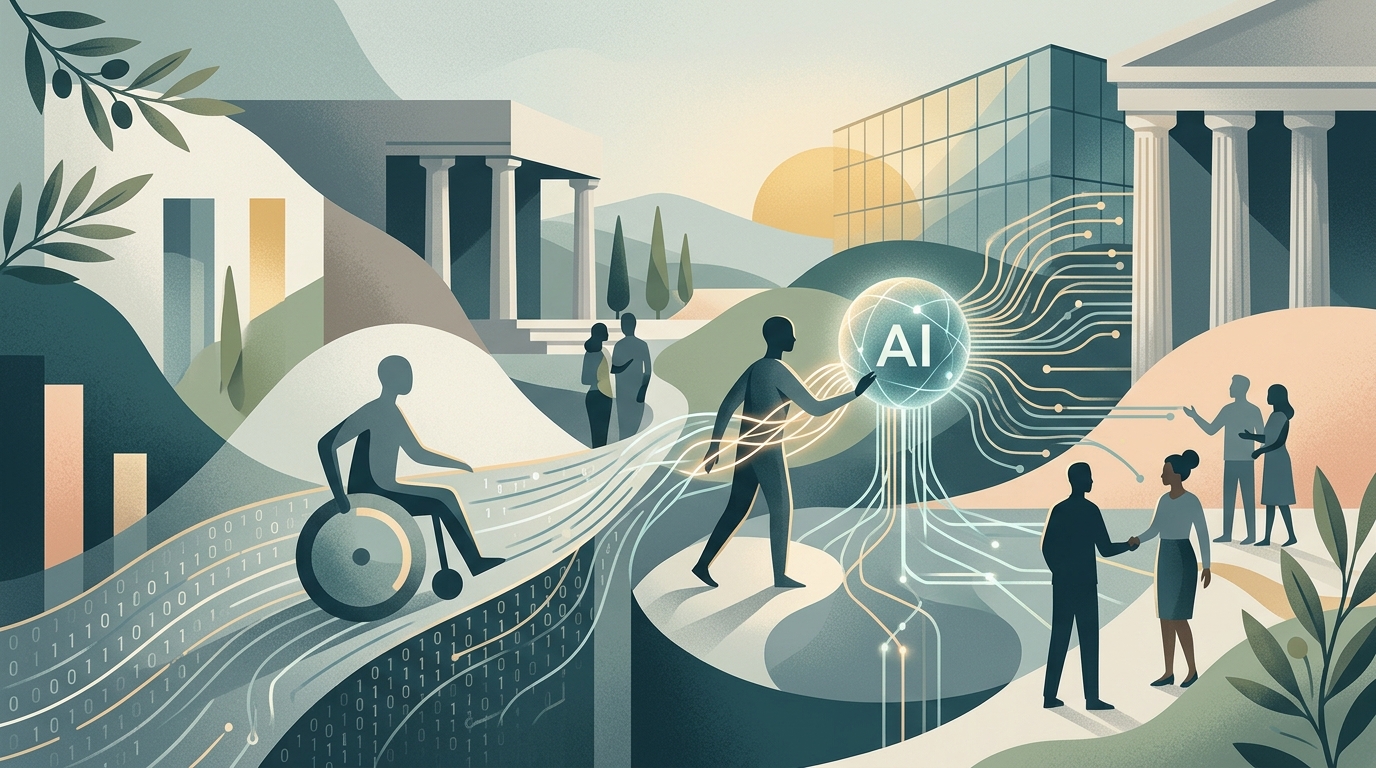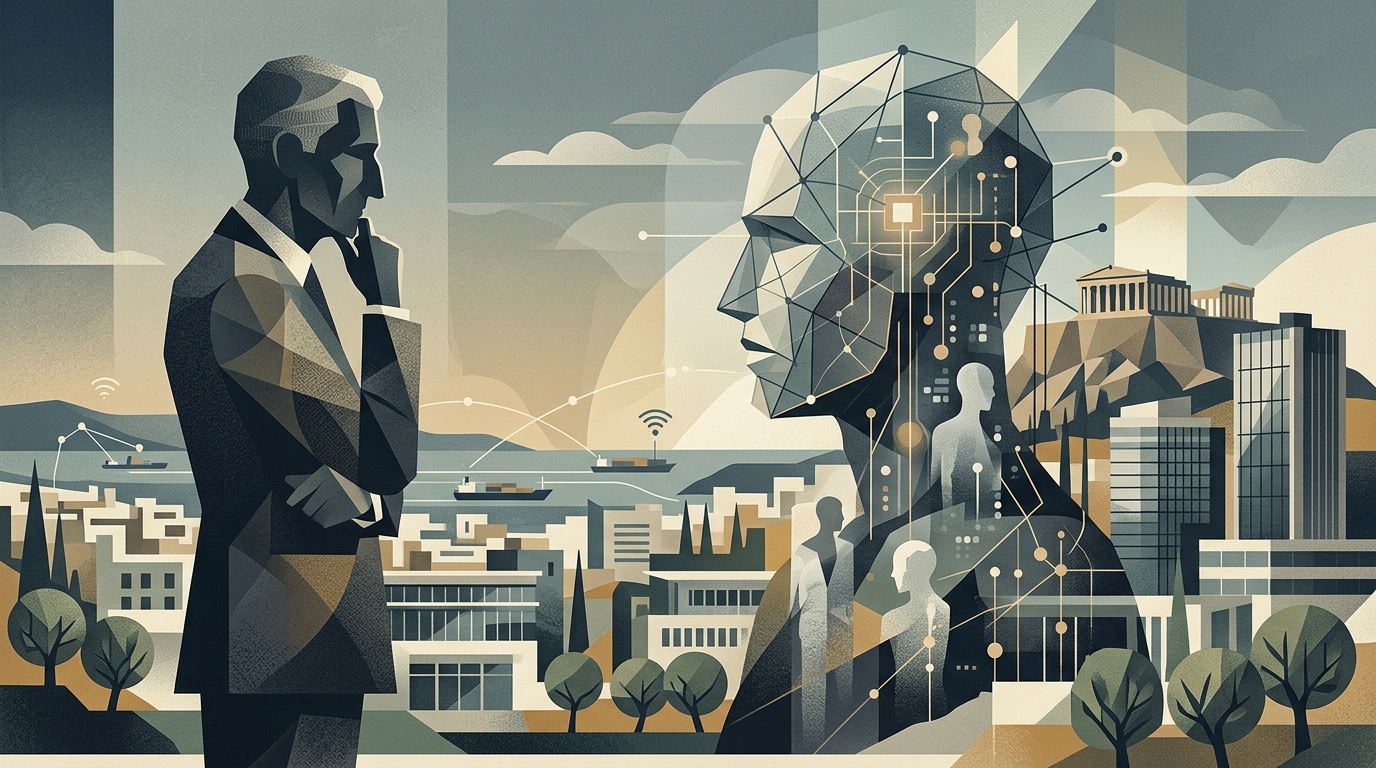
In an era where Artificial Intelligence is no longer a science fiction scenario but a structural element of our daily lives, concerns are shifting from "what the machine can do" to "what the machine can feel." Lord Martin Rees, the UK's Astronomer Royal and one of the most influential thinkers of our time, gave a revealing interview to 'Kathimerini', putting his finger on the pulse of the issue: Is consciousness an exclusive privilege of the biological brain, or can silicon house the same "spark" we call subjective experience?
The Distinction Between Intelligence and Consciousness
Martin Rees begins his analysis by making a crucial distinction that often escapes public discourse. The ability to process information, solve complex mathematical problems, and create art—what we call "intelligence"—does not necessarily imply the existence of "consciousness." As he points out in 'K', an AI system can surpass us in every cognitive function while remaining internally "dark," without a sense of "self."
The question remains philosophical but also deeply practical. If we build robots that act as if they have feelings, do we have a moral obligation to them? Rees warns that if consciousness requires the complex chemistry of carbon, then machines will remain sophisticated zombies. However, if consciousness is "functional"—that is, it arises from the organization of information regardless of the material—then the future of ethics will have to be radically redefined.
The Post-Human Future in Space
One of the most fascinating aspects of Rees's thought concerns the human presence in the universe. He argues that our biological bodies, products of millions of years of Darwinian evolution, are completely unsuitable for travel beyond the Moon. "We are adapted to live on Earth," he notes. The conquest of space, therefore, will not be achieved by humans made of flesh and blood, but by machines or cyber-organisms.
This transition from biological to technological evolution marks the beginning of the post-human era. While biological evolution takes millennia to bring about small changes, technological evolution moves at exponential rates. Rees predicts that the future "inhabitants" of the galaxy will be intelligent beings who have left behind the need for oxygen, food, and sleep, living in timescales that are inconceivable to us.
Existential Risks and Today's Responsibility
As co-founder of the Centre for the Study of Existential Risk at Cambridge, Rees does not turn a blind eye to the threats. In his interview with 'K', he emphasizes that the threat does not necessarily come from an "evil" AI wanting to exterminate us, but from the simple indifference of a superior intelligence toward our needs. If the goals of a powerful AI are not perfectly aligned with human ones, the result could be catastrophic.
- The need for international regulation of AI research.
- The danger from "lone wolves" using technology for biological threats.
- The preservation of human autonomy in a world of automated decisions.
Rees concludes with a dose of optimism but also a stern warning. Earth is a rare jewel in the universe, and humanity is at a critical turning point. We are the first generation that has the power to determine the future of the planet, but also the first at risk of ending it due to technological hubris.
"Whether machines will have consciousness we may never know for sure, but the way we treat them will define our own humanity."
Martin Rees's interview in 'Kathimerini' is a call for intellectual vigilance. In a world running at the speed of light towards automation, returning to the fundamental questions of philosophy is not a luxury, but a necessity for survival.