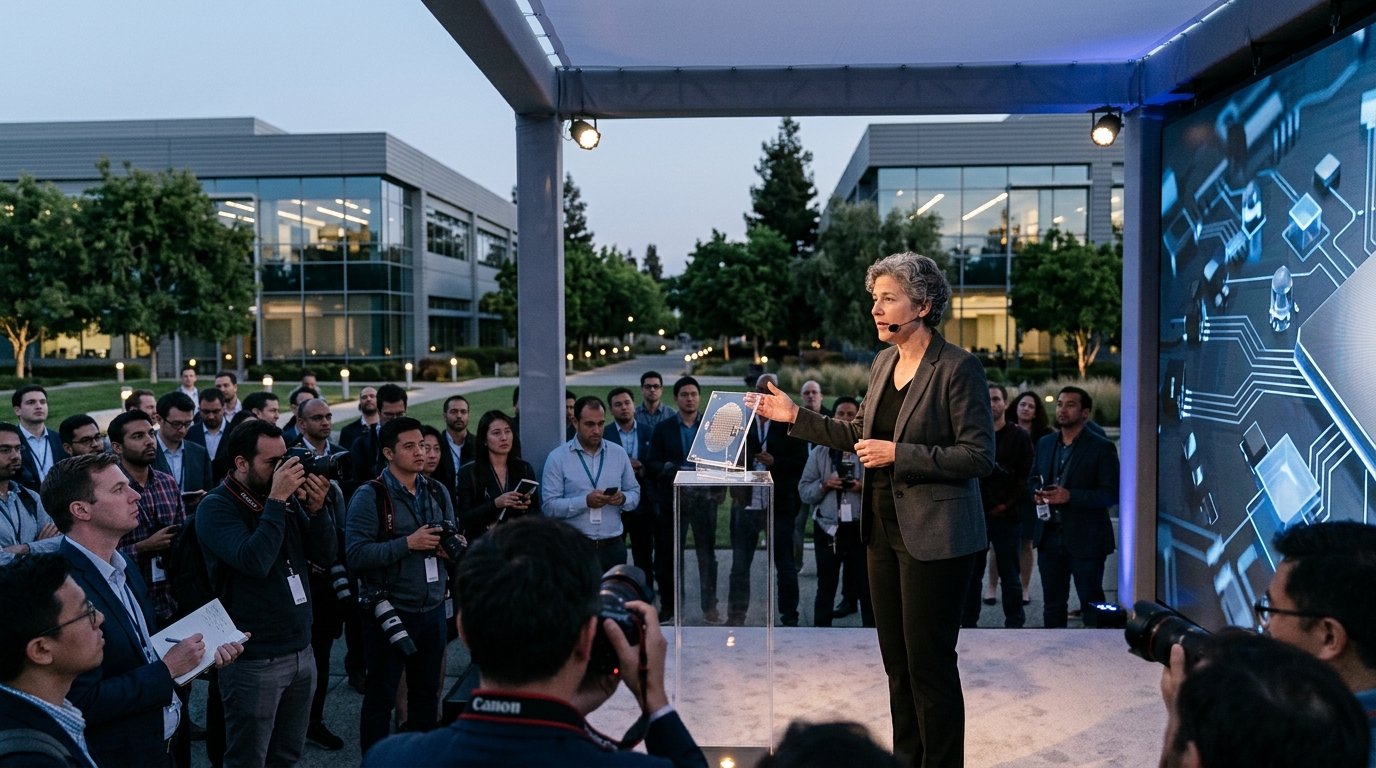
In the heart of the global race for AI supremacy, Amazon is no longer content being just a cloud provider or a retailer. The recent unveiling of its plans to develop specialized AI chips marks a strategic pivot that could reshape the entire smart device ecosystem. This move, largely a response to the growing reliance on Nvidia and the skyrocketing costs of its processors, aims for total vertical integration—from hardware to software.
From Data Centers to the Living Room
Amazon, through its subsidiary Annapurna Labs (acquired in 2015), has been feverishly working on two primary chip families: Trainium and Inferentia. While the former is designed for training massive large language models (LLMs) within AWS data centers, the latter focuses on 'inference'—the real-time operation of these models. However, the latest industry reports suggest a significant expansion of this technology into consumer hardware, such as Echo speakers and Fire TV devices.
Integrating AI chips directly into devices—known as Edge AI—means that the processing of our voices and requests will no longer need to travel to the cloud and back. This promises near-zero latency and, theoretically, enhanced privacy, as data remains local to the device. Imagine an Alexa that doesn't 'pause to think' before responding, but reacts instantly, understanding conversational context in a way that feels truly human.
The Strategy of Decoupling from Nvidia
Nvidia’s dominance in the GPU market has created a de facto monopoly that squeezes the profit margins of big tech giants. Amazon, following in the footsteps of Apple’s M-series and Google’s Tensor chips, seeks to slash AI operational costs by 40% to 50%. According to market analysts, proprietary silicon allows Amazon to optimize hardware specifically for its own algorithms, something that general-purpose Nvidia cards cannot offer to the same degree of efficiency.
"The battle for AI will not just be won with algorithms, but by who controls the silicon upon which those algorithms run," industry experts suggest.
This approach gives Amazon a massive advantage in scaling Generative AI. With the release of Trainium2, the company promises four times the performance of its predecessor, allowing developers to train models faster and with significantly lower energy consumption—a critical factor in the era of climate concerns and power-hungry data centers.
The Future of AI Devices: Beyond Voice Commands
What does this mean for the average user? The next generation of Kindles, Fire Tablets, and Ring devices will be equipped with 'perceptive' capabilities. These won't just be devices that execute commands; they will be systems that anticipate needs. For instance, a Ring security camera with an onboard AI chip could distinguish between a delivery driver and a familiar friend without ever sending video footage to an external server for analysis.
- Autonomy: Devices that function even without an internet connection for core AI tasks.
- Personalization: Local learning of user habits without data sharing.
- Energy Efficiency: Longer battery life for portable devices thanks to specialized silicon.
In conclusion, Amazon’s silicon investment is not merely a cost-cutting exercise. It is the foundation of a new era where artificial intelligence becomes invisible, embedded in our physical reality, and entirely controlled by the architect of the ecosystem.