In today's breakneck digital landscape, Artificial Intelligence (AI) is no longer the exclusive playground of Silicon Valley giants. A transformative initiative, the B.I.D. Academy (Business Intelligence & Development), recently highlighted by the Killeen Daily Herald, is proving that AI can be the "great equalizer" for small and medium-sized enterprises (SMEs). As we navigate mid-2026, a local business's ability to intelligently integrate smart systems into its daily operations has become the primary determinant of its longevity and success.
The Democratization of Innovation
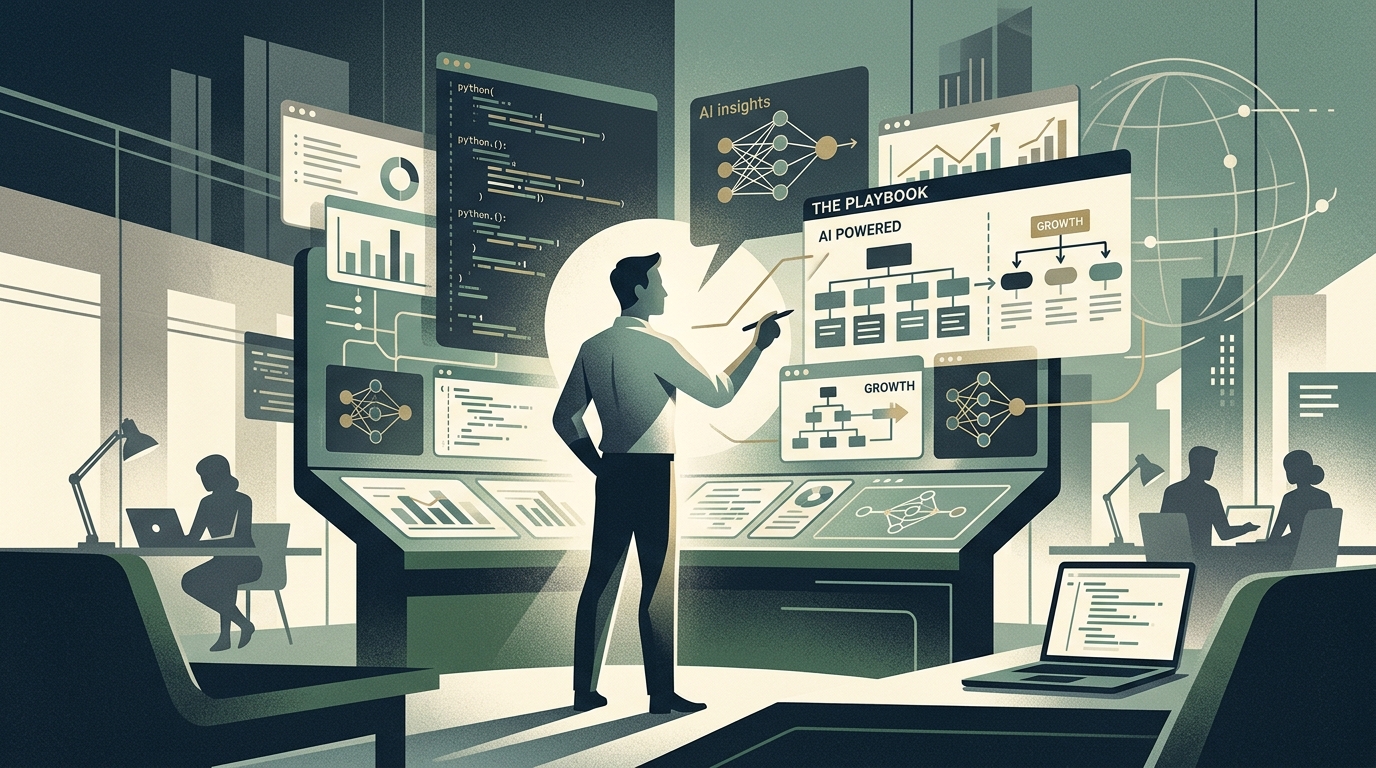
For decades, small businesses have struggled with limited resources, attempting to compete against the economies of scale enjoyed by massive corporations. The B.I.D. Academy focuses precisely on this pain point: providing high-level technical expertise to entrepreneurs who possess vision but lack the specialized tools. The training provided is far from theoretical; it focuses on practical applications that automate tedious processes, from inventory management to sophisticated marketing content creation.
The Academy’s approach underscores a fundamental paradigm shift. AI is not viewed as an external threat designed to replace human labor, but as a "copilot" that augments human potential. For local shops in Killeen and beyond, this translates into saving dozens of man-hours per week, allowing owners to pivot their focus back to strategic growth and personalized customer service—the very things that make small businesses unique.
Practical Applications and Operational Efficiency
The tools taught at B.I.D. Academy cover a spectrum of business needs. Firstly, the use of Large Language Models (LLMs) allows a small business to generate professional communication materials, press releases, and social media campaigns in seconds. What once required hiring an outside consultant or agency can now be performed in-house with minimal overhead.
- Automated Customer Service: 24/7 chatbots that answer queries and book appointments without human intervention.
- Predictive Analytics: Tools that analyze historical sales data to forecast demand and optimize supply chain orders.
- Hyper-Personalization: Systems that create tailored offers for individual customers, significantly boosting retention rates.
As the Academy's instructors point out, the hurdle is no longer access to technology—since many of these tools are affordable or even open-source—but rather the "digital confidence" required to implement them effectively.
Bridging the Literacy Gap
However, the transition is not without its friction. B.I.D. Academy acknowledges a stark reality: businesses that delay AI adoption risk falling into a competitive deficit that may soon become insurmountable. In 2026, AI literacy is the new standard of competence. The Academy places a specific emphasis on underserved communities that have historically lacked access to capital and tech training, ensuring the AI revolution remains inclusive rather than exclusionary.
"AI isn't going to replace the small business owner; the business owner using AI will replace the one who isn't," is a common refrain in B.I.D. Academy workshops.
This sentiment captures the essence of our current era. Technology acts as a force multiplier. For a family-owned business, using a data analytics tool can reveal hidden market opportunities that were previously invisible without a dedicated team of analysts.
The Future of the Local Economy
Looking ahead, the B.I.D. Academy model could serve as a global blueprint for urban economic development. By empowering local entrepreneurs through technology, communities can strengthen their economic fabric and reduce reliance on centralized multinational platforms. AI gives small businesses the "teeth" they need to compete in a modern, globalized marketplace.
In conclusion, the initiative in Killeen serves as a vital reminder that technology is a tool meant to serve human ends. When combined with proper education and community support, Artificial Intelligence can transform the "small" into the "mighty," fostering a more resilient, innovative, and equitable economy for everyone.