As we navigate through the summer of 2026, the video game market stands at a critical juncture. Nintendo, having solidified its dominance with the Switch 2, recently issued an announcement that sent shockwaves through the community: the console’s price is set to increase by $50 starting September 1st, reaching the psychological threshold of $499.99. Within this context, Amazon’s current Prime Day is not merely another discount period; it is a strategic window for consumers to bolster their entertainment ecosystem before the impending wave of price hikes.
The Switch 2, powered by technologies like DLSS 3.5 and capable of 4K output in docked mode, has fundamentally shifted accessory requirements. We are no longer talking about simple plastic shells, but sophisticated tools that allow the console to perform at its peak. From high-speed memory cards to controllers featuring Hall Effect sensors, the deals on offer these days are more than just attractive—they are essential.
The Storage Imperative in the 4K Era
One of the Switch 2’s primary challenges is the sheer size of its games. With next-gen titles frequently exceeding 50GB due to high-resolution textures, the console’s internal memory is quickly depleted. During Prime Day, we’ve observed significant price drops on microSD Express cards, which are vital for the rapid load times demanded by Nintendo’s new hardware.
- 1TB cards from reputable brands are hitting historic lows.
- Read speed is now a critical factor, as older microSD models may cause stuttering during asset streaming.
- Investing in a fast card now protects users from the price increases expected this fall due to flash semiconductor shortages.
Storage is no longer a luxury; it is a necessity. Market analysts point out that NAND flash prices are projected to rise by 15% in the final quarter of 2026, making these Prime Day deals the ideal moment to strike.
Controllers and Ergonomics: The War on Drift
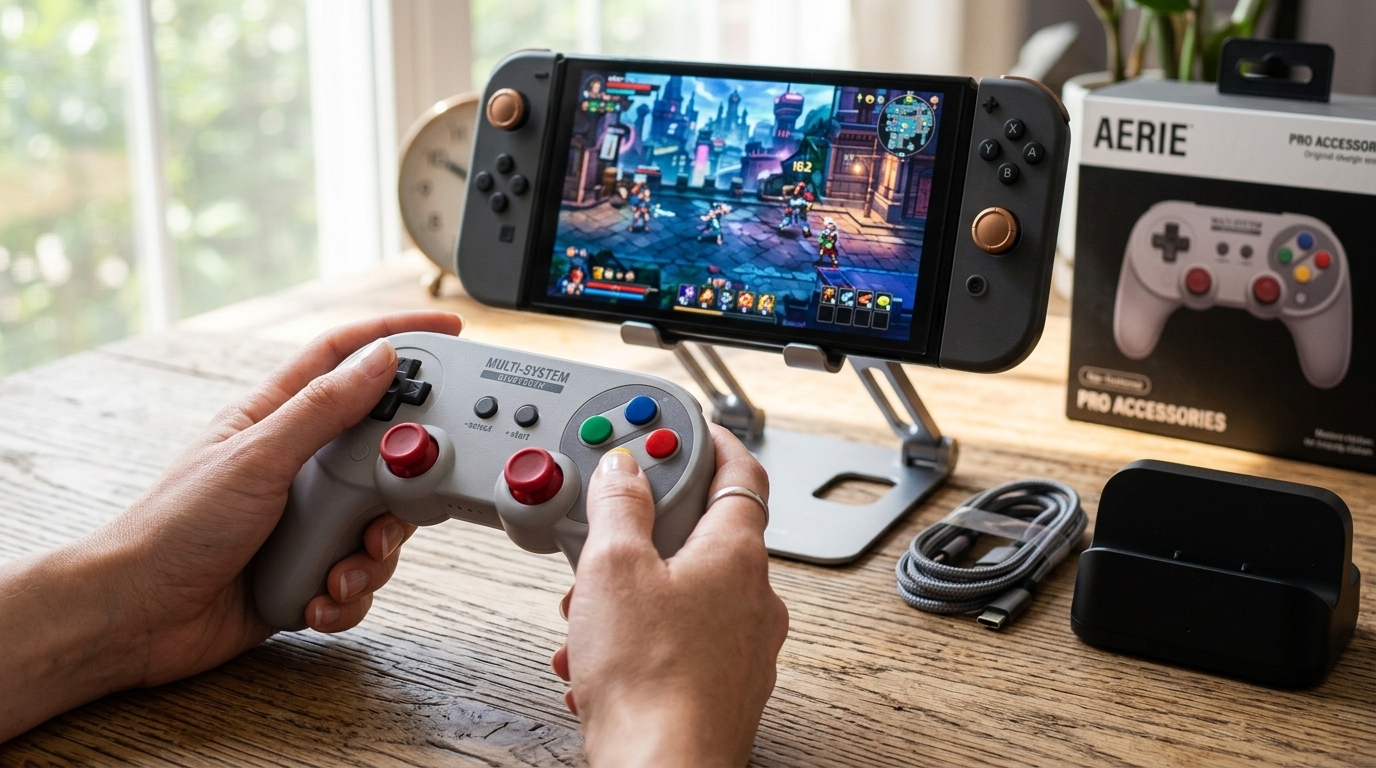
The Switch 2 Pro Controller remains the gold standard, but its price is often prohibitive. This Prime Day, for the first time, we are seeing substantial discounts on third-party manufacturers that integrate magnetic Hall Effect sensors. This technology permanently eliminates the "stick drift" issue that plagued the previous generation. Investing in a controller that does not suffer from mechanical wear is a direct investment in a player's quality of life.
"The shift toward Hall Effect sensors in Switch 2 accessories isn't just a technical upgrade; it's a declaration of independence from the planned obsolescence of the past," notes a senior executive from a major peripheral firm.
Beyond controllers, carrying cases and docks have seen significant improvements. The new docks on sale now support DisplayPort 2.0 and feature integrated 2.5Gbps Ethernet ports, essential for stable online gaming and the rapid downloading of increasingly massive game files.
Nintendo’s Strategy and Market Psychology
But why is Nintendo raising prices now? The answer lies in manufacturing costs and the yen’s exchange rate. By bumping the console’s price to $499.99, Nintendo is attempting to preserve its profit margins in a global economy strained by inflation. This creates a domino effect: when the core device becomes more expensive, accessories often follow suit.
Consumers who secure their necessary peripherals now—such as GaN (Gallium Nitride) chargers for faster power delivery, tempered glass screen protectors, and ergonomic grips—stand to save upwards of $100-$150 compared to the prices we expect to see in October. It is a classic case where foresight is financially rewarded.
In conclusion, Prime Day 2026 serves as a final line of defense for the gamer’s wallet. With the Switch 2 entering its "mature pricing" phase, the era of cheap experimentation is drawing to a close. Choosing high-quality accessories today ensures that the gaming experience remains premium, without the bitter aftertaste of future price hikes.