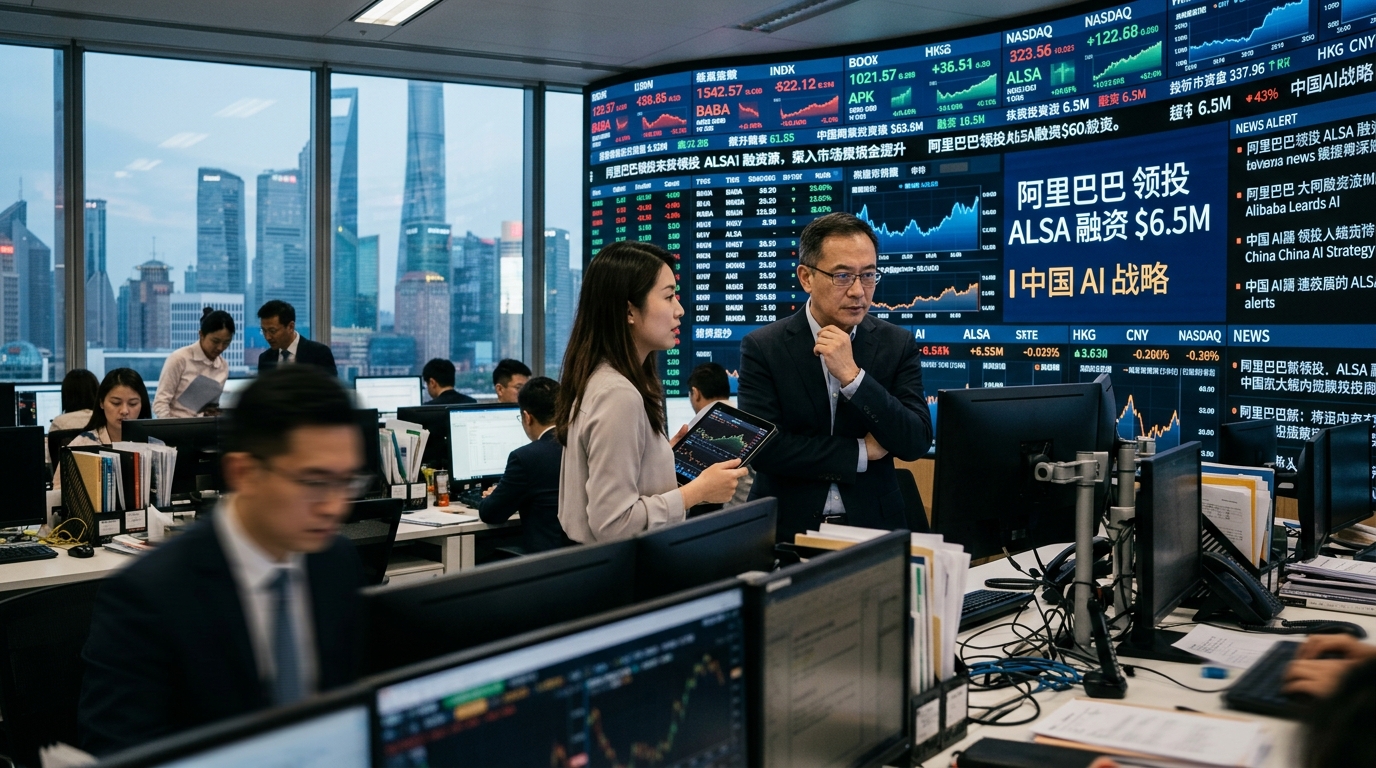
In the ever-shifting landscape of global technological hegemony, Alibaba Group Holding Ltd. continues to position itself as the undisputed architect of China's Artificial Intelligence ecosystem. The recent news that the e-commerce and cloud titan led a $6.5 million funding round for AI startup Alsa is not merely a financial transaction; it is a declaration of intent in an era where access to advanced semiconductors and algorithmic efficiency represent the new 'digital gold.'
The Strategic Significance of Alsa in Alibaba's Ecosystem
Alsa, an emerging force in the AI sector, focuses on solutions that optimize processing power and the performance of Large Language Models (LLMs). At a time when U.S. restrictions on high-tech chip exports to China are becoming increasingly stringent, a company's ability to deliver 'more with less' is invaluable. Alibaba's investment demonstrates that the group is not only interested in developing its own models, such as Tongyi Qianwen, but also in creating a fortress of startups that will shield the Chinese market from external pressures.
This funding comes at a moment when Alibaba is restructuring its operations, prioritizing its Cloud Intelligence Group. Integrating Alsa's technologies into Alibaba's cloud services could provide a significant competitive advantage over Tencent and Baidu, allowing businesses to train AI models at a lower cost and with greater speed.
The Race for Chinese AI Autonomy
The year 2026 finds China at a critical crossroads. While American companies like OpenAI and Anthropic continue to lead developments in foundational models, Chinese giants have pivoted toward 'vertical' and 'applied' AI. The investment in Alsa highlights this trend: the focus is shifting from the sheer number of parameters to the efficiency of implementation. Alsa appears to possess the expertise for optimizing the 'inference' process, which constitutes the bulk of operational costs for AI companies today.
- Strengthening the domestic AI software supply chain.
- Reducing reliance on Western optimization tools.
- Creating a network of partner startups that fuel Alibaba Cloud.
Geopolitics and Technological Sovereignty
We cannot analyze this move without considering the geopolitical context. Washington closely monitors every move by Alibaba, as the company serves as China's national champion in technology. By investing in smaller, agile startups like Alsa, Alibaba manages to diffuse innovation and protect intellectual property within its borders.
"The battle for AI will not be decided solely in laboratories, but in the ability of companies to scale their solutions economically," note market analysts in Beijing.
In conclusion, $6.5 million may seem like a small sum by Alibaba's standards, but its symbolic and strategic value is immense. It represents another brick in the wall of protection and development that China is building around its domestic technology, ensuring that the next computing revolution will have a distinctly Chinese character.