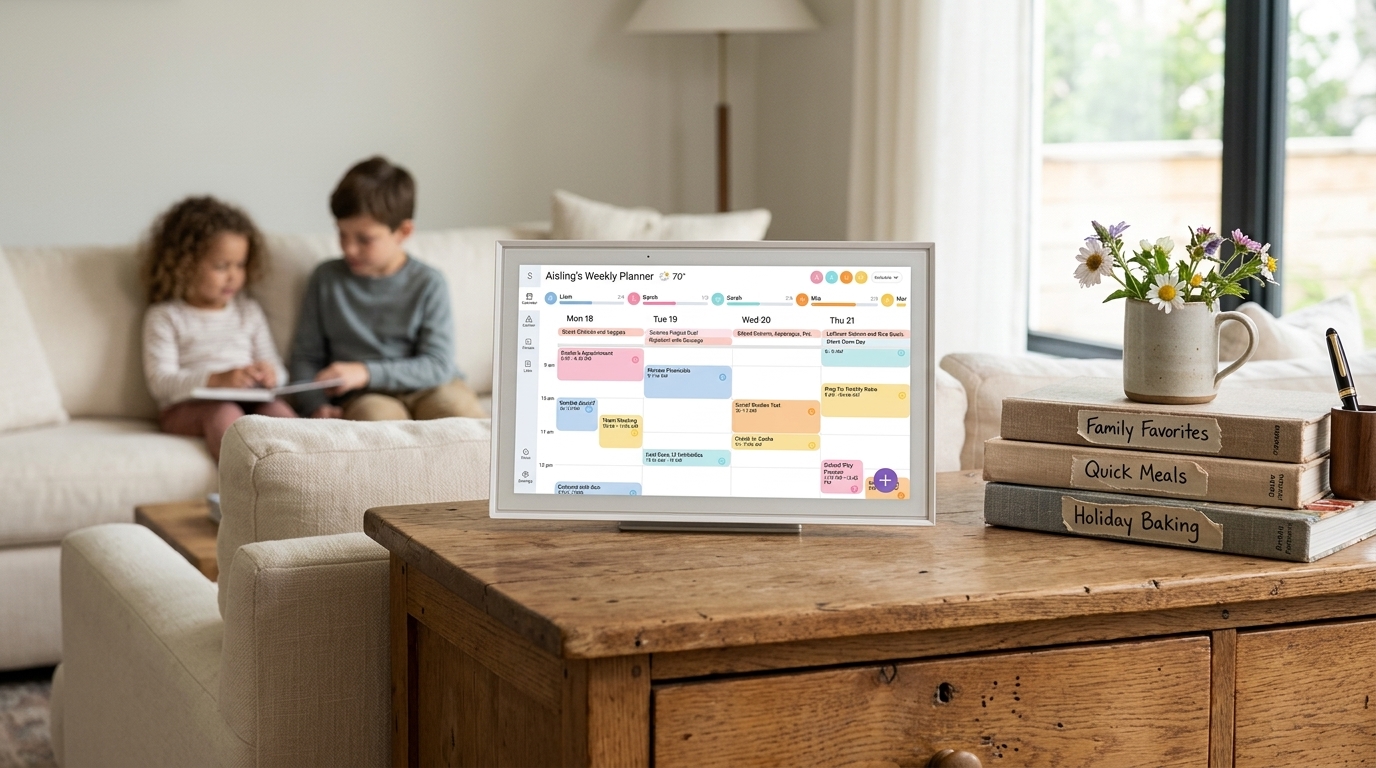
In the frantic cadence of 2026, the domestic sphere remains the ultimate logistical challenge. The kitchen, once centered around the warmth of the hearth, is now the nerve center of a complex data operation. Gone are the days of cluttered refrigerators covered in magnets and frantic paper notes. The Skylight Calendar, a device that appears like a sleek digital frame but functions as a household 'command center,' has emerged as a definitive solution to the age-old problem of coordinating multiple schedules in a single, visual environment. In a world where parents struggle with the 'mental load' of managing everything from soccer practices to dental appointments, this technology promises a rare commodity: domestic tranquility.
Centralizing the Domestic Chaos
The Skylight is not merely a tablet mounted on a wall; it is a purpose-built appliance designed to be 'always on,' serving as the single source of truth for every family member. Its primary strength lies in its ability to sync seamlessly with existing digital ecosystems—Google Calendar, Apple iCloud, Outlook, and Yahoo. This allows parents to maintain their preferred apps on their smartphones while the information propagates automatically to the home’s central display.
The user experience is focused on friction reduction. When every family member is aware of the day's itinerary, the constant barrage of questions like 'what’s for dinner?' or 'who is picking me up?' begins to fade. Visualizing time through a large, bright interface helps children grasp the flow of the week, a crucial developmental step in learning time management. Furthermore, the integration of grocery lists and meal planning transforms the device into a holistic resource management tool, bridging the gap between scheduling and execution.
Empowering 'Touchscreen Natives'
One of the most profound shifts observed with the adoption of the Skylight is its impact on the younger generation. Children born into the current decade are 'touchscreen natives'—for them, interacting with a digital interface is as intuitive as breathing. By providing them access to an interactive calendar, we grant them a sense of agency. They can view their own commitments, check off assigned chores, and feel like active participants in the household’s operation rather than mere passengers in their parents' busy lives.
The 'Chores' feature on the Skylight utilizes a system of gamification that resonates deeply with modern kids. Tapping the screen to complete a task provides immediate visual feedback and a sense of accomplishment. This not only reduces parental nagging but also fosters a culture of accountability. At a time when screens are often criticized for isolating family members, a shared screen that promotes collaboration offers a compelling counter-narrative to the digital isolation trend.
Privacy, Cost, and the Subscription Trap
Despite the clear organizational benefits, introducing another 'smart' screen into the home is not without its caveats. The hardware cost, coupled with a subscription model required to unlock premium features such as photo syncing or advanced customization, raises questions about the democratization of organization. Is family harmony becoming a premium service? Moreover, the consolidation of a family’s entire schedule—detailing the movements and habits of minors—into a single corporate database necessitates a high degree of trust in data security and privacy protocols.
Ultimately, the Skylight is more than just a gadget; it is a reflection of our collective desire for control in an increasingly chaotic world. While it cannot replace meaningful face-to-face communication, it can certainly remove the logistical hurdles that often lead to domestic friction. Its success suggests a burgeoning market for 'calm technology'—tools that don't seek to hijack our attention but rather help us reclaim our time and focus on the moments that truly matter.