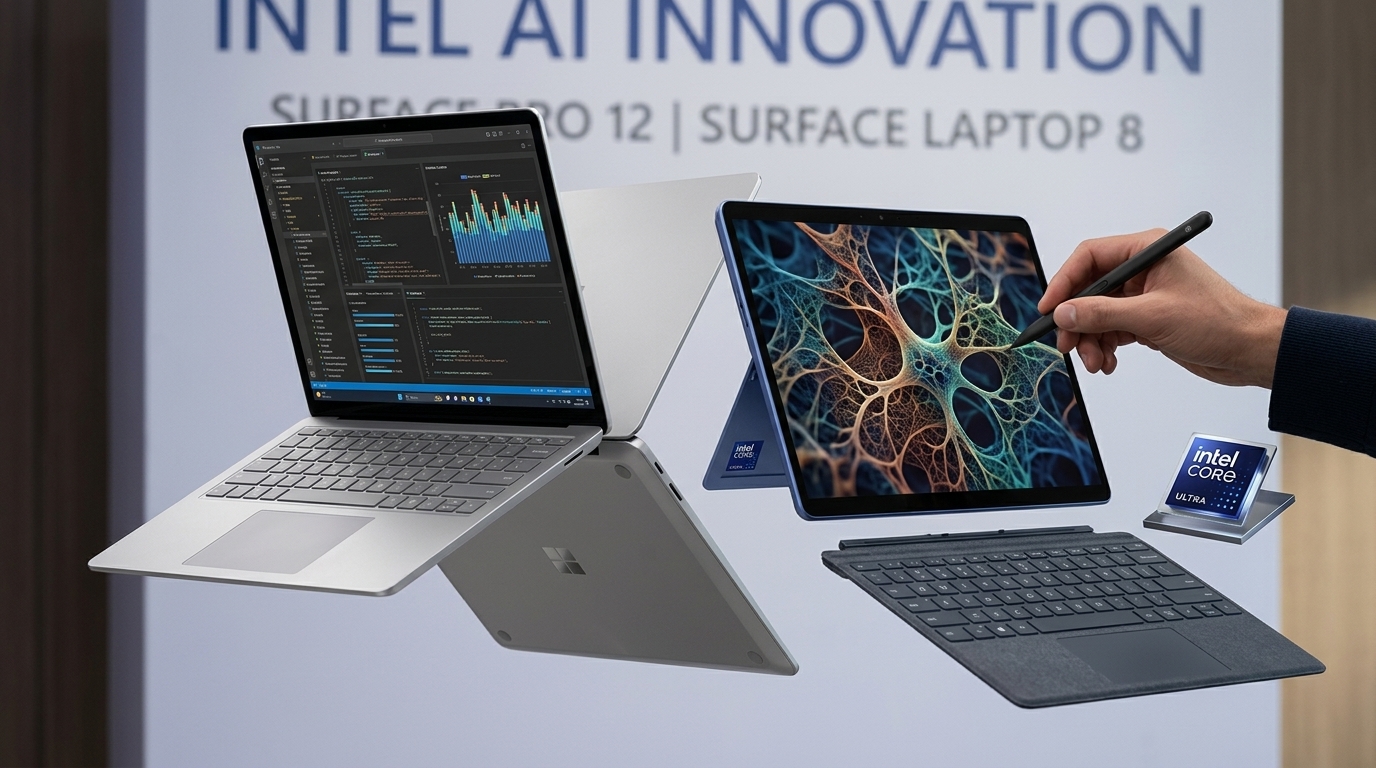
Two years after the bold pivot toward Arm architecture that defined the Surface Pro 11 era, Microsoft is returning to its roots—or at least a highly evolved version of them. With the official unveiling of the Surface Pro 12 and Surface Laptop 8, the Redmond tech giant is placing Intel back at the heart of its flagship strategy, powering the new devices with the Intel Core Ultra Series 3 processors.
The 'Dual-Track' Strategy
This move is not a retreat, but a calculated strategy of diversification. While 2024 saw Microsoft prioritizing Qualcomm's Snapdragon chips to showcase energy efficiency, 2026 finds Intel having effectively closed the gap. The new Core Ultra Series 3 chips promise not just raw computational power, but a built-in Neural Processing Unit (NPU) exceeding 45 TOPS, meeting the stringent requirements of the Copilot+ PC standard.
For the professional user, returning to Intel's x86 architecture means one thing: absolute compatibility. Despite massive improvements in Windows on Arm emulation, certain specialized applications in engineering, high-end video production, and legacy enterprise databases still perform optimally in a native Intel environment.
Surface Pro 12: The Hybrid Reimagined
The Surface Pro 12 maintains its iconic form factor but features significant internal overhauls. The OLED display is now standard across all models, offering superior contrast and color accuracy that professional creators demand. Microsoft has focused heavily on thermal management, allowing the Core Ultra Series 3 to maintain high clock speeds without the thermal throttling that plagued previous Intel-based generations.
- Processor: Intel Core Ultra Series 3 with advanced AI architecture.
- Display: 13-inch PixelSense Flow OLED with a 120Hz refresh rate.
- Connectivity: Thunderbolt 5 support for data transfer speeds up to 80Gbps.
- Battery Life: Promises of 15+ hours of real-world usage.
Surface Laptop 8: The Ultrabook King
If the Pro 12 is for the creatives, the Surface Laptop 8 is the workhorse for the corporate world. Available in 13.5 and 15-inch variants, the Laptop 8 emphasizes typing comfort and productivity. The integration of Intel’s latest silicon allows Microsoft to deliver a device that remains quiet and cool, even under heavy multitasking workloads.
"Our collaboration with Intel on the Series 3 chips redefines what a laptop can achieve in the age of generative AI," a Microsoft spokesperson noted during the launch event.
The new Surface Studio Camera, featuring hardware-level AI effects, ensures video calls are clearer than ever, while the haptic touchpad has been refined for even greater precision and feedback.
The Consumer Dilemma: Intel or Arm?
With the release of these models, Microsoft creates an intriguing choice for buyers. The Arm versions remain in the catalog for those who prioritize battery life above all else. However, Intel, with the Core Ultra Series 3, seems to have achieved the near-impossible: offering battery longevity that approaches Arm standards without sacrificing the legacy software compatibility that built the Windows empire over the last few decades.
In conclusion, the Surface Pro 12 and Laptop 8 are more than just an annual spec bump. They represent Microsoft's assertion that the PC ecosystem is more vibrant than ever, and that the fierce competition between Intel and Qualcomm can only result in better products for the end user.