Deep within the vaults of the Library of Congress, thousands of hours of public radio and television broadcasts have sat in silence for decades. It wasn't for a lack of digitization, but due to a lack of discoverability. Without written transcripts, researchers and the public found it nearly impossible to locate specific historical moments or local news segments within oceans of magnetic tape. Today, a pioneering strategy combining cutting-edge Artificial Intelligence with the meticulous labor of thousands of volunteers is changing the game, setting a new standard for global cultural preservation.
The Challenge of the 'Dark Archive'
The American Archive of Public Broadcasting (AAPB), a collaboration between the Library of Congress and GBH Boston, faced a massive problem of scale. With over 150,000 hours of content dating back to the 1940s, manual transcription would have taken hundreds of years and an astronomical budget. This 'dark archive' contained everything from interviews with Civil Rights leaders to local debates on climate change long before it became a global headline.
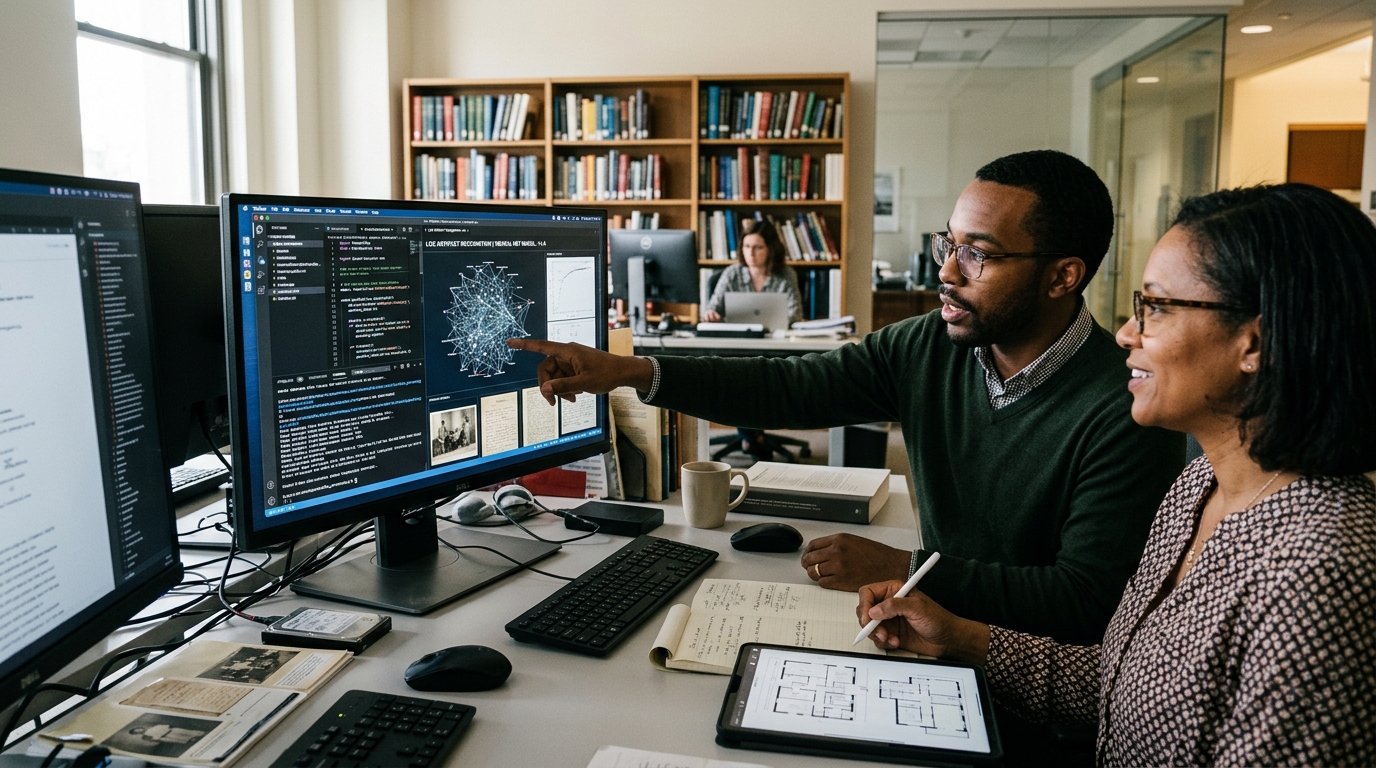
The solution arrived through advanced speech-to-text AI tools. However, despite its speed, AI often struggles with regional accents, poor audio quality from aging tapes, or specialized terminology. This is where the human element becomes indispensable. Instead of blindly trusting algorithms, the Library implemented a 'human-in-the-loop' model, where volunteers correct and refine machine-generated transcripts.
The FIX IT+ Program: Crowdsourcing History
The centerpiece of this effort is the FIX IT+ platform. Through this interface, citizen-archivists from around the world can listen to segments of archival material and correct the AI's automated drafts. This process is vital for historical accuracy. As archive officials point out, a single misheard word in a historical interview can entirely alter the meaning of a speaker’s intent.
- Volunteers have corrected thousands of hours of content, focusing on complex segments where AI fails to decode the nuance.
- The platform utilizes gamification to encourage participation, allowing users to track their progress and see their impact on the collection.
- This hybrid approach reduces transcription costs by approximately 90% compared to traditional professional services.
This initiative isn't just about efficiency; it's about community engagement. When a citizen spends time transcribing a broadcast from the 1960s, they form an organic connection with their local history, rediscovering voices that had been long forgotten in the analog dust.
From Algorithms to Historical Truth
The Library of Congress's use of AI isn't limited to transcription. Machine learning models are also being deployed to categorize material and recognize faces or locations within video files. This enables researchers to perform complex queries, such as 'find all mentions of nuclear energy in local news broadcasts between 1970 and 1980.'
"We aren't just using technology to be faster; we are using it to make the archive democratic," an official stated. "History that cannot be found is history that effectively does not exist for the general public."
The ongoing challenge remains managing the sheer volume of data. AI is evolving rapidly; models like OpenAI’s Whisper have dramatically improved initial transcript quality. However, the need for human oversight remains constant, as machines lack the historical context and empathy required to truly understand the human experience captured in these recordings.
The Future of Digital Archiving
The Library of Congress serves as a beacon for other institutions worldwide. Many countries with vast public broadcasting archives are looking at this model to surface their own recent histories. The use of AI as an 'assistant' rather than a 'replacement' appears to be the gold standard for the cultural sector.
In an era where misinformation and the erosion of history are significant risks, creating accurate, searchable, and accessible archives is an act of democratic preservation. The Library of Congress reminds us that the key to our future lies in our ability to remember our past, utilizing every tool at our disposal to ensure those voices are never lost again.