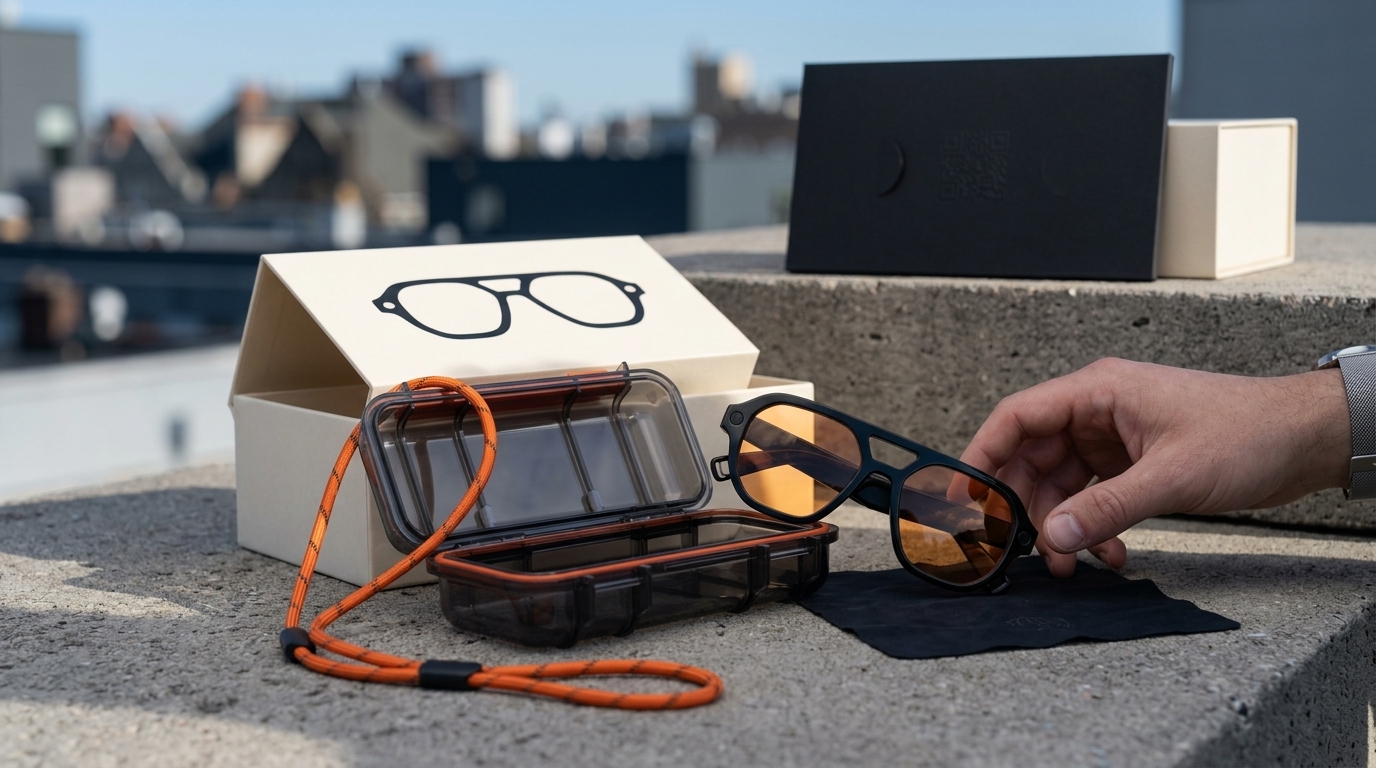
In the tech world, the legacy of OnePlus—a company that once disrupted the smartphone industry with its "Never Settle" philosophy—remains potent. Today, a team of former executives and engineers from that era is attempting to replicate that success, not on our phones, but on our faces. L’Atitude 52°N, a new London-based startup, recently unveiled its first pair of smart glasses, promising a stylish alternative to the bulky wearables we’ve grown accustomed to. However, beneath the polished design and AI promises lies a troubling reality: the "hidden cost" of a future subscription.
The OnePlus Pedigree and a New Vision
L’Atitude 52°N is not just another random startup. Its leadership team carries the DNA of OnePlus, something immediately reflected in the glasses' aesthetics. Unlike the Ray-Ban Meta, which rely on a globally recognized brand name, L’Atitude’s glasses bet on minimalism and build quality. The goal is clear: to create a device that doesn't look like a "gadget," but like a sophisticated accessory that happens to possess advanced AI capabilities.
The glasses integrate microphones, speakers, and a camera, allowing users to interact with a digital AI assistant. Features include real-time translation, object recognition, and the ability to capture photos and videos without reaching for a smartphone. It is an attempt to unchain the user from the screen, delivering information directly to their visual and auditory field.
The Subscription Enigma: Hardware as a Service
The primary controversy surrounding the Kickstarter launch concerns the pricing model. The company is offering access to AI features for free for the first year. After that period, users will be required to pay a subscription to continue using the "smart" capabilities of their glasses. The problem? L’Atitude 52°N has not yet defined what that cost will be.
This ambiguity creates a dangerous uncertainty for consumers. They are purchasing a product whose full functionality depends on a future, unknown expense. In essence, they aren't buying a device; they are renting access to it. This "Hardware as a Service" (HaaS) model is becoming increasingly popular in Silicon Valley as companies struggle to cover the massive operational costs of the servers running AI models. However, for the end-user, it means the hardware they own could become obsolete—or at least "dumb"—if they decide to stop paying.
The Economic Reality of Artificial Intelligence
Why would a company risk alienating its customers with such vagueness? The answer lies in the numbers. Processing AI requests in the cloud is exceptionally expensive. Every time a user asks the glasses to translate a sign or describe a landmark, L’Atitude 52°N pays providers like OpenAI or Google for the use of their models. Without a steady stream of subscription revenue, a small startup could quickly spiral into bankruptcy if its user base is particularly active.
Furthermore, the market for AI wearables is littered with failures. The Humane AI Pin and the Rabbit R1 promised much but failed to convince the public, largely due to technical issues and unsustainable economic models. L’Atitude 52°N is trying to avoid these pitfalls by focusing on design first, but the lack of pricing transparency could prove to be its Achilles' heel.
Consumer Protection and the Future of Ownership
The issue transcends this specific company. We are at a turning point where the concept of "ownership" in technology is eroding. If you bought a car and were told a year later that you had to pay a monthly fee for the brakes to work, there would be an outcry. In the tech world, however, we have begun to accept that features advertised at the time of sale can be locked behind paywalls later.
Regulatory bodies in the EU and the US are closely monitoring these practices. The need for clear terms of service and transparent pricing from day one is imperative. Consumers who back projects on platforms like Kickstarter are often a company's most loyal supporters, but they are also the most vulnerable to policy shifts that weren't clearly communicated at the outset.
Conclusion
L’Atitude 52°N’s glasses are undoubtedly an interesting addition to the wearable market. Combining OnePlus-level engineering with London aesthetics is a compelling proposition. However, the "blank check" they are asking users to sign regarding future AI costs is a gamble many may not be willing to take. In an era where "subscription fatigue" is a documented phenomenon, transparency is not just an ethical obligation—it is a survival strategy.