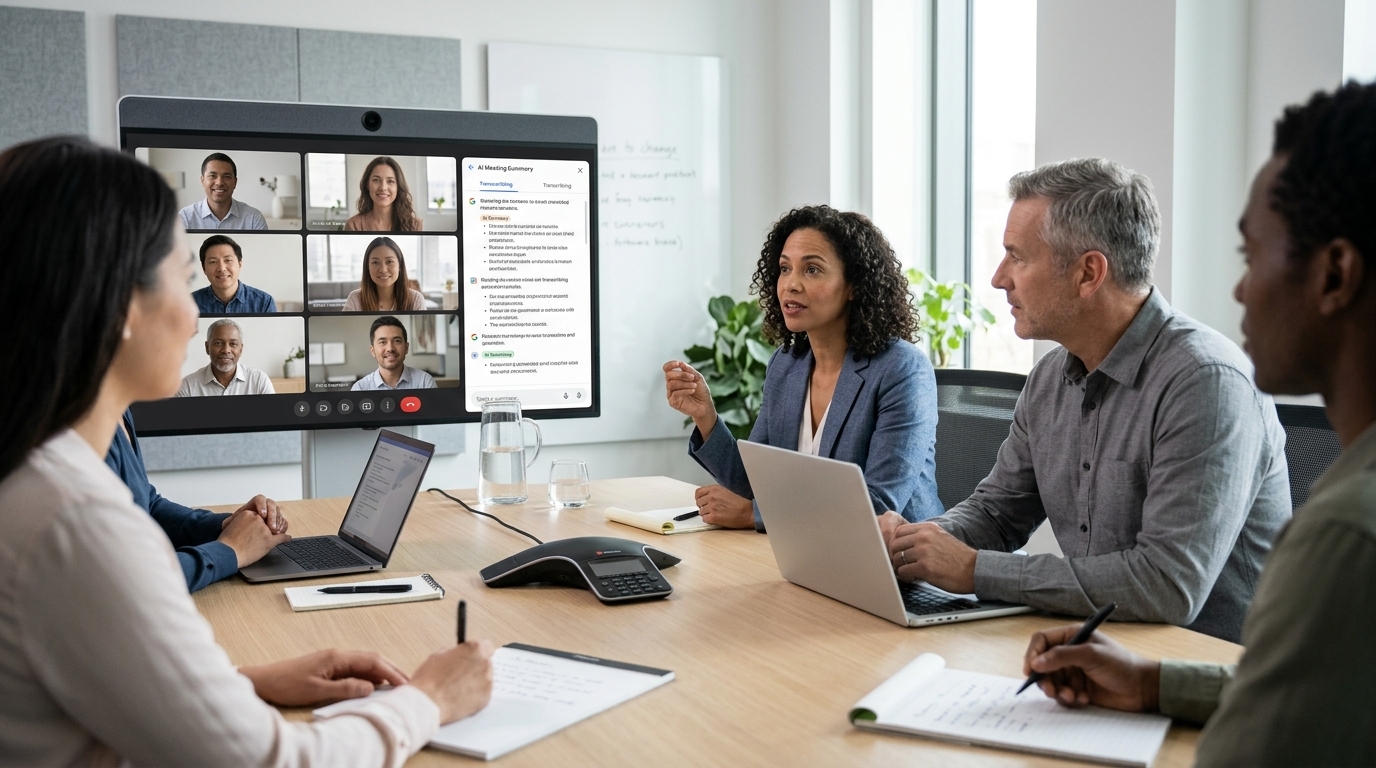
In an era where the boundaries between the digital and physical worlds are becoming increasingly blurred, Google is making a move that promises to fundamentally reshape how businesses manage their knowledge and collective memory. The "Take notes for me" feature, which was previously a privilege of Google Meet users within a video conferencing environment, is now being liberated from the constraints of the screen. As first reported by 9to5Google, Google’s Gemini AI can now "listen," transcribe, and summarize meetings occurring in physical spaces, as well as sessions on rival platforms like Zoom and Microsoft Teams.
The Collapse of the Digital Silo
For years, enterprise AI operated within "silos." If a meeting didn't take place within a specific software ecosystem, its data was either lost or relied upon human memory and manual note-taking. Google’s new update shatters this barrier. By using the Google Meet app on mobile devices or laptops as a "digital ear," Gemini can capture the flow of conversation in a physical conference room. This means employees no longer need to split their attention between participating in the discussion and recording minutes.
Google’s strategy here isn't just about convenience; it’s about data dominance. By embedding Gemini into physical spaces, Google positions Workspace as the central repository of corporate intelligence. The summaries generated are not just text files; they are searchable data points that can be cross-referenced with Google Docs, emails, and calendars, creating a comprehensive map of corporate decision-making.
Interoperability: A Masterstroke Against Competition
Perhaps the most intriguing aspect of this announcement is the expanded support for Zoom and Microsoft Teams. In a rare move of openness, Google is allowing its tools to operate atop its primary competitors' platforms. This suggests a strategic shift: Google recognizes that many large enterprises utilize multiple communication tools. Rather than trying to force everyone into an exclusive Google Meet environment, it is offering Gemini as the "superior" intelligence that can oversee any platform.
This approach directly threatens specialized applications like Otter.ai and Fireflies, which built their business models on providing AI transcription across different platforms. By integrating this capability directly into Google Workspace, Google offers a solution with no additional cost (for those already paying for the Gemini add-on) and superior integration within the existing work ecosystem.
The Privacy Dilemma and the Ethics of Surveillance
However, convenience comes with significant questions regarding privacy. The idea of a device "always listening" in a boardroom can be unsettling. Google assures users that they will have full control over activating the feature and that there will be clear indicators when recording is active. Nevertheless, the social pressure to "record everything" for the sake of productivity could lead to the erosion of "off-the-record" conversations, which are often essential for creativity and conflict resolution.
"Technology isn't just recording words; it’s capturing the intent and dynamics of a team. We must ask if we are ready for a workplace reality where every spontaneous thought is permanently archived," industry analysts note.
Furthermore, storing this volume of data on Google’s servers raises concerns about the security of trade secrets. While Google promises that Workspace data is not used to train public AI models without consent, the concentration of such vast amounts of sensitive information in a single provider's hands always constitutes a potential risk.
Conclusion: The New Corporate Memory
Google’s move to bring AI note-taking to in-person meetings is a milestone in the evolution of productivity. It transforms ephemeral conversations into permanent, actionable assets. As Gemini evolves, it won't just be limited to recording; it will likely suggest next steps, identify contradictions in real-time, and link current discussions to past projects. The challenge for businesses will be finding the balance between absolute efficiency and the preservation of a human, private workspace.