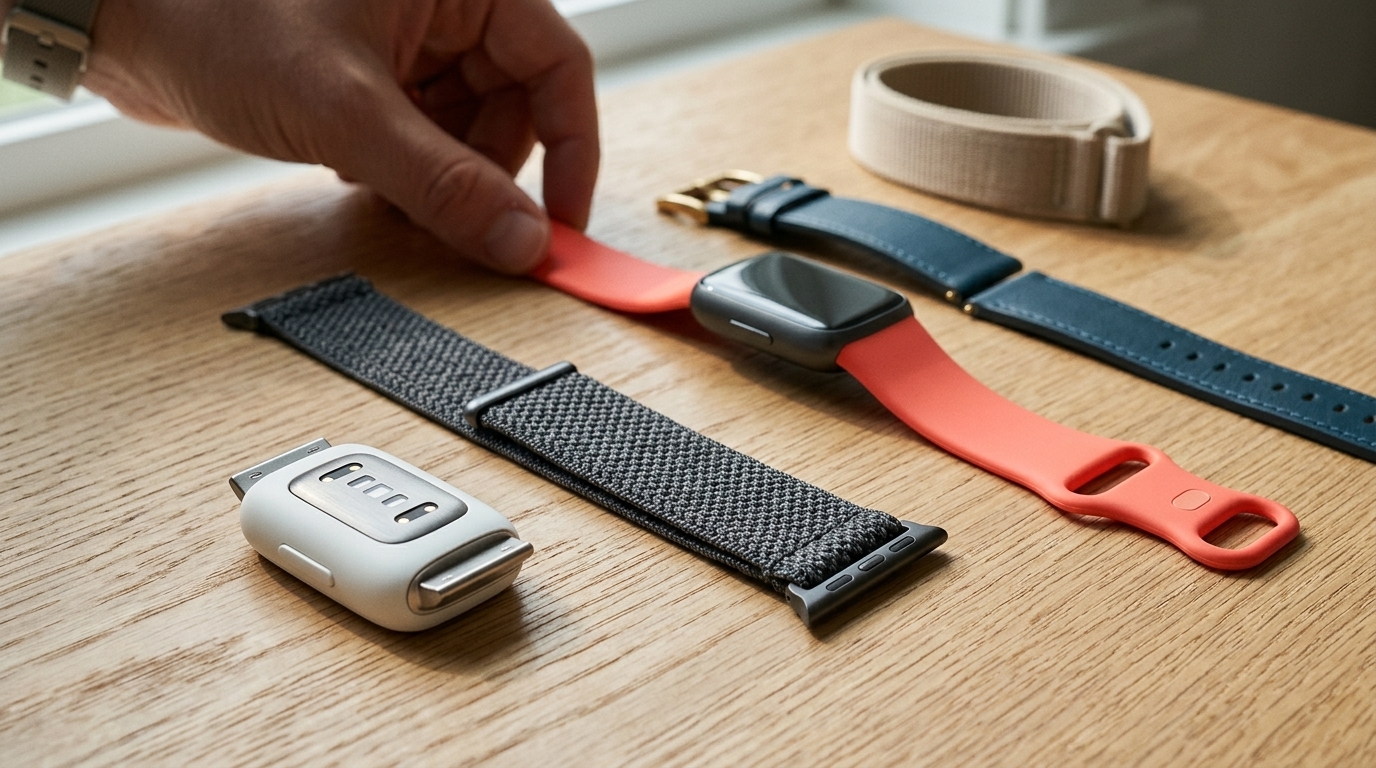
In an era where screens claim every second of our attention, Google, through its Fitbit division, is making a bold move: removing them entirely. The Fitbit Air isn’t just another smartwatch; it’s a statement of intent for what health technology should look like in 2026. After years of trying to turn our wrists into miniature smartphones, the Air returns to Fitbit’s roots, offering a device that is nearly invisible yet constantly present.
The Philosophy of 'Less is More'
The Fitbit Air lacks a screen, a choice that might initially baffle the modern consumer. However, this omission is the heart of its identity. Without the need for bright pixels and notifications that interrupt the flow of the day, the device focuses exclusively on data collection. Its design is minimalist, featuring a soft, hypoallergenic silicone band that hugs the wrist so naturally you often forget it's there. The absence of a screen also allows for unprecedented battery autonomy, reaching up to ten days on a single charge, eliminating the 'charging anxiety' that plagues most wearables.
Cutting-Edge Tech Beneath the Surface
Despite its simple appearance, the Fitbit Air is packed with Google’s most advanced sensors. It features continuous heart rate monitoring, a skin temperature sensor, and the sophisticated cEDA (Continuous ElectroDermal Activity) system for stress measurement. Google has integrated its Gemini AI directly into the Fitbit app, which takes over the task of interpreting the data. Instead of a mere list of numbers, the user receives daily reports in natural language: 'It looks like your body needs more rest today, as your heart rate variability was low during sleep.'
- Sleep Tracking: The lack of a screen makes the Air the ideal sleep accessory, as there’s no risk of a screen accidentally lighting up in the middle of the night.
- Automatic Exercise Recognition: The device understands when you start running, swimming, or cycling without any manual intervention.
- Durability: With water resistance up to 50 meters, it is designed for every environment.
The App as the Command Center
Since the device has no screen, the Fitbit app on your smartphone becomes the sole mirror of your activity. Google has completely revamped the interface, making it more intuitive. The emphasis has shifted from 'punitive' step tracking to holistic wellness. The Fitbit Air doesn’t pressure you to hit goals with annoying pings; instead, it provides the data when you choose to see it. This 'pull' rather than 'push' approach is a breath of fresh air in a world full of digital noise.
"The Fitbit Air is not a device that demands your attention. It is a silent witness to your health, allowing you to live your life without constantly checking your wrist."
Conclusion: A Shift Toward Mindfulness
The Fitbit Air targets a specific category of users: those who want the benefits of technology without the cost of distraction. It is the answer to screen fatigue and a return to the essence of health tracking. Backed by Google’s ecosystem and Fitbit’s reliability, the Air lays the groundwork for a new generation of 'invisible' wearables that integrate into our lives without dominating them. At $99, it is perhaps the most honest proposition in the market today.