The advertising industry is in a state of perpetual evolution, and Google's latest move confirms that the future belongs to consolidation and artificial intelligence. By officially folding Google Display Ads into the Demand Gen campaign ecosystem, the Mountain View tech giant isn't just rebranding a service; it's redefining how brands communicate with audiences across the 'open web.'
The Convergence of Traditional Display and Next-Gen Demand
For decades, the Google Display Network (GDN) served as the backbone of visual advertising on the internet, allowing millions of advertisers to showcase banners on websites, blogs, and apps. However, the rise of social media and short-form video platforms like YouTube Shorts created a need for something more dynamic. Demand Gen campaigns were designed specifically for this: to combine the visual flair of social networks with Google's massive reach.
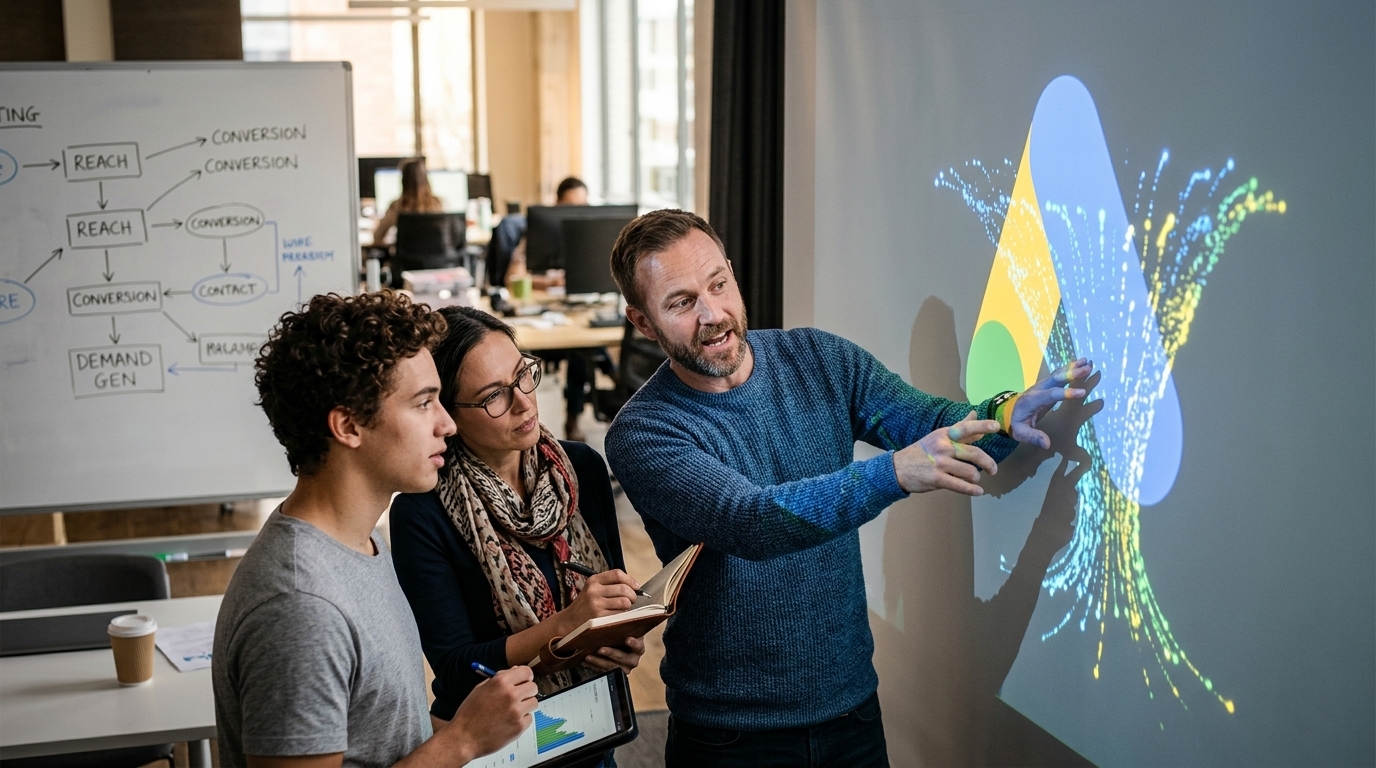
With this new integration, advertisers who wish to serve ads exclusively on the traditional Display Network can now do so within the Demand Gen environment. This offers a more 'fluid' management experience, where creative assets—images, text, and video—can be automatically rearranged by Google's AI to achieve the best possible outcome. This consolidation breaks down the rigid silos between different campaign types, allowing marketers to focus on strategy rather than the technical minutiae of placement.
Artificial Intelligence and Creative Freedom
The key to this transition is Generative AI. Google is integrating generative artificial intelligence tools directly into the Demand Gen workflow. This means an advertiser can generate high-quality image variations or refine their copy with just a few clicks.
"AI doesn't replace creativity; it enhances it, allowing brands to experiment at a speed that was unthinkable a few years ago,"company executives stated.
Furthermore, the use of 'Lookalike Segments' is becoming more potent. Instead of targeting based solely on keywords or browsing history, AI analyzes the characteristics of a business's existing customers and finds new users who share similar behaviors across all Google platforms, from Gmail to Discover. This predictive capability is what sets Demand Gen apart from the static display ads of the past.
Implications for Small and Large Businesses
While large ad agencies have the resources to adapt quickly, small and medium-sized enterprises (SMEs) often struggle with the complexity of digital tools. Moving Display Ads into Demand Gen promises to simplify the process. With a single campaign, a local business can now appear simultaneously on a local news site (via Display) and in the YouTube feed of a potential customer. This 'omnichannel' approach, once reserved for big spenders, is now democratized.
However, there is a flip side. Increased reliance on Google's automation means less control over the granular details. Advertisers will have to trust the algorithms to decide exactly where their budget is spent. In the era of privacy regulations and the deprecation of third-party cookies, this 'walled garden' approach by Google is becoming the new standard. The trade-off for efficiency is transparency, a bargain that many are still debating.
Conclusion: Toward an Automated Future
The integration of Display Ads into Demand Gen is more than just a technical upgrade; it's a statement of intent. Google is moving toward a model where human intervention is limited to setting goals and budgets, while AI handles everything else—from creative generation to placement and optimization. For marketing professionals, the challenge is now to learn how to 'prompt' and guide the AI rather than trying to compete with it. May 26, 2026, marks the moment when traditional web advertising officially lost its autonomy, becoming a cog in a much larger, intelligent ecosystem.