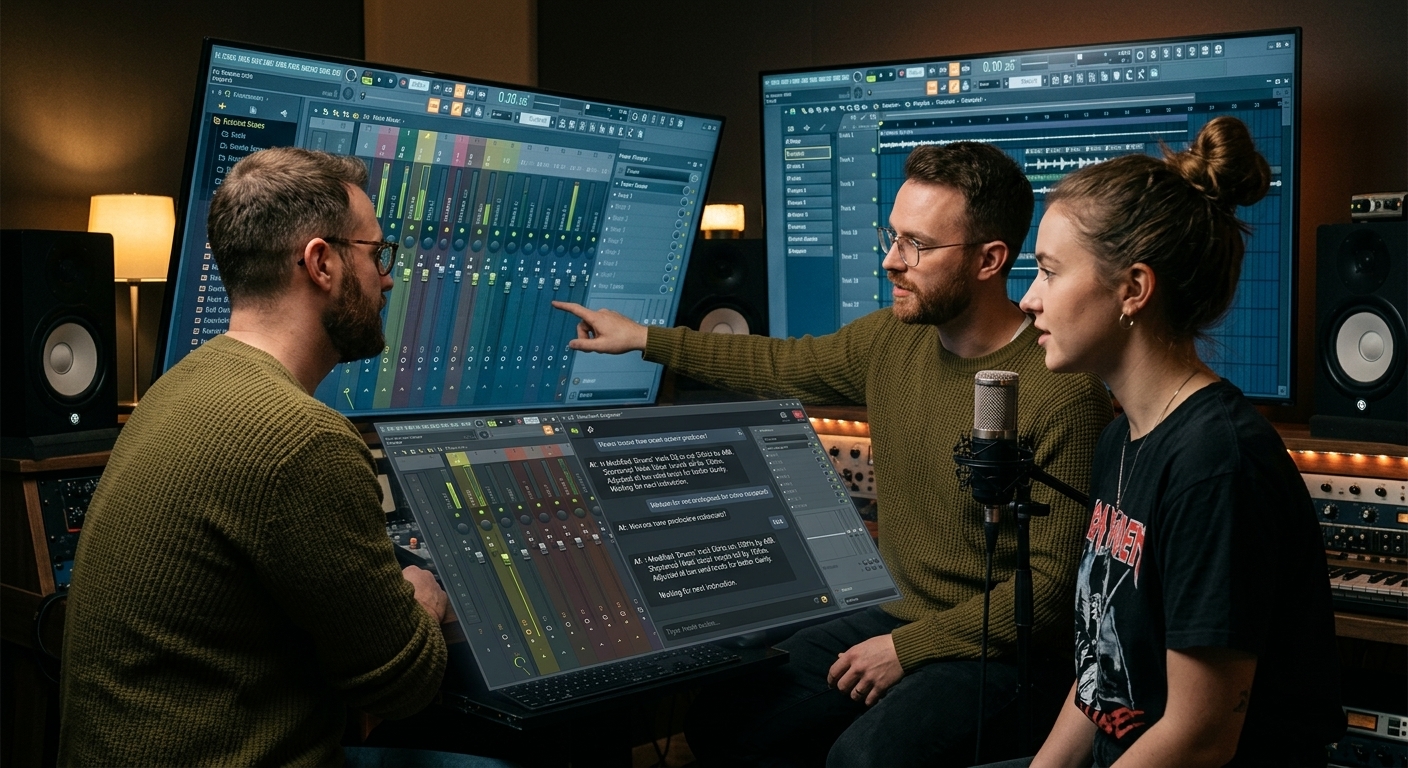
The release of FL Studio 2026 marks a pivotal moment in the history of music production, as Image-Line has decided to give its artificial intelligence both "hands" and "ears." Last year, the introduction of Gopher was met with some skepticism: it was essentially a sophisticated user manual in chatbot form. Users could ask "how do I sidechain?" and receive a written response. Today, in the 2026 release, Gopher no longer just tells you how to do it; it does it for you.
From Information to Execution
The core difference in the new version lies in the integration of the AI chatbot directly into the Digital Audio Workstation (DAW) engine. The digital assistant now has access to mixer parameters, playlist channels, and virtual instrument settings. This means a producer can type—or voice command—instructions like "clean up the low frequencies on the vocals" or "create an effects chain for atmospheric techno reverb," and the system will apply the changes in real-time.
This evolution transforms FL Studio from a mere tool into an "assistant engineer." In traditional high-end studios, the assistant is the one who prepares channels, organizes files, and performs repetitive tasks, allowing the lead producer to focus on the creative vision. Image-Line is bringing this dynamic to every bedroom producer's setup, democratizing processes that previously required years of experience and technical training.
Automating the Workflow
One of the most impressive features of the new Gopher is its context awareness. If you are working on a house track and ask for "something missing from the drop," the AI analyzes the spectral content and energy of the track and suggests—or applies—additions like drum fills, riser effects, or compression changes.
- One-click automated Stem Separation.
- Dynamic channel routing based on descriptions.
- Smart CPU management by disabling inactive plugins via AI.
- Mastering suggestions tailored to the specific genre.
The Challenge of Creative Identity
However, this transition is not without its controversies. Many professional engineers argue that excessive automation will lead to a "homogenized" sound. If everyone uses the same AI assistant to clean their frequencies or set their compression, will music lose the imperfections that make it human? Image-Line responds to this by emphasizing that Gopher is optional and functions as a "supplementary tool." Final control remains with the user, who can undo or modify every move the AI makes.
"AI does not replace the artist, but it removes the technical barriers standing between inspiration and realization," states the Image-Line development team.
Competition and the Future
FL Studio 2026 is not alone in this race. Apple with Logic Pro and Ableton have already begun integrating machine learning features. However, Image-Line's chatbot-centric approach seems to be the most accessible for a new generation of creators who are accustomed to interacting with systems like ChatGPT. The question remains whether the next big chart-topper will be written by a human or if it will be the product of a successful "conversation" with a digital assistant.
In conclusion, Image-Line's move to turn Gopher into an active assistant engineer is a bold statement about the future of the music industry. Technology is no longer just telling us how to use our tools; it is using them with us, forever changing the definition of a "music producer."