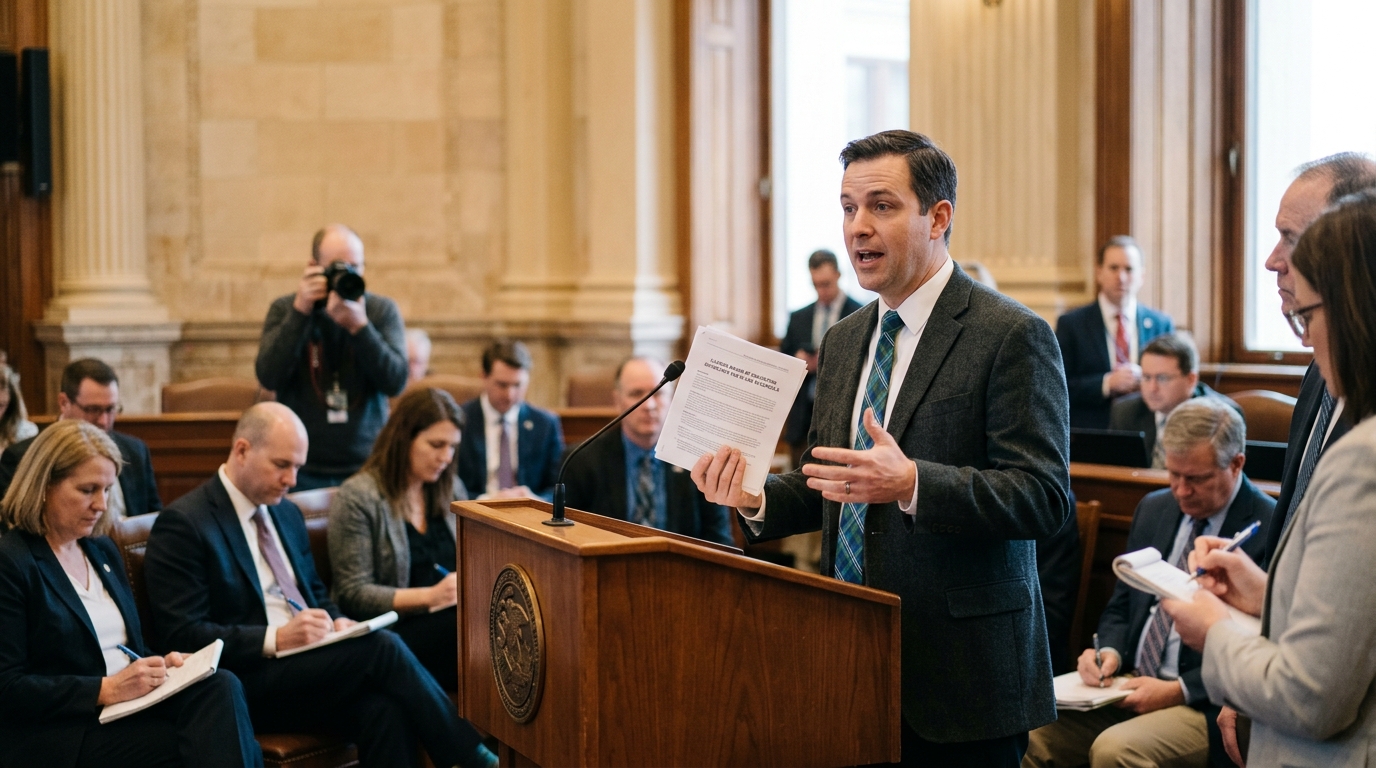
The educational landscape in Illinois is standing at a historic crossroads. With the recent release of comprehensive guidelines by the Illinois State Board of Education (ISBE), the state has become a pioneer in officially recognizing that Artificial Intelligence (AI) is not merely a tool, but a fundamental paradigm shift in learning. The guidance, titled "Generative AI Guidance for Illinois Schools," aims to provide educators, administrators, and parents with a roadmap to navigate a landscape that is changing faster than traditional curricula can adapt.
From Prohibition to Integration: A 180-Degree Shift
When ChatGPT burst onto the scene in late 2022, the initial reaction from many school districts was fear. Bans were common, as concerns over plagiarism and the erosion of critical thinking dominated the conversation. However, Illinois is choosing a different path. The new directive argues that total prohibition is not only impractical but also detrimental to students who will eventually enter a workforce dominated by AI.
The ISBE document emphasizes "AI literacy." This means students should not just know how to use these tools, but also understand how they function, recognize their inherent biases, and discern when their use is ethically appropriate. The guidelines encourage teachers to rethink assessment methods, placing greater weight on the process of learning rather than the final product. For instance, instead of a simple essay that could be generated by a machine, students might be asked to present drafts, explain their sources, or use AI as a "socratic partner" to critique and refine their own original ideas.
Ethics, Equity, and the Digital Divide
One of the most critical aspects of the new guidelines is the focus on equity. There is a legitimate fear that AI could widen the gap between privileged and underprivileged students. If only students in affluent districts have access to advanced AI tools and the training to use them, existing inequalities will become entrenched. Illinois calls on school districts to ensure that access to technology is universal and that the tools employed do not replicate racial or socioeconomic biases found in training data.
Furthermore, data privacy remains a central concern. The guidelines underscore the necessity of complying with laws protecting minors online, such as COPPA and FERPA. Schools are urged to be extremely cautious about what student data is fed into AI models, as this information is often used to further train the algorithms of Big Tech companies, raising serious questions about the ownership of intellectual property created by minors.
The Role of the Educator in the New Era
Despite the technological influx, the ISBE is clear: the human remains the central pillar of education. The principle of "Human-in-the-loop" is foundational. AI is not intended to replace the teacher but to liberate them from administrative burdens and provide tools for personalized instruction. Educators can use AI to generate customized lesson plans that meet the specific needs of individual students—a task that previously required a disproportionate amount of time.
However, the challenge of professional development is immense. Many educators feel unprepared to guide students in this new field. Illinois promises ongoing support and resources, but the success of this initiative will depend on a willingness to experiment and the acceptance that, in this phase, teachers and students will often be learning alongside each other.
Conclusion: A Living Document
The Illinois State Board of Education acknowledges that these guidelines are not definitive. Technology evolves at such a pace that any policy risks becoming obsolete within months. For this reason, the framework is treated as a "living document" that will be updated regularly. This move by Illinois sends a powerful message globally: education cannot turn a blind eye to reality. The challenge is to shape AI before it shapes, without our intervention, the future of our children.