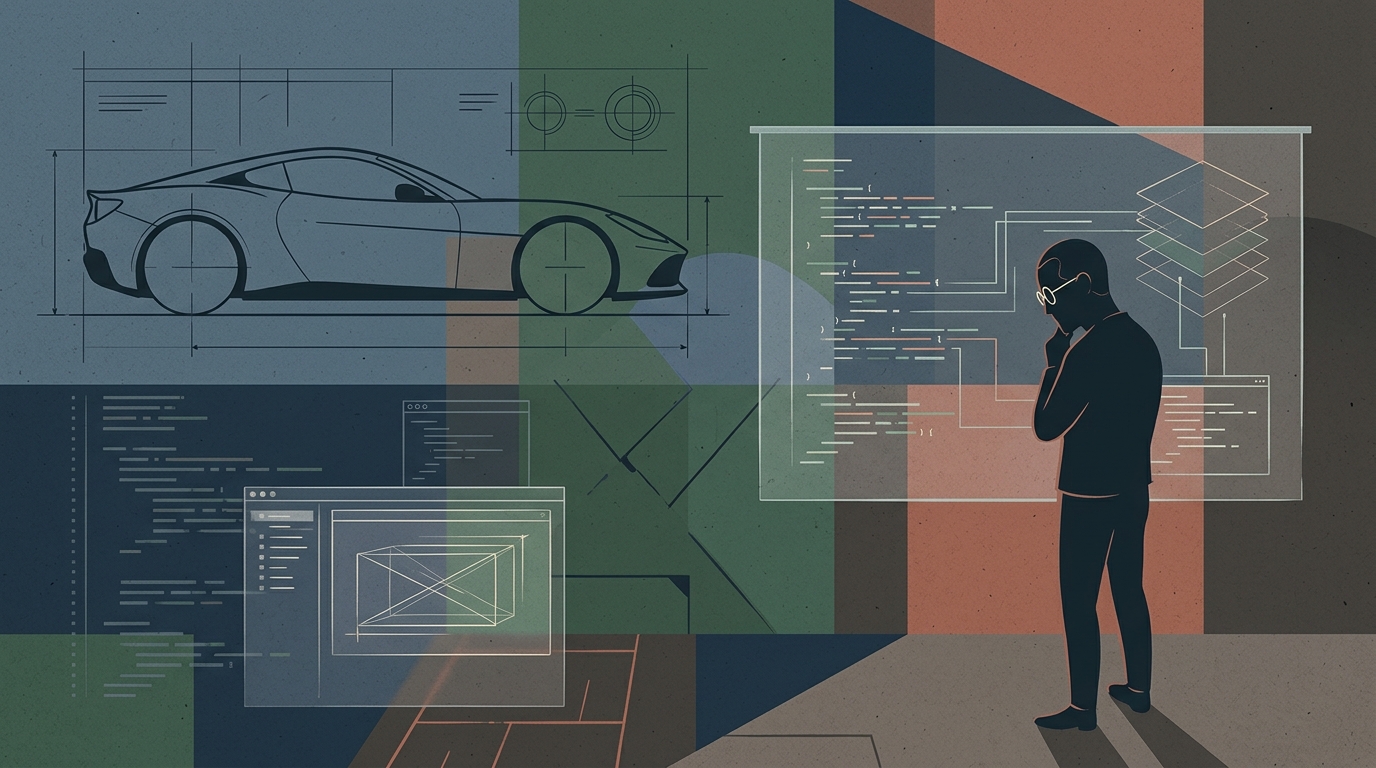
Ferrari has always been the symbol of passion, mechanical excess, and sensual design. However, the unveiling of the Ferrari Luce, the company’s first fully electric model signed by the legendary Jony Ive, has triggered a wave of backlash that few in Maranello could have predicted. Priced at a staggering $640,000, the Luce is not just a car; it is a statement on what "luxury" means in the age of electrification. But for many automotive enthusiasts and social media users, this statement looks more like a... Nissan Leaf than the next chapter of Italian history.
The Philosophy of "Subtraction" vs. Tradition
Jony Ive, the man who defined Apple's aesthetic for decades, brought his philosophy of minimalism and "subtraction" to the Ferrari Luce. The Luce (Italian for Light) is characterized by smooth surfaces, an absence of aggressive air intakes, and a silhouette that prioritizes aerodynamic efficiency and elegance. According to LoveFrom, Ive's design collective, the goal was to create something timeless, avoiding the clichés of modern supercars that look like fighter jets.
However, this approach clashes with Ferrari's core identity. The Tifosi, the brand's die-hard fans, are used to curves that scream speed and power. The Luce, with its rounded shape and clean lines, is seen by many as "soulless." Comparisons to mainstream electric vehicles, such as the Kia EV6 or the Nissan Leaf, quickly flooded the internet. The question is clear: Can a Ferrari be a Ferrari without the visual tension that has defined it for eight decades?
"Design is not just what it looks like, but how it works. In the case of the Luce, the function is total harmony with the air, even if that sacrifices traditional aggression," say sources close to the design team.
The EV Challenge and the Homogenization of Design
The problem Ferrari faces is not unique. The transition to electric power imposes strict constraints due to the need for a low drag coefficient. To achieve maximum range and performance, cars tend to adopt similar "teardrop" shapes. This physical necessity leads to a dangerous homogenization, where a $600,000 supercar begins to resemble a $40,000 family hatchback.
The Ferrari Luce attempts to differentiate itself through materials and the internal experience. The use of recycled yet luxurious fabrics, lighting that changes according to the driver's mood, and the absence of traditional screens in favor of a holographic system are innovations aimed at "quiet luxury." Nevertheless, in the digital age of the image, the first thing that counts is the exterior appearance, and there, the Luce seems to be losing the battle of impressions.
Financial Risk and the Strategy of Scarcity
Despite negative reviews on social media, the Ferrari Luce is likely to sell out before it even enters production. Ferrari's strategy is built on absolute scarcity. With a limited number of units, the Luce targets a new generation of collectors who value technology and the collaboration with names like Jony Ive more than the traditional roar of a V12 engine.
- The $640,000 price tag positions the Luce at the top of the EV market.
- The partnership with LoveFrom signals a shift towards becoming a broader lifestyle brand.
- Investors are closely monitoring the model's reception, as it will dictate the trajectory of RACE (Ferrari) stock in the coming years.
In conclusion, the Ferrari Luce is an experiment. It is a historic brand's attempt to survive in a post-fossil fuel world by redefining itself. Whether Jony Ive succeeded or whether he created an overpriced "gadget on wheels" is something time and, of course, sales will tell. For now, the Luce remains the most talked-about—and perhaps most misunderstood—car of 2026.