In the heart of East Hartford, a technological shift is unfolding that promises to radically change how first responders train for life-and-death situations and how families navigate the harrowing journey of dementia. Health Scholars, a company specializing in immersive training, is leveraging Virtual Reality (VR) and Artificial Intelligence (AI) to create simulations that go far beyond traditional textbooks and static drills, offering experiential learning that saves lives.
High-Stakes Simulation: Training for the Unthinkable
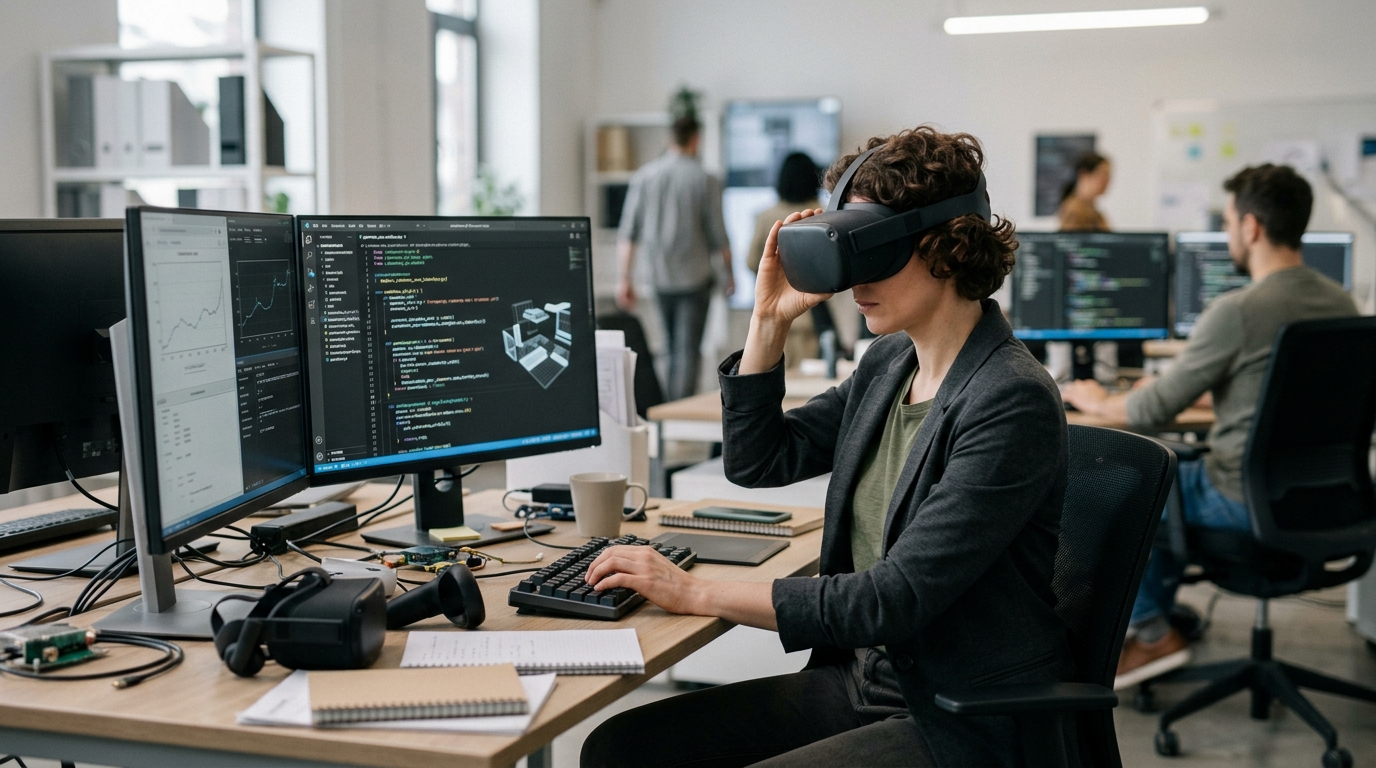
For a paramedic, the first few minutes of an emergency call are critical. Yet, traditional training has long been hampered by the limitations of plastic mannequins and theoretical classroom scenarios. The Health Scholars platform immerses the trainee in a 360-degree environment. By donning a VR headset, a paramedic is instantly transported to the back of a moving ambulance or a chaotic emergency room.
The integration of Artificial Intelligence is the true game-changer. Utilizing advanced voice recognition, the system requires trainees to issue verbal commands just as they would in the field. If a trainee fails to call for the correct dosage of epinephrine or fails to direct their team effectively, the AI reacts in real-time, simulating the deteriorating condition of the virtual patient. This 'muscle memory' and psychological conditioning prepare healthcare professionals for the intensity of real-world emergencies with a level of fidelity that was previously impossible.
The Empathy Machine: Navigating the Fog of Dementia
Beyond technical proficiency, the company is making significant strides in a deeply human domain: dementia care. For family members, watching a loved one lose their cognitive faculties is a painful and often confusing process. VR technology allows caregivers to literally see the world through the eyes of someone living with cognitive decline.
Through these simulations, a healthy individual can experience the visual distortions, auditory hallucinations, and profound confusion that a simple walk across a living room can trigger for an Alzheimer’s patient. The AI adapts scenarios to highlight communication barriers. The result is more than just clinical knowledge; it is profound empathy. When a caregiver understands that a dark rug might look like a bottomless hole to a dementia patient, their approach shifts from frustration to compassionate support.
Economic and Social Implications of Immersive Tech
The adoption of VR and AI in healthcare training is not merely a matter of improved pedagogy; it is a necessity for the sustainability of modern healthcare systems. Traditional high-fidelity simulation centers are prohibitively expensive and difficult to scale. VR offers a solution that is both cost-effective and portable.
- Reduction in medical errors through repetitive practice in a zero-risk environment.
- Knowledge retention rates up to 80% higher than traditional lecture-based learning.
- Objective performance metrics provided by AI analytics to identify specific areas for improvement.
As healthcare systems worldwide grapple with staffing shortages and an aging population, the innovations emerging from East Hartford serve as a blueprint for the future. The convergence of digital intelligence and the human need for care creates a new paradigm where technology doesn't distance us but rather empowers us to be more effective and, ultimately, more humane in our most vulnerable moments.