For decades, the name Dyson has been synonymous with an obsessive, almost religious commitment to proprietary engineering. Sir James Dyson built a multi-billion dollar empire on a simple promise: if you want something done right, you have to design the motor yourself. From the cyclonic vacuums to the Supersonic hair dryers, the heart of every Dyson appliance has been a digital motor designed in Malmesbury and manufactured in proprietary facilities in Singapore and the Philippines. However, the recent confirmation that the new Spot & Scrub Ai robot vacuum uses a third-party motor represents a seismic shift in the tech giant's corporate culture.
A Break with Tradition
The revelation came via The Verge, which confirmed with Nathan Lawson McLean, Dyson’s senior design manager, that the new Spot & Scrub Ai model is a product of "co-engineering." The motor powering the device comes from Picea, a move that caught industry analysts off guard. For a company that has historically marketed its motors as spinning faster than Formula 1 engines, admitting to using an "outside" component at the core of its product is almost humbling.
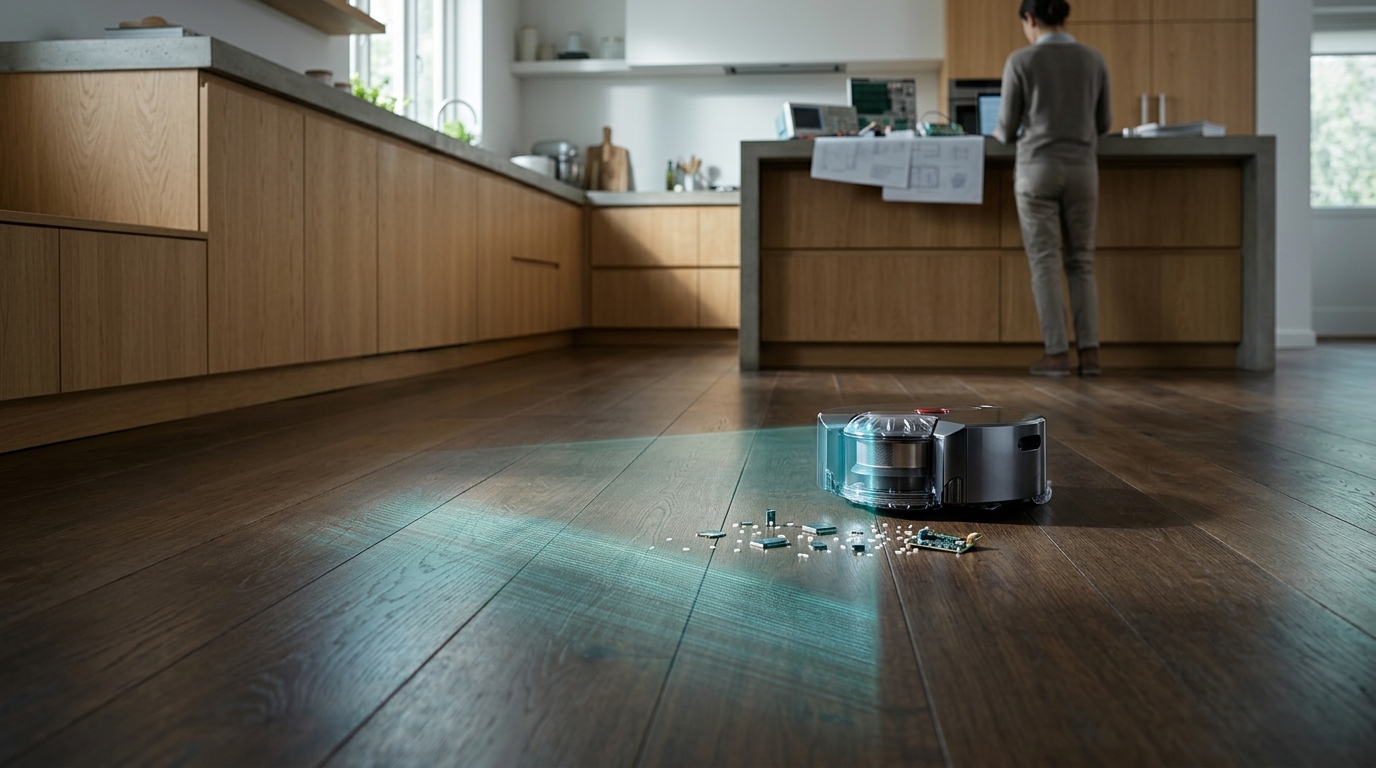
The Spot & Scrub Ai is not an ordinary vacuum. It is Dyson’s attempt to enter the robot mop-and-vacuum hybrid market, a sector where Chinese giants like Roborock and Dreame have dominated in recent years. The decision to use a Picea motor suggests that Dyson may have realized its own motor technology, while superior in pure suction, might not have been optimal for the specific requirements of a hybrid robot that must manage water, drainage tanks, and extremely tight internal packaging.
Competitive Pressure and the Asian Market
Why would Dyson risk its hard-earned reputation? The answer likely lies in market velocity. While Dyson spent years developing the Vis Nav—a vacuum with incredible suction but no mopping capability—the market moved on. Consumers now demand automated stations that empty water and wash mopping pads. Dyson found itself at a disadvantage, offering products that felt technologically superior in one niche but functionally incomplete for the modern household.
The Spot & Scrub Ai was initially launched in select markets like South Korea and Vietnam, regions that serve as testing grounds for Dyson. Using an off-the-shelf motor allows the company to reduce time-to-market and focus on software and AI sensors, which are the new battlegrounds. However, this raises a critical question: if Dyson stops making its own motors, what justifies the premium price tags that often exceed $1,000?
The Future of the Brand: Engineering or Marketing?
This strategy is reminiscent of Apple’s approach—designing the software and user experience while outsourcing component manufacturing. But Dyson is not Apple. Its identity is inextricably linked to the physical mechanics of its machines. Transitioning to an "integrator" model rather than an "inventor" model carries the risk of commoditization.
- Loss of supply chain control could impact long-term reliability and repairability.
- Differentiation from Chinese competitors becomes harder when sharing the same suppliers.
- The trust of Dyson loyalists is shaken by the shift away from the "made by Dyson" philosophy.
Ultimately, this move may be a necessary retreat to remain relevant in a world that moves faster than Malmesbury’s R&D cycles. If the Spot & Scrub Ai proves successful, we might see Dyson transform from a motor company into a robotics and AI firm. If it fails, it will go down in history as the moment the company traded its soul for convenience.