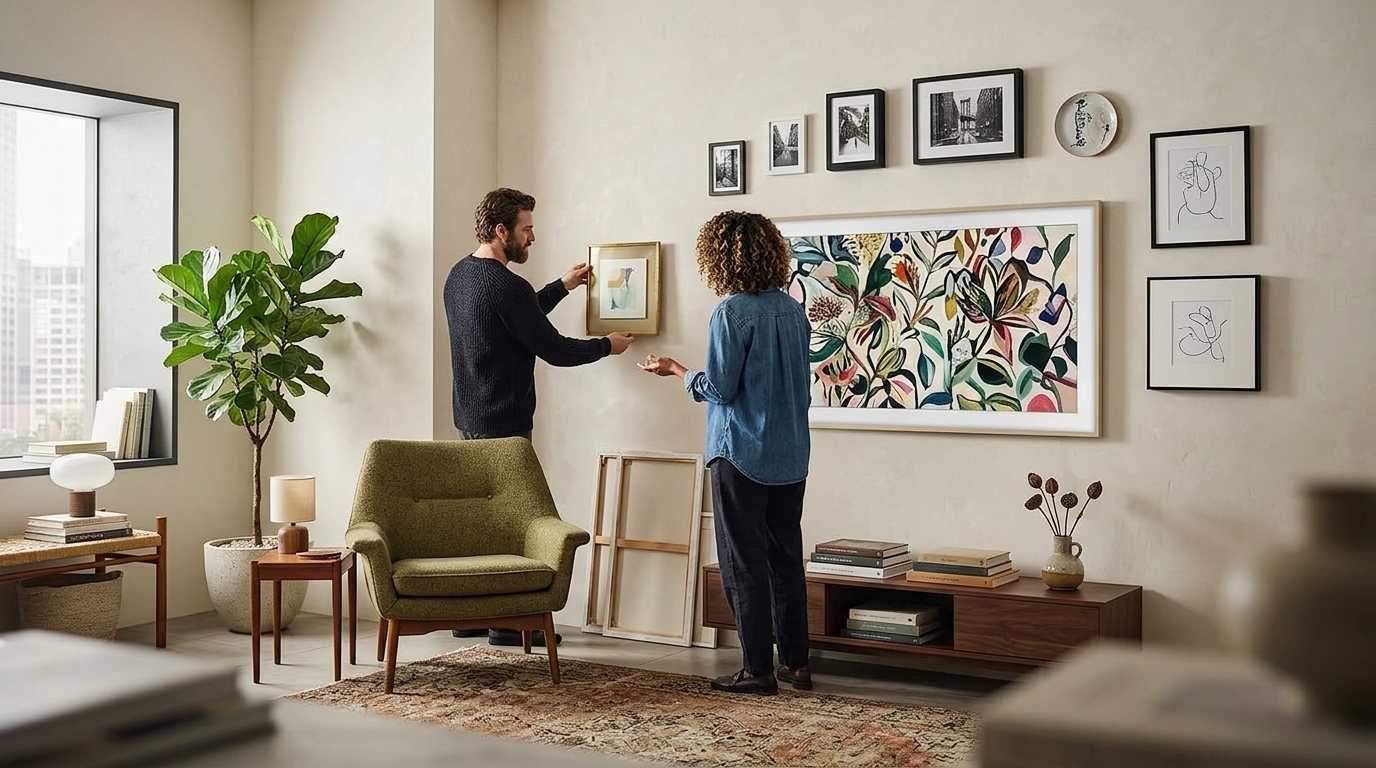
For decades, the television has been the "necessary evil" of interior design: a massive, black, lifeless rectangular void that dominated the living room when turned off. This aesthetic dissonance began to fade with the advent of Art TVs—devices designed to masquerade as framed masterpieces. However, the high cost of entry kept this luxury out of the mass market. This weekend, a significant market shift, with discounts exceeding 40% on flagship 2025 models, suggests that "invisible" integration technology is entering a new, more democratic phase.
The Battle of the Matte Screen: Samsung vs. Hisense
Samsung has been the undisputed pioneer with its "The Frame" series, successfully convincing millions of consumers that a TV can simultaneously be a gallery. The 2025 iteration continues this tradition, offering a matte surface that virtually eliminates reflections, making the digital representation of a Monet or Van Gogh look eerily authentic. But competition from the East, specifically Hisense with its CanvasTV, has forced the Korean giant to reconsider its pricing strategy.
The Hisense CanvasTV, currently offered at a striking $779 for the 65-inch model, represents an existential threat to the status quo. It features a similar matte coating, motion sensors that activate the screen only when someone is in the room (to save energy), and a stylish frame included in the box. Hisense's strategy is clear: offer 90% of the Samsung experience at 60% of the cost. This price war is driving current deals, making Art TVs a rational choice rather than a niche indulgence.
Technology Serving Aesthetics
Why would someone invest in an Art TV instead of a traditional OLED with better contrast? The answer lies in environmental psychology. Modern Art TVs aren't just screens; they are ambiance management systems. The use of QLED technology ensures that colors remain vibrant even in bright daylight, while the screen's ability to adjust color temperature based on room lighting is what "tricks" the eye into seeing a natural canvas rather than an emitting light source.
- Matte Finish: The most critical innovation that differentiates these TVs from standard displays, eliminating the "mirror effect."
- Ambient Sensors: Automatically adjust brightness so digital art doesn't glow unnaturally in the dark.
- Art Subscription Models: Samsung offers access to thousands of works via its Art Store, creating a recurring revenue stream that allows for the subsidization of the hardware's initial price.
Furthermore, the "Slim Fit Wall Mount" installation allows the TV to sit flush against the wall with no gaps, enhancing the illusion of a real frame. For many users, this aesthetic perfection outweighs the absolute black levels of an OLED, especially in spaces like the living room or bedroom where the TV is not the sole focus of attention.
The Economic Dimension and the Future
The current price drop through retailers like Woot (an Amazon subsidiary) suggests a broader trend of inventory clearing ahead of 2026 model announcements. However, for the average consumer, the differences between annual refreshes in this category are often negligible. Purchasing a 65-inch Art TV below the psychological threshold of $1,000 is a milestone. It means that "smart decor" is ceasing to be a privilege of high-end architectural firms and is moving into the hands of the general public.
"Technology is at its best when it becomes invisible," designers often say, and Art TVs are the embodiment of this philosophy.
In conclusion, while traditional cinephiles may continue to prefer top-tier Mini-LED or OLED models for ultimate movie quality, the rise of Art TVs shows that a large segment of the audience values how a device affects the daily atmosphere of their home more. With prices collapsing, the question is no longer whether you can afford an Art TV, but whether you are ready to permanently say goodbye to the black hole on your wall.