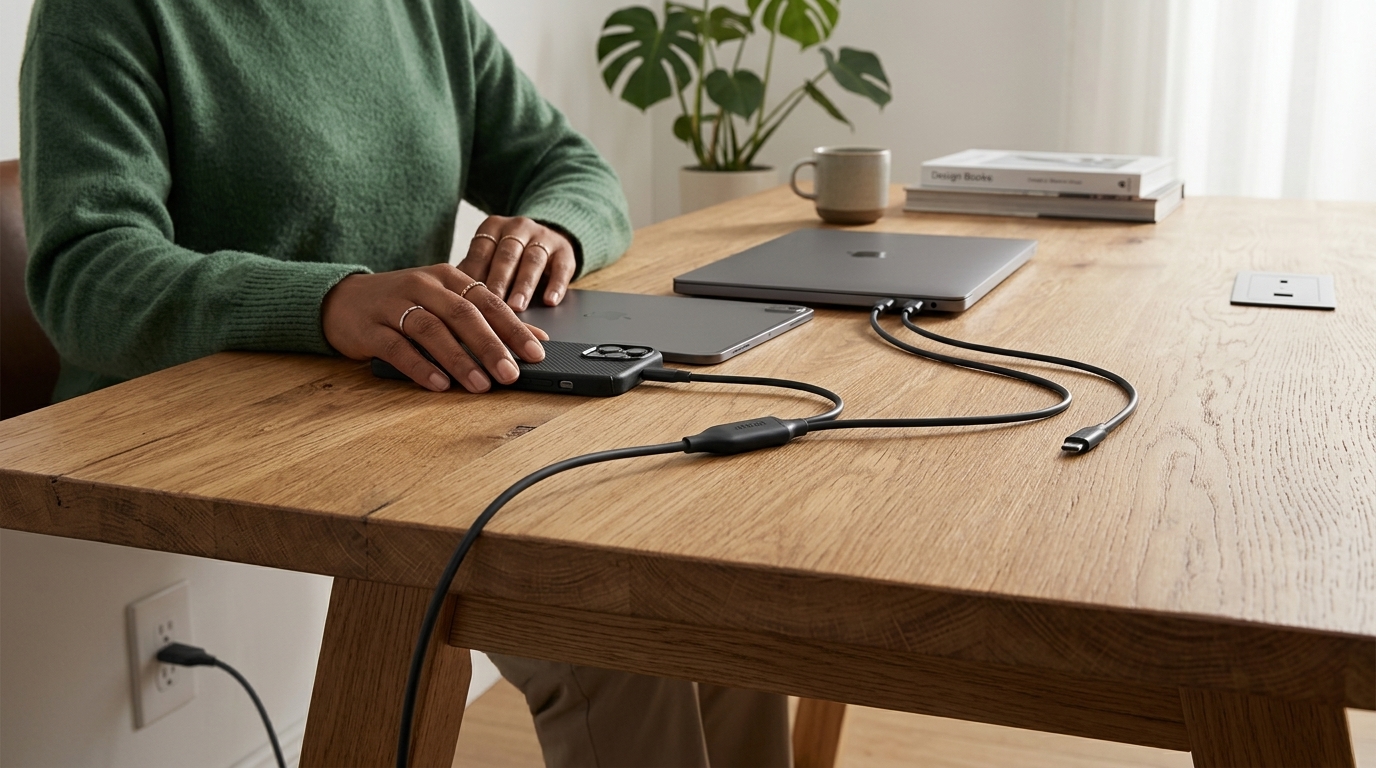
It is May 2026, and the promise of a world united by a single charging standard has been largely fulfilled. Following the universal adoption of USB-C by Apple, Nintendo, and laptop manufacturers worldwide, the challenge is no longer compatibility, but management. The recent deal on Anker’s 2-in-1 USB-C cable for $15 is more than just a purchasing opportunity; it is a reflection of how accessory technology is striving to keep pace with the proliferation of our personal devices.
The USB-C Hegemony and the End of Chaos
For decades, consumers were trapped in a labyrinth of proprietary plugs, Lightning cables, and micro-USB ports that refused to die. Today, with the European Union having mandated USB-C as the de facto standard, the average user owns at least three to five devices requiring the same port: a smartphone, a tablet, wireless earbuds, perhaps a console like the Nintendo Switch 2, and a laptop. The need for simultaneous charging without occupying every outlet in the house has led to the rise of multi-cables.
This specific Anker cable, currently at a promotional price, solves a very specific pain point: the need to charge two devices from a single output port. Whether it's a power bank on a flight or a wall charger in a cramped office, the ability to power your phone and headphones simultaneously with a single cable reduces both the visual and physical clutter of daily life.
Technical Excellence and Power Management
Not all 2-in-1 cables are created equal. Anker, a company that began as a low-cost alternative and evolved into a market leader, has invested heavily in Power Delivery (PD) technology. This cable is not merely a "splitter." It incorporates intelligent circuitry that recognizes the requirements of each connected device. When two devices are plugged in, the power is shared dynamically, ensuring that neither device overheats and that charging remains as efficient as possible.
In tests conducted with modern ultrabooks and smartphones, the cable proved it could handle high loads without the voltage drops often seen in cheaper, generic solutions. Durability is also a critical factor. The use of braided nylon and reinforcement at the connector joints ensures that the $15 investment pays off in the long run, reducing the need for frequent replacements that contribute to global e-waste.
The Psychology of the "Cheap" Accessory for Expensive Tech
There is a fascinating irony in the fact that users who spend over $1,000 on an iPhone or a MacBook Pro often hesitate to buy high-quality cables. However, the accessory market has matured. Anker’s deal arrives at a moment when consumers are seeking "value for money" more than ever. In a tightening economy, the ability to upgrade the user experience of your devices for a minimal cost is exceptionally attractive.
Furthermore, Anker has managed to build a relationship of trust that goes beyond simply selling a product. Their after-sales support and warranty make the $15 a safe bet. In the world of tech tools, reliability is the most important currency, and Anker seems to understand this perfectly.
The Future of Charging: Towards a Portless World?
Despite the boom in USB-C cables, the debate about the future remains open. Wireless charging continues to improve, with Qi2 standards offering speeds that approach wired solutions. However, physics remains relentless: wired charging is more efficient, generates less heat, and is essential for high-speed data transfer.
In conclusion, Anker’s 2-in-1 cable is not just an accessory, but an essential tool for the digital nomad of 2026. It offers a bridge between the need for portability and the reality of multi-device ownership. In an era where technology often complicates our lives, such simple, affordable, and functional solutions are the ones that ultimately win our trust.