For decades, technological support for the visually impaired was confined to linear systems: screen readers that converted text to speech and physical Braille devices. However, 2026 marks a pivotal turning point for humanity. The advent of multimodal Artificial Intelligence is not merely adding a new feature; it is fundamentally altering how blind and low-vision individuals interact with both physical and digital environments. From navigating unfamiliar cities to deciphering complex social dynamics, AI now functions as a digital 'companion' translating visual chaos into meaningful language.
From Object Detection to Contextual Understanding
The profound difference between the tools of the past and today’s applications, such as Be My AI (by Be My Eyes) or Google’s enhanced Lookout, lies in the ability to understand context. Previously, an app could identify a 'chair.' Today, AI can explain that 'there is an empty wooden chair in the corner, next to a table where a man in a blue shirt is sitting and appears to be waving at you.'
This level of detail is not just informative; it is liberating. The use of Large Language Models (LLMs) allows users to ask follow-up questions. Instead of a static description, a user can ask: 'Is there enough space for me to pass with my cane?' or 'What does the menu say under the appetizers section?'. This conversational approach transforms the technology from a passive tool into an active assistant.
Integration into Daily Life and Employment
Social inclusion is the next big frontier. Many visually impaired individuals report that the greatest challenge is not physical movement, but access to information that sighted people take for granted. AI is now assisting in reading handwritten notes, interpreting charts in professional presentations, and describing photos on social media that lack alternative text (alt-text).
- Indoor Navigation: New systems utilize LiDAR and AI to map rooms in real-time, warning of obstacles at head height.
- Social Interaction: Facial recognition apps help users know who has entered a room or discern the emotional state of their interlocutor through expression analysis.
- Independence in Shopping: The ability to read labels and compare prices via a smartphone camera enables autonomous living without the constant need for human intervention.
"AI does not replace sight, but it bridges the information gap, allowing us to move through the world with the dignity of knowledge," states a disability rights activist.
Challenges: Hallucinations and Data Privacy
Despite the enthusiasm, the road ahead is not without hurdles. The phenomenon of AI 'hallucinations' remains a serious risk. If an app misdescribes a medication or an expiration date on food, the consequences could be dangerous. The reliability of models must reach near 100% for critical safety applications, a milestone that is still being pursued.
Furthermore, the issue of privacy arises. When a device is constantly 'seeing' the environment to assist a user, it records data from third parties without their consent. The balance between accessibility and the protection of personal data is a legal and ethical gray zone that the European Union and other international bodies must regulate urgently.
The Future: Wearables and Universal Design
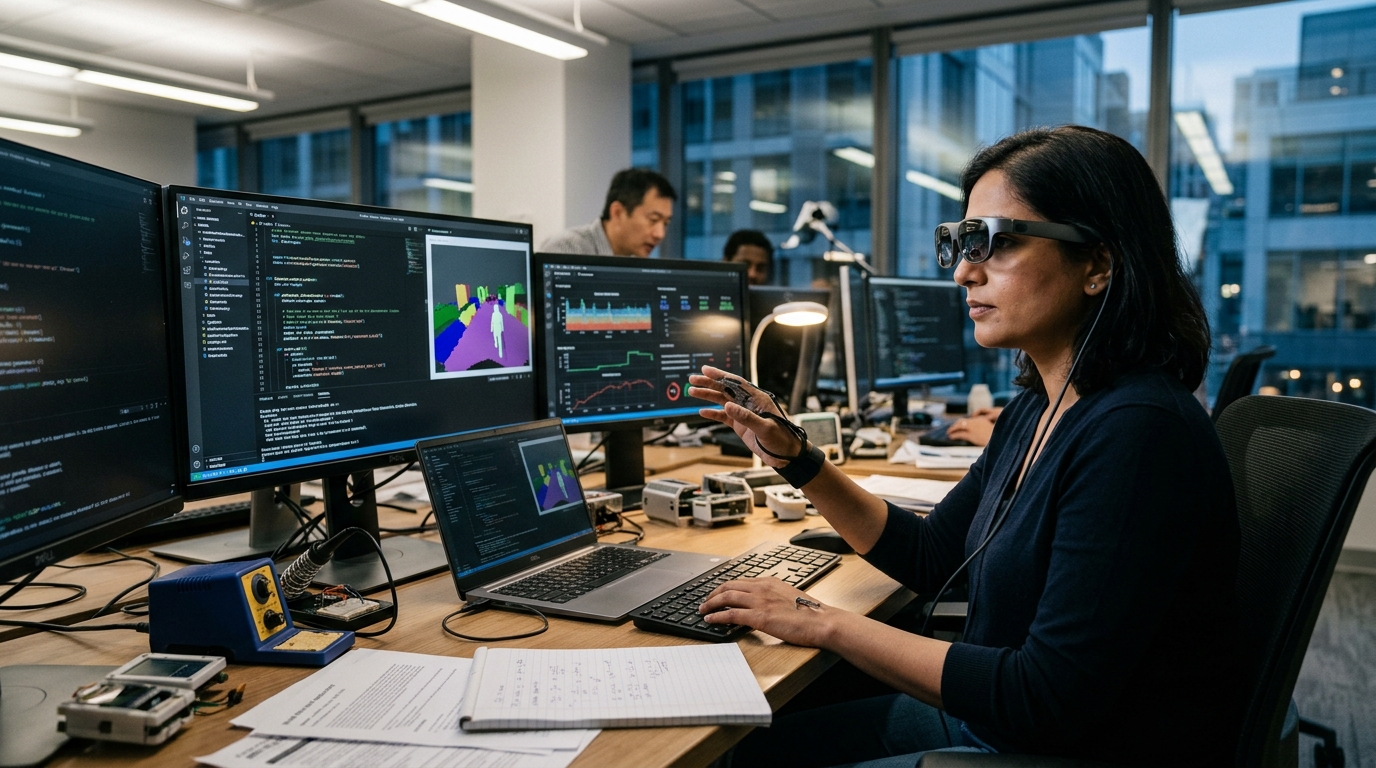
The future of this technology lies away from the smartphone screen. 'Smart glasses' incorporating cameras and bone-conduction headphones are becoming increasingly discreet and powerful. Integrating AI directly into the hardware allows for faster processing and less reliance on cloud connectivity.
Ultimately, the success of AI in supporting the visually impaired will be judged by the accessibility of the technology itself. The cost of devices and the requirement for high-speed internet must not become new walls of exclusion. Universal Design dictates that these solutions should be embedded into the operating systems we all use, making accessibility not an afterthought, but a fundamental right.