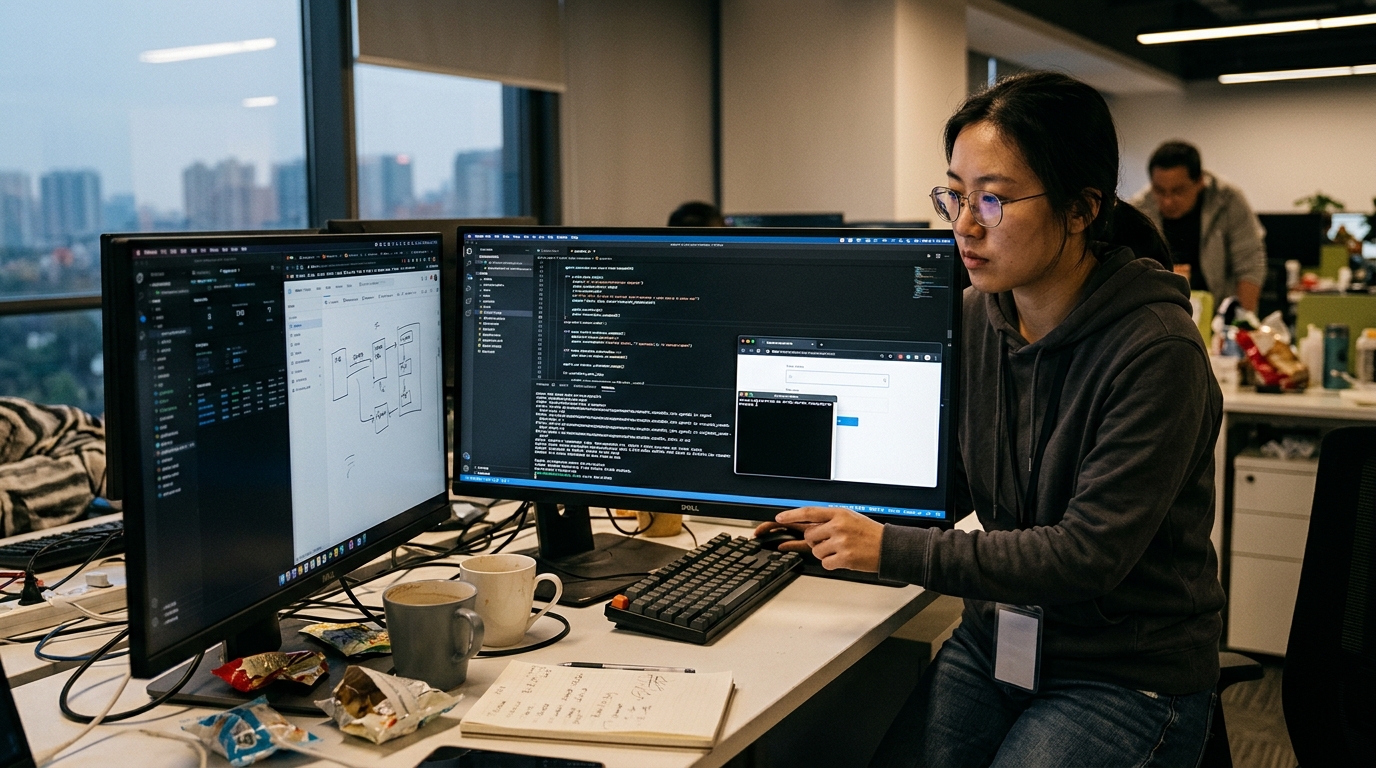
In the world of engineering, precision is not merely a goal; it is the fundamental prerequisite for safety and innovation. While general-purpose artificial intelligence, such as ChatGPT, has dazzled the public with its creativity, its application in mission-critical sectors like aerospace, energy, and construction has remained limited due to the phenomenon of "hallucinations." Accuris, a company born from the spin-off of S&P Global Engineering Solutions, is filling this gap with its new AI Assistant—a tool specifically engineered for the rigorous demands of professional engineers.
The Shift from General to Domain-Specific Intelligence
The core challenge facing engineers today is not a lack of information, but the sheer volume and fragmentation of it. An engineer can spend up to 40% of their time searching for technical standards, manuals, and legacy designs. The Accuris AI Assistant is not just a chatbot; it is a knowledge engine trained on millions of pages of technical standards from organizations such as ISO, ASME, and ASTM. The critical differentiator lies in Retrieval-Augmented Generation (RAG) technology, which ensures that the system's responses are grounded exclusively in verified sources, providing precise citations for every claim.
Data Management and Security
For large industrial enterprises, data security is the most significant hurdle to AI adoption. Accuris addresses this by creating a "closed" environment where the AI can access not only global standards but also a company’s internal proprietary documents—so-called "legacy data." Imagine a junior engineer asking, "What was the tolerance criterion for valves in the 2014 project in Saudi Arabia?" and receiving a validated answer in seconds. This capability bridges the knowledge gap between veteran experts and the new generation, ensuring the continuity of institutional technical expertise.
Impact on Productivity and the Future
The introduction of such tools marks the end of the era of manual document cross-referencing. As infrastructure projects grow in complexity, the need for speed without compromising safety becomes imperative. Accuris claims that its AI Assistant can reduce research time by up to 70%, allowing engineers to focus on design and problem-solving rather than administrative searching. However, adopting this technology also requires a cultural shift. Engineers must learn to collaborate with AI while maintaining their critical thinking, as the responsibility for the final decision remains—and must remain—human.
"AI in engineering is not about replacing the human; it is about augmenting their ability to manage complexity without error."
In conclusion, the Accuris AI Assistant serves as a prime example of the domain-specific AI that will dominate the coming years. This is not a toy for casual queries, but a precision instrument integrated into the professional workflow, respecting the rules and ethics of a profession where the smallest error can have catastrophic consequences. The era of the "Augmented Engineer" has officially arrived.