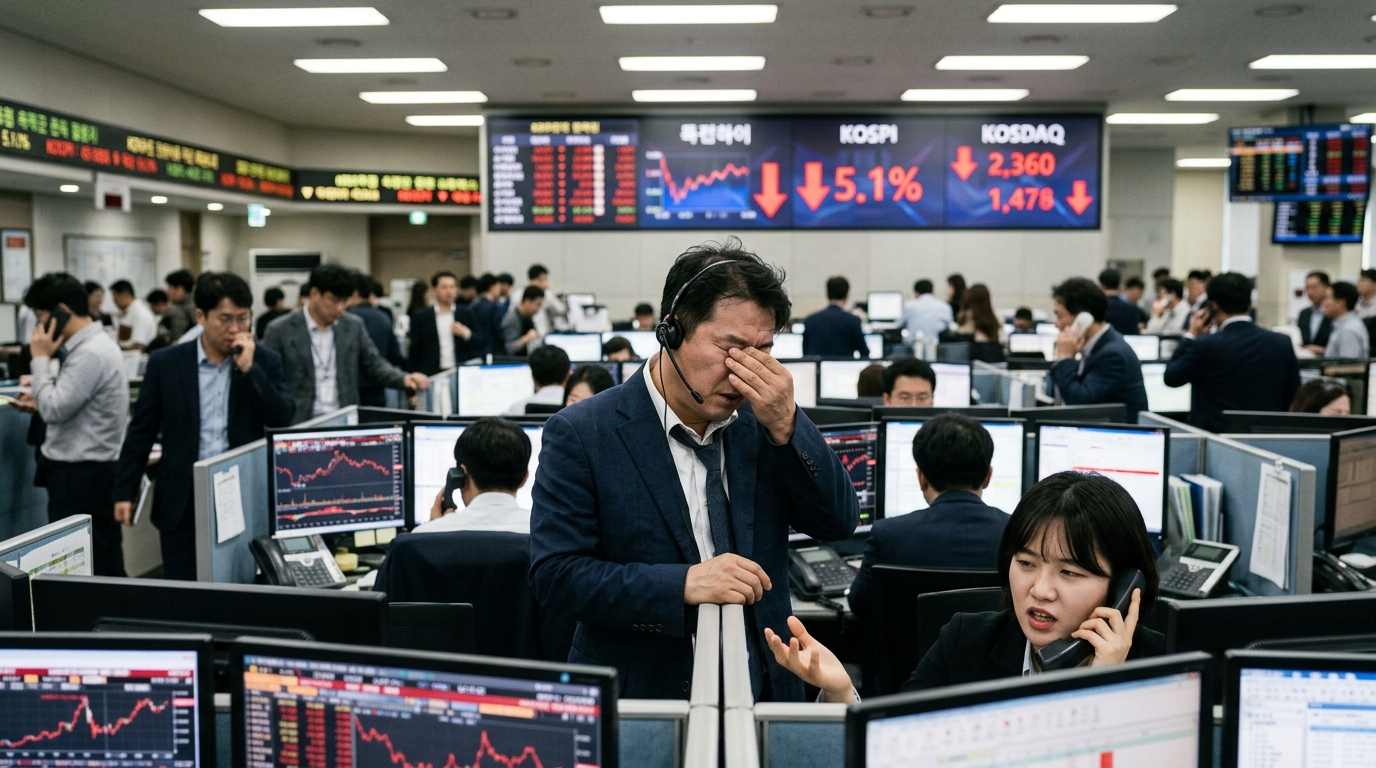
May 19, 2026, will likely be remembered as the day the South Korean market was forced to confront reality. With a violent 5% drop, the KOSPI index suffered its largest single-day loss in years, dragging down hopes for an endless AI-fueled ascent. What began as a correction in the semiconductor sector quickly evolved into a broader debate about the "overheating" of a market built on an alarmingly narrow foundation.
The High Bandwidth Memory (HBM) Trap
For nearly two years, South Korea has been the undisputed protagonist of the global AI supply chain. SK Hynix and Samsung Electronics transformed into pillars of the global ecosystem, providing the essential High Bandwidth Memory (HBM) for Nvidia’s processors. However, today’s data suggests that demand for HBM4, while remaining high, is insufficient to offset losses from the slowdown in traditional DRAM and NAND memory chips, which still constitute the bulk of sales volume.
Analyst concerns focus on the fact that the rally of previous months lacked breadth. While semiconductor stocks were skyrocketing, the rest of the country’s industrial fabric remained stagnant. This lack of "market breadth" means that when industry leaders falter, the entire index collapses like a house of cards. Today’s 5% drop is not merely a numerical correction; it is a warning about the dangerous concentration of capital in a handful of players.
Economic Dependency and Geopolitical Tremors
South Korea’s economy is structurally dependent on tech exports, making it exceptionally vulnerable to fluctuations in the global semiconductor cycle. As central banks worldwide maintain interest rates at levels that dampen consumption, demand for consumer electronics—such as smartphones and laptops—has significantly receded. AI was the "magic word" keeping expectations high, but investors are now beginning to demand tangible results and profitability beyond mere promises.
Furthermore, geopolitical pressure from the United States to further restrict advanced technology exports to China has placed Seoul in a difficult position. China remains one of the largest customers for Korea’s legacy chips, and any restriction there directly hits corporate revenues, regardless of how well AI-chip sales are performing in the West.
The "Bubble" Psychology and the Road Ahead
The dominant question in investment offices across Seoul is whether this is a healthy correction or the bursting of a bubble. The history of semiconductors is riddled with such "boom and bust" cycles. However, the current situation has a unique characteristic: AI technology is viewed by many as a general-purpose technology destined to reshape the economy, akin to electricity or the internet.
If this belief holds true, then today's plunge is a buying opportunity for long-term investors. However, if enterprise AI adoption proves slower than expected, then the valuations of Korean companies—based on projections of explosive growth over the next five years—will need to be radically reassessed. The Korean market, often called the "canary in the coal mine" for the global economy, may have just signaled a general retreat for tech stocks worldwide.
"The market is not punishing technology; it is punishing impatience and a lack of diversification," says an analyst at KB Securities. "When an entire national economy bets on a single product, volatility is the inevitable price."
In conclusion, South Korea stands at a crossroads. It must decide whether to remain the "blacksmith" of the AI era, bearing all the production risks, or whether it can develop other sectors of its economy to shield itself from the violent cycles of technology. For now, investors remain cautious, waiting to see if 5% was the floor or merely the beginning of a deeper descent.